
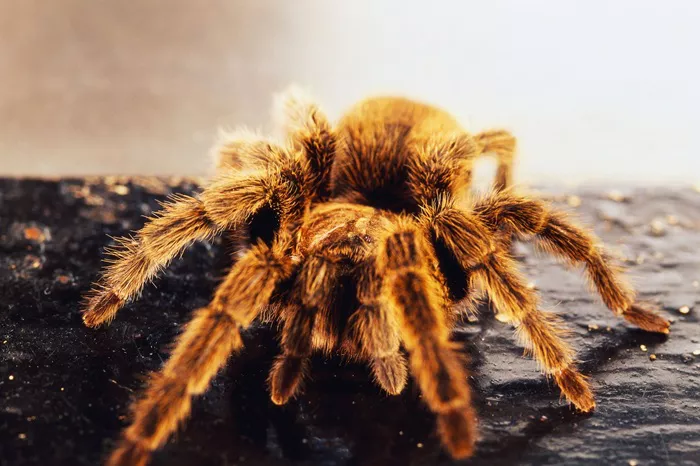
Imagine you’ve just brought home a stunning Chilean Rose Hair Tarantula (Grammostola rosea), ready to show off its beautiful rose-colored hairs and impress your friends. But as days go by, you notice that your new tarantula isn’t eating. It’s been sitting there, motionless, its legs tucked in, not even bothering to react to the crickets in its tank. This can be frustrating, especially if you’re new to keeping tarantulas. You might wonder, “What’s going on with my tarantula? Is it sick? Am I doing something wrong?”
Rest assured, this is a common issue, and there could be several reasons why your Chilean Rose Hair Tarantula isn’t eating. As a novice tarantula keeper, it’s important to understand the specific needs and behavior of this species. In this article, we will dive deep into the possible causes, offer helpful solutions, and give you a clearer understanding of your pet’s needs. By the end, you’ll feel confident in caring for your Chilean Rose Hair Tarantula, even when it seems like it’s fasting!
Understanding Your Chilean Rose Hair Tarantula
Before we tackle the reasons why your Chilean Rose Hair Tarantula might not be eating, it’s important to know a bit about this fascinating species. Native to the arid regions of Chile, Argentina, and Bolivia, this tarantula is known for its docile temperament and striking appearance. It’s one of the most popular species for pet owners because it’s relatively low-maintenance compared to other tarantulas.
However, understanding the natural environment and habits of your tarantula will help you cater to its specific needs. In the wild, these tarantulas are opportunistic feeders, often ambushing insects that wander too close to their burrows. They don’t eat every day, and they can survive on a sporadic diet for quite a long time. So, if your Chilean Rose Hair Tarantula isn’t eating, it may simply be acting according to its instincts.
Common Reasons Why Your Chilean Rose Hair Tarantula Isn’t Eating
1. Temperature Issues: Your Tarantula’s ‘Thermostat’ is Off
One of the most common reasons a Chilean Rose Hair Tarantula might stop eating is because of temperature problems in its enclosure. Think of temperature as the “thermostat” for your tarantula’s digestive system. Just like how we might feel sluggish and tired when it’s too cold, your tarantula’s metabolism slows down when it’s too cold.
Chilean Rose Hair Tarantulas thrive at temperatures between 75°F and 80°F (24°C to 27°C). Anything lower than 70°F (21°C) can cause your tarantula to become lethargic and lose its appetite. In contrast, a temperature that’s too high can lead to dehydration, which can also cause your tarantula to stop eating.
Solution: Check the temperature of your tarantula’s tank using a thermometer. If it’s too cold, try increasing the temperature by using a heat pad or lamp. Be sure to create a temperature gradient, so your tarantula can move to a cooler spot if needed.
2. Humidity: Not Too Wet, Not Too Dry
Humidity is another factor that plays a big role in your tarantula’s health. While tarantulas like the Chilean Rose Hair Tarantula are relatively hardy when it comes to humidity, too much moisture can cause problems. If the enclosure is too humid, it could encourage mold or mites, which can make your tarantula uncomfortable and reluctant to eat.
Conversely, too little humidity can cause your tarantula to dehydrate, which is just as dangerous. It’s a delicate balance. The ideal humidity level for a Chilean Rose Hair Tarantula is between 50% and 60%.
Solution: Use a hygrometer to measure the humidity in the tank. If it’s too dry, lightly mist the enclosure with water. If it’s too humid, reduce the water source and make sure the substrate is well-drained.
3. Stress: Your Tarantula’s Mood Matters
Stress can be a silent killer when it comes to tarantulas. If you’ve recently moved your tarantula to a new home, handled it too much, or made drastic changes to its habitat, your Chilean Rose Hair Tarantula might be stressed out. Just like you might feel anxious before a big presentation, your tarantula can feel uneasy when its environment is constantly changing.
Stress can cause tarantulas to refuse food and even become defensive. It’s important to create a calm, stable environment for your tarantula to thrive.
Solution: Avoid handling your tarantula too much, especially when it’s settling into its new environment. Place the tank in a quiet area where the tarantula can feel safe. If you’re noticing excessive stress behavior (like rapid movements or defensive posturing), consider giving your tarantula some alone time to relax.
4. Pre-Molt: A Natural Fasting Period
Tarantulas are known to go through a process called “molting,” where they shed their exoskeleton to grow. When a tarantula is preparing to molt, it may go on a food strike for a few weeks. This is a completely normal behavior, and it’s nothing to worry about.
If your Chilean Rose Hair Tarantula has stopped eating and is acting a bit more reclusive, it might be getting ready to molt. During this time, tarantulas are particularly vulnerable, and they often refuse food to avoid the risks associated with digestion while molting.
Solution: Be patient. If your tarantula is entering the pre-molt phase, it’s best to leave it alone and let it do its thing. Avoid disturbing the tank during this time, and offer food once the molt is complete.
5. Overfeeding: Too Much of a Good Thing
Sometimes, tarantulas refuse food because they’ve been overfed. Just like us, if you feed a tarantula too much, it might become a bit lazy and decide it doesn’t need to eat for a while. A healthy Chilean Rose Hair Tarantula typically eats every 7 to 14 days, depending on its age and size. Juveniles may eat more often, but adults are known to eat less frequently.
Solution: Adjust the feeding schedule. If you’ve been feeding your tarantula too often, try spacing out the meals. Offer food every 10 to 14 days, and don’t be alarmed if your tarantula skips a meal or two.
6. Health Issues: Check for Signs of Illness
If your tarantula isn’t eating, it could be suffering from an underlying health issue. Infections, mites, and parasites can cause a tarantula to refuse food. While health issues are not common, they can be serious.
Look for any signs of abnormal behavior, such as lethargy, difficulty moving, or visible injury. Additionally, check for external parasites like mites on your tarantula’s body.
Solution: If you suspect that your tarantula is sick, consult a veterinarian who specializes in exotic pets or arthropods. Early intervention can make a big difference in the recovery process.
7. Age: Your Tarantula’s Life Cycle
Just like many animals, a Chilean Rose Hair Tarantula’s appetite can change as it ages. Younger tarantulas tend to have bigger appetites, while older ones may eat less often. As your tarantula matures, it may go through phases where it eats less or even fasts for a while.
Solution: Monitor your tarantula’s eating habits over time. If it’s an adult and has recently slowed down its eating, it may simply be going through a natural stage in its life cycle.
Conclusion: Patience and Observation Are Key
Understanding why your Chilean Rose Hair Tarantula isn’t eating can feel like solving a mystery. But with patience and careful observation, you’ll be able to identify the cause and take the appropriate steps. Whether it’s temperature, humidity, stress, or the natural pre-molt fasting period, you’ll soon find that your tarantula will be back to its usual feeding routine.
Always keep in mind that these creatures are hardy, but they require specific conditions to thrive. So, make sure to maintain a stable environment, offer food at the right times, and allow your tarantula space to rest.
With time, your Chilean Rose Hair Tarantula will likely return to its happy, healthy self—and you’ll gain valuable insights into its behavior and care!
Related topics: