
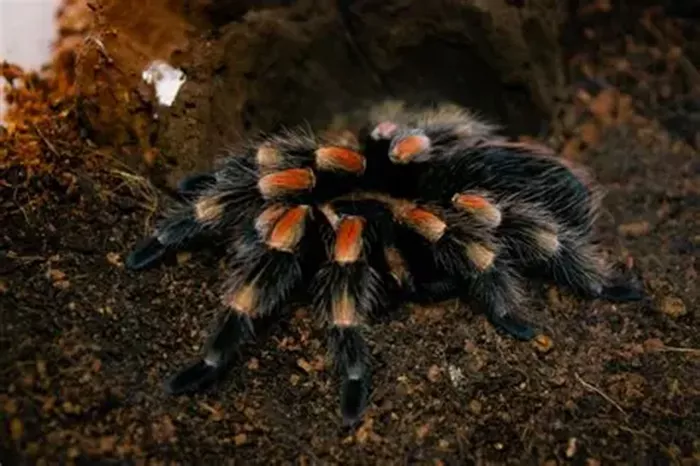
Have you ever seen a Mexican redknee tarantula, with its vibrant orange-red leg markings and imposing size? If so, you might have wondered: what class is the Mexican redknee tarantula? In this article, we’ll explore the fascinating world of this iconic tarantula species. You’ll gain insight into its classification, biology, habitat, and care needs. By the end, you’ll know exactly where this tarantula fits into the tree of life and how it compares to other creatures.
What is the Mexican Redknee Tarantula?
The Mexican redknee tarantula (scientific name: Brachypelma smithi) is a species of tarantula that is native to Mexico, particularly the western regions of the country. It is one of the most well-known tarantula species in the pet trade due to its docile nature and striking appearance.
Imagine this: a tarantula the size of a small plate, with legs covered in striking orange or red markings. The Mexican redknee’s beauty, combined with its slow-moving temperament, has made it one of the most popular spiders to keep as pets. But, when you look at the Mexican redknee, you might also be curious about what class it belongs to and how it fits into the animal kingdom.
Understanding Biological Classification
To understand what class the Mexican redknee tarantula belongs to, we first need to dive into biological classification. The classification system is like a giant family tree that categorizes all living organisms based on their shared characteristics. Just like how you might be in a family tree with parents, siblings, and cousins, every species on Earth is part of a much larger biological family. The classification system is divided into several levels:
Domain
Kingdom
Phylum
Class
Order
Family
Genus
Species
Each of these levels gets more specific as we move down the tree. The class is a major part of this hierarchy, grouping organisms with similar features.
What Class Does the Mexican Redknee Tarantula Belong To?
The Mexican redknee tarantula belongs to the class Arachnida. This class is part of the phylum Arthropoda, which includes all animals with exoskeletons, segmented bodies, and jointed legs.
What is the Class Arachnida?
The class Arachnida includes not only tarantulas, but also other well-known arachnids like:
Spiders
Scorpions
Ticks
Mites
Arachnids are all invertebrates, which means they lack a backbone. They have an exoskeleton, which is a hard outer shell that protects their body, much like a suit of armor. This exoskeleton is made of chitin, a strong substance that provides structural support.
Analogy:
Think of the exoskeleton like a hard candy shell. When you bite into it, the candy protects the inside, just as the exoskeleton protects the tarantula’s soft body.
Why Arachnids?
Why is the Mexican redknee tarantula classified as an arachnid, though? The primary features that classify it as an arachnid include:
Eight Legs: Unlike insects, which have six legs, arachnids have eight legs. Imagine walking on four pairs of legs instead of just three pairs – it gives them a unique, unmistakable look!
Body Structure: Arachnids typically have two main body parts – the cephalothorax (a combination of head and thorax) and the abdomen. This is different from insects, which usually have three distinct body parts (head, thorax, abdomen).
No Antennae: Insects have antennae on their heads, while arachnids do not. The Mexican redknee, like all tarantulas, lacks antennae, which is a telltale sign of its arachnid classification.
The Phylum Arthropoda: A Larger Classification
While the class Arachnida is where the Mexican redknee tarantula resides, it is important to note that it is part of a larger group called Arthropoda.
The phylum Arthropoda is one of the most diverse and successful groups of animals on Earth. It includes over 80% of all known animal species! Some of the creatures in this phylum include:
- Insects (like ants, butterflies, and bees)
- Arachnids (like the Mexican redknee tarantula)
- Crustaceans (like crabs, lobsters, and shrimp)
- Myriapods (like millipedes and centipedes)
Analogy:
Think of Arthropoda as a massive umbrella that covers a huge range of creatures. If you’ve ever walked by a spider, noticed a fly buzzing around, or seen a crab at the beach, you’ve encountered arthropods. Each of these creatures is distinct but still shares common features, such as exoskeletons and segmented bodies.
The Mexican Redknee’s Family, Genus, and Species
The Mexican redknee tarantula belongs to the family Theraphosidae, which is a family of tarantulas. This family includes many large, hairy spiders that are often kept as pets due to their docile nature.
Its genus is Brachypelma, which contains several species of tarantulas, many of which are popular in the pet trade. The specific species name is smithi, making the full scientific name Brachypelma smithi.
Why is This Classification Important?
This classification tells us a lot about the tarantula’s evolutionary relationships. By knowing that the Mexican redknee is in the Brachypelma genus, we understand that it shares certain traits with other tarantulas in the same group. This is important for understanding its behavior, habitat needs, and care requirements as a pet.
Behavior and Habitat of the Mexican Redknee Tarantula
Behavior:
The Mexican redknee tarantula is known for its calm demeanor, making it an excellent choice for pet owners, even those who have little experience with tarantulas. While it can be a bit shy and reclusive, it is generally not aggressive and will only bite in self-defense, often only when provoked.
Habitat:
Native to Mexico, this species lives in dry, arid regions, often burrowing underground to create a safe, cool environment. It’s important to replicate these conditions if you plan to keep one as a pet, providing a burrow or a hiding spot.
Caring for a Mexican Redknee Tarantula
If you’re thinking of owning a Mexican redknee, knowing its class and species is just the beginning. Here’s a quick guide to ensuring your tarantula stays happy and healthy:
Housing: Provide a large, secure enclosure with plenty of room to burrow.
Temperature: Maintain a temperature between 75-85°F (24-29°C) to mimic the warm, dry environment of Mexico.
Humidity: Keep the humidity low, around 40-50%, but make sure there is always a water dish available.
Diet: Feed your tarantula a diet of crickets, mealworms, and other insects.
Handling: Although they are calm, it’s best to handle them minimally to reduce stress.
Conclusion: The Mexican Redknee Tarantula’s Place in the Animal Kingdom
So, to answer the big question: the Mexican redknee tarantula belongs to the class Arachnida. It’s an incredible example of the diversity within the Arthropoda phylum, and it showcases how much we can learn from the classification system. Whether you’re an expert in tarantulas or just starting to learn, understanding where the Mexican redknee fits in the biological tree helps us appreciate these magnificent creatures even more.
Related topics: