
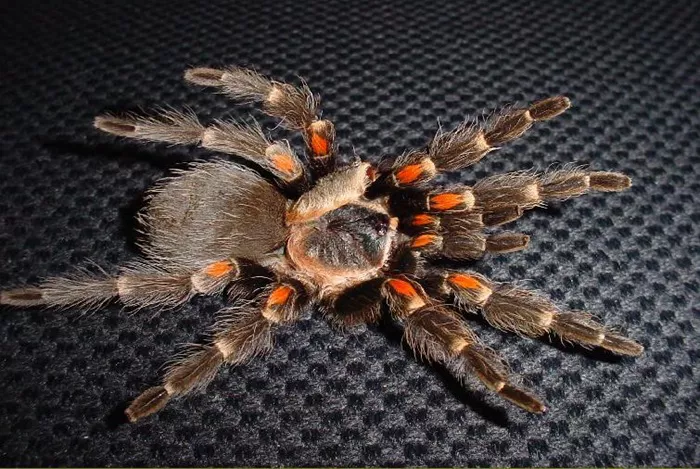
When you first hear about Mexican Redknee Tarantulas, you might imagine a little spider scuttling around with tiny pincers or claws. But here’s the twist—these fascinating reptiles (actually arachnids, but often studied alongside reptiles due to their care needs) have a structure that is a bit different from what we normally call claws. Curious? Let’s dive into the world of these stunning creatures and find out how they really move, climb, and interact with their environment.
What Are Mexican Redknee Tarantulas?
Before we get into claws, it’s important to understand the species we’re talking about. The Mexican Redknee Tarantula, scientifically known as Brachypelma smithi, is a large, strikingly colored spider from Mexico. Its most eye-catching feature is the bright red-orange patches on its knees, contrasting beautifully with the dark legs and body.
These reptile-like arachnids are calm, making them excellent pets for beginners. They can live for decades in captivity—females sometimes surpass 25 years! That longevity makes it important for you to fully understand their anatomy, including something as seemingly simple as claws.
Do Mexican Redknee Tarantulas Actually Have Claws?
Here’s the surprising answer: Yes, they have claws, but not like cats or dogs.
At the tip of each leg, Mexican Redknee Tarantulas have two small claws and a structure called the “scopula”, a dense brush of fine hairs. These claws are tiny, curved, and perfect for gripping rough surfaces. Meanwhile, the scopula works like sticky pads that help the spider climb smooth surfaces, almost like the way geckos stick to walls.
Think of it this way: if a human foot had a claw and tiny suction cups at the same time, you could walk up a glass wall—that’s essentially what these claws and scopula do for the tarantula.
The claws alone are not enough for climbing; they work in combination with the scopula. This is why sometimes, when you see your Mexican Redknee Tarantula on the side of its terrarium, it seems to stick effortlessly. Those claws are like the tiny hooks on your shoelaces—they hold, but they need support.
The Anatomy of Tarantula Claws
Each leg ends in two main claws. Here’s a breakdown:
Primary Claw: The larger claw, used for gripping rough surfaces and digging.
Secondary Claw: Smaller, helps stabilize the grip and provides extra support when climbing.
Scopula Hairs: Fine bristles that create friction, allowing climbing even on smooth glass or plastic.
Imagine walking on a gravel path wearing sneakers with excellent grip; the sneakers are like the claws, while the socks inside that slightly stick to your skin are like the scopula—both work together to prevent slipping.
A neat fact: when handling a tarantula, its claws are too tiny to hurt you. Most bites or injuries people fear come from the fangs, not these microscopic hooks.
How Claws Help in Daily Life
These claws are not just for show. They are crucial for:
Climbing: Tarantulas can scale walls of their enclosures thanks to claws and scopula.
Digging: Mexican Redknee Tarantulas are semi-burrowing; they dig shallow burrows using their claws.
Gripping Prey: While fangs inject venom, claws help hold struggling insects securely.
Defense and Balance: If startled, the claws help them quickly retreat and maintain balance.
A real-life observation by a tarantula owner named Lisa highlights this: “When I first added a smooth plastic water dish, I thought my tarantula wouldn’t climb it. Within minutes, I watched her tiptoe across the glass—her claws and tiny hairs were amazing.”
Claws and Terrarium Setup
Now that you know claws are important, here’s why it matters for your terrarium:
Substrate Matters: A soft, slightly loose substrate like coconut fiber allows your tarantula to dig easily.
Climbing Surfaces: If you provide smooth walls, your tarantula’s claws and scopula will still let them explore, but avoid high open spaces to prevent falls.
Water Dishes and Accessories: Make sure dishes and logs are stable; claws grip but cannot prevent slipping from unstable surfaces.
Knowing this, you can create a safe, interactive habitat that mimics their natural behavior.
Common Misconceptions About Tarantula Claws
Many people assume:
- “Tarantulas use claws to catch prey like crabs.” Wrong—they mainly rely on fangs.
- “Claws mean they can scratch humans.” False—the claws are minuscule and harmless.
- “All tarantulas climb equally well.” Not true—species with smaller scopula or claw structures may struggle.
For Mexican Redknee Tarantulas, claws and scopula are well-developed, making them surprisingly agile.
How Claws Affect Handling and Care
When you handle or observe your Mexican Redknee Tarantula:
Avoid stressing them: Sudden movements may cause them to try climbing or escaping.
Notice the claws in action: They use them to grasp surfaces and stabilize.
Prevent falls: Even though claws grip, a fall from height can injure them.
Owners often share that watching a tarantula navigate obstacles is mesmerizing: “Her little claws grip everything so carefully—it’s like she’s dancing on the terrain,” says Mark, a hobbyist.
Comparing Tarantula Claws to Other Species
Not all tarantulas are created equal:
| Species | Claw Type | Climbing Ability |
|---|---|---|
| Mexican Redknee (B. smithi) | Two claws + scopula | Excellent climber |
| Chilean Rose (Grammostola rosea) | Less dense scopula | Moderate climber |
| Goliath Bird-Eater (Theraphosa blondi) | Very small scopula | Poor climber |
Interesting Facts About Tarantula Claws
Scopula Hair Efficiency: Studies show scopula hairs increase surface contact by 50%, enhancing grip.
Molting: During molting, claws are soft. The spider must stay safe as they temporarily lose climbing ability.
Natural Habitat: In Mexican deserts and scrub forests, claws allow them to climb rocky surfaces and burrow under logs.
These claws, tiny but mighty, are integral to their survival.
Conclusion: Unlocking the Claw Mystery
So, do Mexican Redknee Tarantulas have claws? Absolutely. They may be small, but they are highly functional. With two claws and specialized scopula hairs, these arachnids climb, dig, and interact with their environment in ways that will amaze you. Understanding their claws helps you provide better care, safer handling, and deeper appreciation for these incredible creatures.
When you next watch your tarantula explore its terrarium, take a moment to observe how the claws and scopula work in perfect harmony. It’s not just a spider—it’s a tiny, agile marvel of nature.
Related topics: