
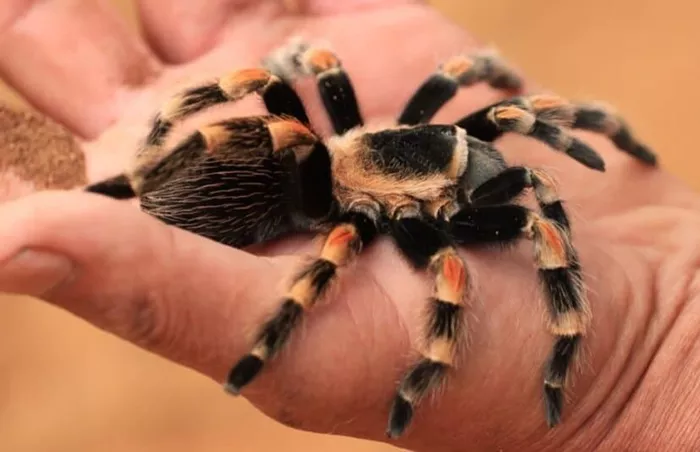
If you’re fascinated by exotic pets, you’ve likely encountered the striking Mexican redknee tarantula. With its bold black body and vivid orange-red leg joints, it’s one of the most iconic tarantulas in the world. But have you ever wondered if these spiders are rare? Are they endangered in the wild? Or are they thriving in their natural habitats? In this article, we’ll delve deep into the world of the Mexican redknee tarantula to answer these questions and more.
🕷️ What Is a Mexican Redknee Tarantula?
The Mexican redknee tarantula is a species of tarantula native to Mexico. It’s known for its distinctive coloration, with a black body and orange-red markings on the joints of its legs. There are two species commonly referred to as the Mexican redknee tarantula:
Brachypelma hamorii: This species is found in the western regions of Mexico, including the states of Colima, Jalisco, and Michoacán. It’s characterized by its vibrant red-orange markings and is often sought after by tarantula enthusiasts.
Brachypelma smithi: Once considered the same species as B. hamorii, B. smithi is now recognized as a distinct species. It’s found in the southern regions of Mexico and shares similar physical characteristics with B. hamorii.
🌍 Are They Rare in the Wild?
In their natural habitats, Mexican redknee tarantulas are considered vulnerable. The International Union for Conservation of Nature (IUCN) lists B. hamorii as “Vulnerable,” indicating that it’s at risk of becoming endangered unless conservation efforts are made. Similarly, B. smithi is listed as “Near Threatened,” suggesting that it could become vulnerable in the future.
🏞️ Habitat Loss
One of the primary threats to these tarantulas is habitat destruction. As urban areas expand and agriculture spreads, the natural habitats of these spiders are being destroyed. This not only reduces the available living space for the tarantulas but also affects the prey species they rely on for food.
🐾 Illegal Pet Trade
The allure of the Mexican redknee tarantula has led to over-collection from the wild. Despite regulations, wild-caught specimens are still smuggled out of Mexico and sold in international pet markets. This illegal trade further diminishes wild populations and disrupts local ecosystems.
🐢 Are They Rare in Captivity?
In captivity, Mexican redknee tarantulas are more common. Thanks to successful breeding programs, many pet owners now keep these spiders without impacting wild populations. Captive breeding ensures that the demand for these tarantulas doesn’t lead to further depletion of their natural habitats.
🧪 Breeding Programs
Various breeding programs have been established to maintain healthy captive populations of Mexican redknee tarantulas. These programs focus on genetic diversity and the well-being of the spiders, ensuring that they thrive in captivity and reducing the need for wild collection.
🏠 Pet Ownership
For those interested in keeping a Mexican redknee tarantula as a pet, it’s essential to source them from reputable breeders. This helps support ethical practices and ensures that the spiders are healthy and well-cared for.
🧠 Fun Facts About Mexican Redknee Tarantulas
Long Lifespan: Female Mexican redknee tarantulas can live up to 30 years in captivity, while males typically live around 5 years.
Slow Growers: These tarantulas grow slowly, molting several times throughout their lives to reach maturity.
Docile Nature: Known for their calm temperament, Mexican redknee tarantulas are often recommended for beginners in the arachnid hobby.
Unique Defense Mechanism: When threatened, they can flick urticating hairs from their abdomen, which can cause irritation to predators or perceived threats.
🛡️ Conservation Efforts
To protect Mexican redknee tarantulas in the wild, several conservation measures have been implemented:
CITES Protection: Both B. hamorii and B. smithi are listed under CITES Appendix II, which regulates international trade to prevent over-exploitation.
Habitat Preservation: Efforts are underway to protect and restore the natural habitats of these tarantulas, ensuring they have safe environments to live and reproduce.
Public Awareness: Educational campaigns aim to raise awareness about the importance of these spiders and the threats they face, encouraging responsible pet ownership and support for conservation initiatives.
✅ Conclusion
While Mexican redknee tarantulas are not extinct, they are rare in the wild due to habitat loss and illegal trade. However, through conservation efforts and responsible breeding programs, their populations are being supported. If you’re considering keeping one as a pet, ensure you source it ethically and support conservation initiatives to help protect these remarkable spiders for future generations.
Related topics: