
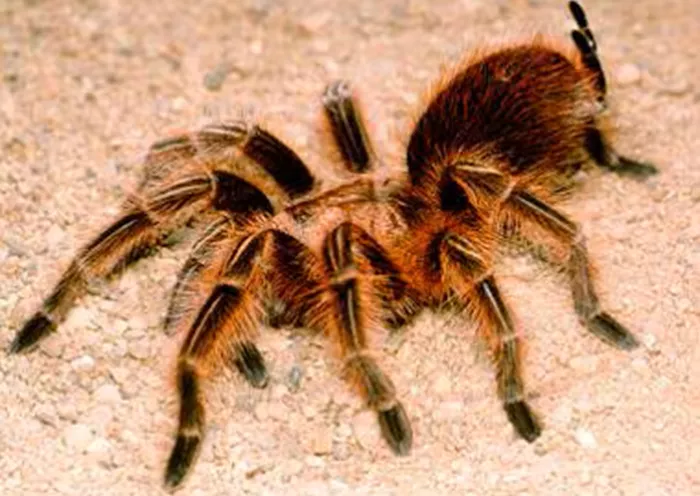
If you’re new to the world of exotic pets, the Mexican Redknee Tarantula (Brachypelma hamorii) is an excellent choice. Known for its striking black body adorned with vibrant orange-red markings on its legs, this tarantula is not only visually stunning but also boasts a calm temperament, making it ideal for beginners.
Native to the arid scrublands of western Mexico, the Mexican Redknee Tarantula thrives in a dry environment, making it relatively easy to care for. With proper attention to its habitat, diet, and health, you can enjoy the company of this fascinating creature for many years.
🏠 Housing Your Mexican Redknee Tarantula
Enclosure Size and Type
For a single adult tarantula, a 10-gallon (approximately 38 liters) enclosure is sufficient. The enclosure should be wider than it is tall, as these tarantulas are terrestrial and prefer to stay close to the ground. Ensure the enclosure has a secure, ventilated lid to prevent escapes.
Substrate
Provide a substrate that allows for burrowing. Coconut fiber (coir) is an excellent choice, as it retains moisture without becoming soggy. Aim for a substrate depth of 4 to 6 inches (10 to 15 cm) to accommodate burrowing behavior.
Temperature and Humidity
Maintain a temperature range of 70°F to 80°F (21°C to 27°C). If your room temperature falls below this range, consider using a heat mat on one side of the enclosure to create a temperature gradient. Humidity should be kept low to moderate, around 40% to 50%, to mimic the tarantula’s natural desert habitat. Ensure the enclosure has a shallow water dish to provide drinking water.
Hiding Spots
Provide at least one hiding spot, such as a half-log or a piece of cork bark, to give your tarantula a sense of security. These creatures are nocturnal and appreciate having a dark, secluded area to retreat to during the day.
🍽️ Feeding Your Mexican Redknee Tarantula
Diet
Mexican Redknee Tarantulas are carnivorous and primarily feed on insects. Suitable prey items include crickets, roaches, and mealworms. Feed juveniles once a week and adults every 7 to 10 days. Ensure that any uneaten prey is removed after 24 hours to prevent stress and potential harm to the tarantula.
Feeding Tips
Offer prey items in the evening when your tarantula is most active. Use tongs to place the food in the enclosure to avoid accidental bites. Avoid overfeeding, as obesity can lead to health issues.
🐾 Handling and Temperament
Mexican Redknee Tarantulas are known for their docile nature. However, it’s important to note that they do not enjoy being handled frequently. If you choose to handle your tarantula, do so gently and infrequently to minimize stress. Always support its body fully and avoid sudden movements.
Urticating Hairs
When threatened, these tarantulas can flick urticating hairs from their abdomen. These microscopic hairs can cause irritation to the skin and eyes. To protect yourself, consider wearing gloves when handling your tarantula or performing maintenance in its enclosure.
🧬 Molting Process
Like all arachnids, Mexican Redknee Tarantulas molt as they grow. During this process, they shed their exoskeleton. It’s crucial not to disturb your tarantula during this time, as it is vulnerable and can become stressed. Ensure that the enclosure remains clean and that no uneaten prey is present, as they may harm the molting tarantula.
🧪 Health and Maintenance
Enclosure Cleanliness
Regularly clean the enclosure to prevent mold growth and the accumulation of waste. Remove uneaten food and replace the substrate every few months or as needed. Ensure that the water dish is cleaned and refilled with fresh water regularly.
Monitoring Health
Keep an eye out for signs of illness, such as lethargy, refusal to eat, or abnormal behavior. If you notice any of these symptoms, consult a veterinarian experienced with exotic pets.
🧠 Fun Facts
Lifespan: Females can live up to 30 years, while males typically live around 10 years.
Size: Adult tarantulas can reach a leg span of up to 6 inches (15 cm).
Reclassification: Previously known as Brachypelma smithi, this species was reclassified to Brachypelma hamorii following genetic studies.
📝 Conclusion
Caring for a Mexican Redknee Tarantula can be a rewarding experience. By providing the appropriate environment, diet, and handling practices, you can enjoy the company of this fascinating arachnid for many years. Remember to always source your tarantula from reputable breeders to ensure the health and well-being of your pet.
Related topics: