
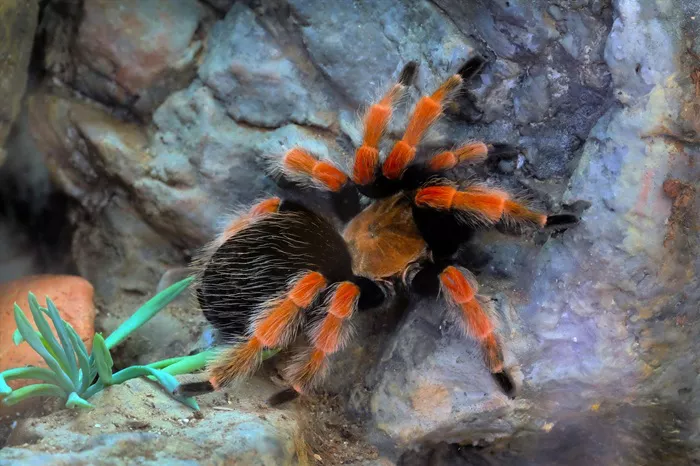
Imagine a creature that is both a showstopper in the world of exotic pets and a quiet enigma when it comes to care. The Mexican red knee tarantula—or Brachypelma smithi—fits this description perfectly. Known for their striking appearance with red-orange markings on their legs, these tarantulas are a favorite among arachnid enthusiasts.
But what about their environmental needs? Specifically, do Mexican red knees thrive in humid conditions? You might have heard that they like their habitats warm and moist, but is there more to the story? Let’s uncover the mysteries of humidity and what these fascinating creatures really need to stay healthy and happy.
Understanding Humidity: The Basics
Before we dive into the specifics of the Mexican red knee’s humidity preferences, let’s take a moment to discuss humidity in a way that everyone can understand.
Humidity is essentially the amount of water vapor in the air. When you step outside on a hot, sticky day, you’re likely feeling high humidity—think of the thick air you breathe in. In contrast, a dry, crisp winter day represents low humidity, where the air feels cool and dry.
In the world of reptiles and arachnids, humidity plays a crucial role in maintaining their health. For creatures like the Mexican red knee tarantula, too much or too little humidity can cause major issues. But, don’t worry—we’ll explain how to get it just right for these awesome arachnids!
Where Do Mexican Red Knees Come From?
To understand their humidity needs, we need to look at their natural habitat. The Mexican red knee tarantula is native to the dry, scrubby areas of Mexico. While it’s found in deserts and semi-arid regions, it doesn’t mean that it completely shies away from moisture. In fact, it often shelters under rocks or in burrows where there’s a balance of temperature and humidity.
Think of a cave in the desert—cool, but not soaked in water. This is the kind of environment they prefer.
Do Mexican Red Knees Like High Humidity?
Now that we’ve set the stage, let’s address the burning question: Do Mexican red knees like humidity? The simple answer is, moderate humidity. These tarantulas don’t require the steamy, rainforest-like conditions that many other species of tarantulas crave. However, they do need a certain level of moisture to thrive.
In their natural habitat, Mexican red knees experience a low to moderate humidity range, typically between 50-60%. It’s neither a dry desert nor a wet swamp—it’s the perfect balance.
Why Moderate Humidity is Key for Mexican Red Knees
Here’s the thing: too much humidity can actually cause problems for your Mexican red knee tarantula. When humidity levels rise above 60-70%, it can make the environment too damp. This leads to problems like fungus growth or mold—not something you want in your tarantula’s home.
On the other hand, low humidity (below 40%) can dry out the tarantula’s exoskeleton, causing its molting process to become difficult, which could lead to incomplete molts and even death. The moisture in the air helps them in shedding their exoskeleton, which is essential for growth.
So, it’s all about finding the sweet spot.
Creating the Right Humidity for Your Mexican Red Knee
Now that you know what humidity level is ideal, let’s talk about how to create the right environment for your tarantula.
The Enclosure: A good enclosure is key to maintaining humidity. A glass terrarium or plastic container with a secure lid is ideal. This helps trap moisture and maintain consistent humidity. Make sure the enclosure has a ventilation system, though, as stale air can lead to health problems.
Humidity Sources: To increase humidity, lightly mist the enclosure once a week. Be careful not to soak it too much. A small water dish in the enclosure will also provide moisture in the air. This allows the tarantula to drink and stay hydrated.
Substrate: Use a moisture-retaining substrate, like coconut fiber or potting soil. These materials hold moisture and help keep the humidity levels stable. Just make sure it’s not too wet, as standing water can create an environment for mold and bacteria.
Thermometers and Hygrometers: Investing in a thermometer and hygrometer is a must to monitor both temperature and humidity. This allows you to make adjustments as needed. Remember, consistency is key!
Signs That Your Mexican Red Knee Needs Adjustments
Sometimes, your tarantula will tell you if the humidity is off. Watch for these signs:
Molting issues: If your Mexican red knee has difficulty molting, it could be a sign that the humidity is too low.
Excessive lethargy: A tarantula that stays curled up in a corner and isn’t moving much could be showing signs of too much moisture in its environment.
Mold or fungi growth: If you see mold growing in the substrate, it’s a definite sign that humidity is too high. Time to adjust!
What Happens If Humidity Levels Are Off?
Just like humans feel uncomfortable in a too-humid or too-dry room, your tarantula will react negatively to poor humidity levels. Here’s how:
Too much humidity: If the humidity is too high, the tarantula may experience mold growth on its body. In extreme cases, it may suffer from skin rot or respiratory infections.
Too little humidity: When humidity is too low, the tarantula’s exoskeleton may dry out. This can interfere with the molting process, and in severe cases, the tarantula may die from an inability to molt.
Just like when you find that your plants need more water or your fish tank needs a filter change, your tarantula’s environment will also need attention from time to time. Keeping it moderate will ensure a healthy, thriving tarantula.
Is There a Way to Simulate Natural Humidity for Mexican Red Knees?
Absolutely! One great way to simulate the natural humidity levels of the Mexican red knee tarantula’s environment is to mimic the climate of its natural habitat, the semi-arid regions of Mexico.
To create a more naturalistic setup, consider adding items like fake rocks, small caves, or plant decorations that can also help regulate moisture. This creates a cozy environment where your tarantula can retreat to shelter from the elements—just like it would in the wild.
Conclusion
In the end, Mexican red knees prefer a habitat that isn’t too dry or too humid. The goal is to maintain moderate humidity (50-60%), providing just enough moisture for them to thrive while avoiding a damp environment that could encourage mold and disease.
By creating the right environment—choosing the right substrate, providing a water dish, and monitoring humidity—you’ll help your tarantula live a long, healthy life. Keeping things simple and balanced will make your experience as a tarantula owner much more rewarding.
Related topics: