
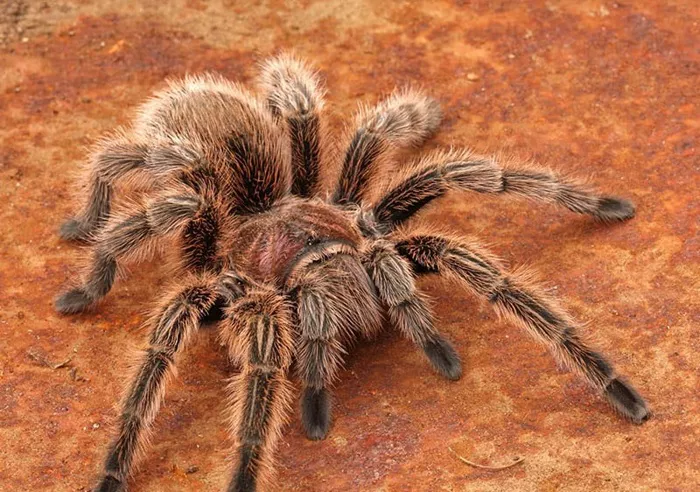
Imagine walking through a desert in northern Chile and suddenly spotting a large, hairy spider quietly resting near a small hole in the ground. You might be amazed to learn that this spider is not just any spider, but one of the most popular tarantulas in the world—the Chilean rose tarantula. But here’s a question for you: What exactly is the real name of the Chilean rose tarantula? You might think it’s a simple question with an obvious answer, but the story behind the name of this fascinating species is actually quite interesting, even a bit complicated. Stick with me, and I’ll explain everything about its name — scientific, common, and why names matter so much in the world of reptiles and arachnids.
The Scientific Name: Grammostola rosea
In biology, every species has a special name called a scientific name or Latin name. This is a two-part name that scientists use worldwide to avoid confusion. For the Chilean rose tarantula, this name is Grammostola rosea.
Think of the scientific name like a unique ID card for this spider, something that doesn’t change no matter where you are in the world. Unlike nicknames or common names, scientific names are precise and universal. Imagine calling a friend by different nicknames in different groups, but their official ID always stays the same — that’s what the scientific name does for species.
The name Grammostola rosea has two parts:
Grammostola is the genus name — this is like the spider’s last name and tells you the broader family group it belongs to. Think of it like your surname shared by your relatives.
rosea is the species name — like the spider’s first name, unique within the genus, and often describes something special about the spider, in this case, the “rose” or reddish coloring it sometimes has.
So, whenever a scientist anywhere says Grammostola rosea, they mean exactly this species of tarantula.
Common Names: Why So Many for One Spider?
If you visit pet stores or chat with tarantula lovers, you’ll hear many different names for this spider. Some call it the Chilean rose tarantula, others say rose hair tarantula, Chilean fire tarantula, or even Chilean red-haired tarantula. Why so many?
This is because common names come from everyday language and are often based on the spider’s looks, where it lives, or how it behaves. But unlike scientific names, common names are not regulated, so they can be confusing.
For example, if you said “rose hair” to one person, they might think of a slightly different spider than what another person means by “Chilean rose.” It’s a bit like calling a soda “pop” or “coke” depending on where you live — same drink, different words.
See Also: Can You Safely Hold This Tarantula?
So, while these names are easier to say and remember, they sometimes cause mix-ups, especially for people new to reptiles and tarantulas. That’s why experts prefer to use Grammostola rosea in scientific discussions.
Why Is the Scientific Name So Important?
You might wonder, “Why not just stick to the easy common names?” Great question! Here are a few reasons why the scientific name Grammostola rosea is essential:
No confusion: Some common names are used for different species. For example, the name “redknee tarantula” can refer to more than one species, but Brachypelma hamorii points to exactly one. The same goes for Grammostola rosea — no mix-up.
Global understanding: Scientists, breeders, and hobbyists all over the world speak different languages, but scientific names are universal. No matter if you are in Chile, the USA, or Japan, Grammostola rosea means the same spider.
Keeps up with research: As scientists learn more and study the spider’s DNA, sometimes species are reclassified or combined. Using the scientific name helps keep track of these changes accurately.
A Quick Look at Taxonomy: The Family Tree of the Chilean Rose Tarantula
Just like you have a family tree, so does every living creature. The Chilean rose tarantula belongs to a larger group called the Theraphosidae family, commonly known as tarantulas or bird spiders.
Here’s a simple way to imagine it:
Family (Theraphosidae): This is like your extended family group — all tarantulas belong here.
Genus (Grammostola): Your immediate family — a smaller group of related tarantulas that share certain features.
Species (rosea): You — the specific spider that has unique traits.
This classification helps scientists understand how different spiders are related, their behavior, and where they come from. So, the Chilean rose tarantula is one unique “person” in a big spider family.
Interesting Story: Confusion Between Grammostola rosea and Grammostola porteri
Here’s a fun fact that shows why scientific names matter so much: For years, many people thought Grammostola porteri was a different species from Grammostola rosea. In fact, they looked quite similar, and both were common in the pet trade. However, in 2022, scientists reviewed the evidence and decided that Grammostola porteri is actually just a junior synonym of Grammostola rosea — meaning they are the same species.
It’s like discovering two old nicknames in your family actually belong to the same person. This change helps everyone be on the same page and avoid confusion in research, pet keeping, and conservation.
The Importance of Proper Naming in Pet Trade and Conservation
If you are a pet owner or planning to get a Chilean rose tarantula, understanding the correct name is more than just trivia. It helps you:
- Buy the right species suited for your care preferences.
- Get accurate care information because different species may have slightly different needs.
- Avoid accidentally supporting illegal trade in protected species (since many spiders are wild-caught).
Though the Chilean rose tarantula is not endangered, habitat loss and human activities affect its natural home. Proper naming supports responsible breeding and conservation efforts.
How the Chilean Rose Tarantula Got Its Common Name
“Chilean rose tarantula” comes from two clues:
Chilean: Because this spider is native to Chile, as well as some parts of Bolivia and Argentina. Its natural habitat includes high deserts and scrub areas at low to moderate altitudes.
Rose: Because many of these spiders show a beautiful reddish or pinkish tint on their hairs, especially on their backs, resembling a delicate rose color. The “rose” part gives it a nice image compared to other big hairy spiders.
The name is catchy, easy to remember, and helps highlight the spider’s unique charm.
What Makes Grammostola rosea Stand Out Among Other Tarantulas?
If you have ever met a Chilean rose tarantula, you’ll notice it’s not just another big spider. It is famous for being:
Docile and calm: Unlike some aggressive tarantulas, this one is known for its gentle temperament, making it a favorite for beginners.
Beautiful color: The reddish “rose” hairs give it an elegant look.
Long-lived: Female Chilean rose tarantulas can live for 20 years or more — that’s like having a pet that stays with you for decades!
All of this makes the species well-loved by reptile enthusiasts and researchers alike.
How Scientific Names Help Us Understand Nature Better
Now that you know the Chilean rose tarantula’s name is Grammostola rosea, you might be curious how these names help scientists. Think of it as a giant library catalog — if books (species) didn’t have unique codes (scientific names), it would be impossible to find what you need.
By using the name Grammostola rosea, researchers can share detailed information about its behavior, venom, diet, habitat, and care, without any confusion. This helps the whole world learn from each other and protect these amazing creatures better.
Conclusion
To sum it up, the Chilean rose tarantula’s real, official name is Grammostola rosea. While it may be called many different names in casual talks or pet stores, the scientific name is the one that uniquely identifies this species anywhere on Earth. Understanding the name is key to appreciating its place in the natural world, caring for it properly, and supporting conservation.
If you are fascinated by tarantulas or reptiles in general, knowing the difference between common and scientific names is like having a secret code that unlocks the wonders of nature. Next time you see a “rose hair” spider, you’ll know exactly what you’re looking at!
Related topics: