
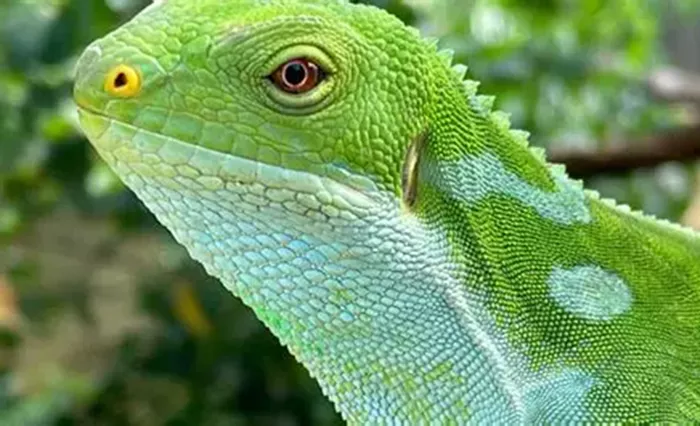
Have you ever wondered what it would be like to meet a truly unique reptile that exists nowhere else on Earth? Meet the Fiji iguana—a fascinating, rare lizard that calls the lush islands of Fiji its exclusive home. This reptile is not just an ordinary iguana; it is a living treasure, surviving in a world full of challenges.
If you are curious about unusual reptiles or simply love nature’s wonders, learning about the Fiji iguana will surprise and delight you. Let’s dive into what makes this iguana so special, how it lives, and why it needs our help.
What Is the Fiji Iguana?
The Fiji iguana (Brachylophus fasciatus) is a type of lizard native only to Fiji, a group of islands in the South Pacific Ocean. Unlike the common green iguanas you might have seen in pet stores or zoos, Fiji iguanas have a more delicate appearance with beautiful color patterns, usually a mix of green with white or bluish stripes.
Imagine a creature that looks like it’s dressed in a leafy, tropical outfit — that’s the Fiji iguana. They are perfectly camouflaged for life in the treetops, blending seamlessly with the green leaves and branches around them.
Why Is the Fiji Iguana So Special?
One reason the Fiji iguana is so fascinating is that it is one of the few iguana species found outside the Americas. Most iguanas live in Central and South America, but this island reptile is a rare exception. Scientists believe the Fiji iguana’s ancestors floated across the ocean on natural rafts millions of years ago, a journey that sounds like something out of an adventure story!
Another remarkable fact is that the Fiji iguana is part of a small group of Pacific iguanas, which includes only three species. These iguanas are important for studying how animals move and evolve on islands far from their relatives.
Physical Features: How to Recognize a Fiji Iguana
When you see a Fiji iguana, you’ll notice some unique traits:
Size: Adult Fiji iguanas are medium-sized lizards, typically about 2 to 3 feet long including their tail.
Color: Their skin is mostly bright green but can have white, blue, or light-colored stripes or bands, especially on the body and tail.
Body shape: They have a slim, agile body with long limbs and claws, perfect for climbing trees.
Head and eyes: Their heads are triangular with sharp eyes that help them spot predators and food from afar.
Their colors are not just pretty—they help them hide from predators like birds or snakes by blending into the tree leaves. Think of it as nature’s own camouflage jacket!
Where Do Fiji Iguanas Live?
Fiji iguanas are found in the wild on a handful of Fiji’s islands, living mostly in coastal forests and tropical rainforests. These forests are dense and full of tall trees, vines, and shrubs, offering plenty of places for the iguanas to climb, hide, and feed.
They love to bask in the sun on branches during the day, soaking up warmth just like you would enjoy a sunny afternoon outside. This warmth is crucial for them because, as reptiles, they rely on external heat to regulate their body temperature.
What Do Fiji Iguanas Eat?
The Fiji iguana is a herbivore, meaning it eats plants rather than meat. Its diet mainly consists of leaves, flowers, fruits, and tender shoots from various plants found in its habitat.
Here’s an interesting point: Their digestive system is specially adapted to break down tough plant material. In a way, they are like natural gardeners, helping spread seeds and maintain the health of the forest.
If you ever care for a Fiji iguana or a similar reptile, remember they need a balanced diet rich in calcium and vitamins to keep their bones strong — similar to how you need milk or leafy greens for healthy bones.
The Life Cycle of the Fiji Iguana
Fiji iguanas start life as eggs laid by the female in warm, sandy soil. These eggs incubate under the sun for several months before baby iguanas hatch. The hatchlings look like miniature adults but are more vulnerable and have to avoid predators while growing.
As they grow, young iguanas spend more time climbing trees and learning to find food. Their colorful stripes may fade and change as they reach adulthood.
The lifespan of Fiji iguanas in the wild can be up to 10 to 15 years if conditions are right. In captivity, with proper care, they might live even longer.
Why Are Fiji Iguanas Threatened?
Sadly, Fiji iguanas are considered vulnerable, meaning they face risks that could cause their populations to shrink dangerously.
Several factors threaten their survival:
Habitat loss: As human activity grows, forests are cleared for farming or development. This leaves iguanas with fewer places to live and find food.
Invasive species: Animals like rats, cats, and mongooses introduced by humans prey on iguanas and their eggs. These predators didn’t exist in Fiji before, so iguanas have no natural defenses against them.
Climate change: Changing weather patterns affect the forests and food availability, making survival harder.
Illegal pet trade: Some people try to capture these iguanas to sell them as pets, which reduces their wild numbers.
Protecting their habitat and controlling invasive predators are key to saving the Fiji iguana.
How Do Fiji Iguanas Stay Healthy?
Like all reptiles, Fiji iguanas depend on proper environmental conditions to stay healthy:
Sunlight or UVB light: These lizards need UVB rays to help their skin make vitamin D3. Think of UVB light as “artificial sunlight” in captivity — without it, they can develop bone problems like metabolic bone disease (a calcium deficiency illness). So, if you ever care for one, UVB lamps are a must.
Temperature: They need warm temperatures during the day, usually between 80–90°F (27–32°C), and cooler but not cold nights. If they get too cold, their metabolism slows down, and they might become sluggish or sick.
Diet: A varied, leafy diet with enough calcium keeps their bones strong and bodies working well.
Hydration: Although they get most water from food and dew, access to fresh water is important.
How Can You Help Protect Fiji Iguanas?
If you love animals and want to help this unique reptile, here are some ways to contribute:
Support conservation organizations working in Fiji that protect forests and control invasive species.
Avoid buying wild-caught iguanas to discourage the illegal pet trade.
Spread awareness about the importance of Fiji iguanas and their role in nature.
If you live in areas with reptiles, help keep habitats clean and safe.
Even small efforts add up and help ensure these iguanas continue to thrive in their island homes.
Fascinating Facts About Fiji Iguanas
Here are some fun and surprising things that might make you love the Fiji iguana even more:
−They can stay perfectly still for a long time, making them hard to spot — almost like nature’s little ninja!
−Their skin color changes slightly depending on the season or stress levels, similar to how some people’s moods change their expressions.
−Scientists study Fiji iguanas to understand how animals colonize remote islands — like tiny explorers in the animal kingdom.
−Their strong claws are great for gripping slippery branches, like natural rock climbers.
Conclusion
The Fiji iguana is more than just a pretty reptile. It’s a symbol of the incredible diversity of life on Earth and a reminder of how fragile island ecosystems can be. When you think about how this lizard traveled across oceans and survived for millions of years, it’s truly awe-inspiring.
Protecting the Fiji iguana means protecting the forests of Fiji, the other animals that share its home, and the natural heritage of our planet. If we lose species like the Fiji iguana, we lose part of the story of life itself.
So next time you think about reptiles, remember the Fiji iguana — a rare gem of the Pacific, quietly climbing its trees and holding on against the odds. And that, dear reader, is a story worth sharing.
Related topics: