
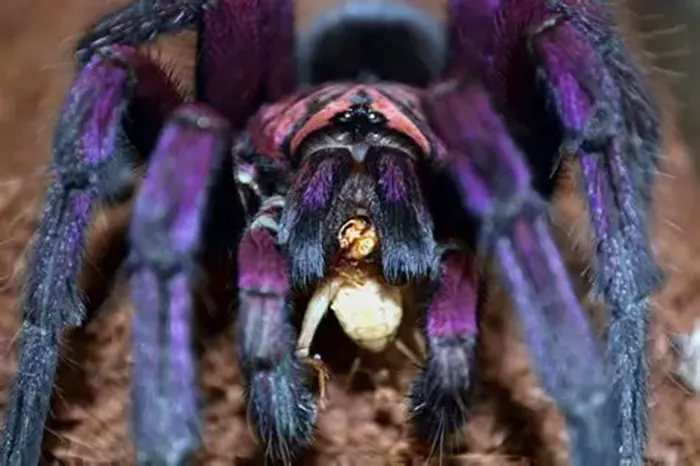
The Purple Tree Spider Tarantula (scientific name: Poecilotheria metallica) is an exotic species of tarantula known for its strikingly beautiful appearance and fascinating behaviors. Often referred to as the Gooty Sapphire Ornamental, this species is highly coveted by tarantula enthusiasts for its vibrant purple-blue coloration and impressive size. However, owning a Purple Tree Spider comes with its own set of challenges, requiring a deep understanding of its habitat, diet, and behavioral traits.
Whether you are a seasoned arachnid enthusiast or a newcomer to the world of tarantulas, this article will take you on a journey through everything you need to know about the Purple Tree Spider. From its natural habitat to care tips and common misconceptions, we will cover all aspects of this exotic creature.
Let’s dive in!
Natural Habitat of the Purple Tree Spider Tarantula
The Purple Tree Spider Tarantula is native to the forests of India, particularly in the Andhra Pradesh region, where it thrives in humid, tropical environments. It is often found in the canopy of trees, which is where it spends most of its time in the wild. These spiders create silk-lined retreats in tree branches and high up in the foliage, where they stay hidden from potential predators.
Their habitat is crucial for their survival, as they require specific humidity levels and temperatures to thrive. If you’re planning to keep one as a pet, it’s important to mimic these conditions in captivity as closely as possible.
Appearance and Coloration
One of the most captivating features of the Purple Tree Spider Tarantula is its vibrant coloration. The purple-blue hues of its legs and body make it stand out among other tarantula species. The intensity of the color is most prominent in males, although females also exhibit this striking appearance.
Their body is covered in fine, silky hair, and they have long, slender legs that allow them to climb and move quickly in the trees. This tarantula’s unique appearance, especially its bright blue legs, has earned it a spot in many enthusiasts’ collections.
Behavior and Temperament
The Purple Tree Spider Tarantula is considered an arboreal species, meaning it primarily lives in trees. These spiders are active climbers and are most comfortable when they have ample vertical space to explore. While they are generally not aggressive, they can be defensive if they feel threatened. They have been known to hiss or flick their hairs as a defense mechanism, which is a warning sign that they should not be disturbed.
In terms of temperament, the Purple Tree Spider is not recommended for beginners. These tarantulas can be skittish and may not enjoy being handled frequently. Their defensive behavior and fast movements make them better suited for experienced keepers who understand tarantula handling.
Diet and Feeding Habits
Purple Tree Spider Tarantulas are carnivorous, and their diet consists mainly of insects and small vertebrates. In the wild, they prey on a variety of creatures, including crickets, grasshoppers, and small lizards. As pets, they can be fed a diet of crickets, roaches, and occasionally, mealworms.
It’s important to feed your tarantula in moderation. Overfeeding can lead to obesity, which can affect their overall health. Additionally, make sure that the food you offer is appropriately sized—too large of a prey item can be dangerous.
Feeding Tip:
When feeding your Purple Tree Spider, make sure the prey item is alive and moving. This will trigger the spider’s hunting instincts, providing it with the mental stimulation it needs. However, always monitor the feeding process to ensure that the prey is not too large.
Caring for Your Purple Tree Spider Tarantula
Setting Up the Enclosure
The right enclosure is critical for the well-being of your tarantula. Here’s what you need to know:
Size: For an adult Purple Tree Spider, a 20-30 gallon vertical tank is ideal. The enclosure should be tall, as these tarantulas are arboreal and require vertical space.
Substrate: Use a moist substrate like coconut fiber or peat moss to maintain the humidity. Make sure the substrate is at least 3-4 inches deep, as the tarantula may burrow and create a retreat.
Temperature and Humidity: These tarantulas thrive in warm and humid environments. The temperature should be kept between 75-85°F (24-29°C), and the humidity should be maintained at 70-80%. You can achieve this by misting the enclosure lightly and providing a humid hide.
Hiding Places: Purple Tree Spiders prefer to hide during the day, so provide branches, cork bark, and artificial plants to mimic their natural environment.
Handling
As mentioned earlier, the Purple Tree Spider is best left undisturbed, especially for beginners. If you must handle your tarantula, use tongs or a similar tool to coax it into a container. Never attempt to pick it up with your hands, as this could cause stress or injury to both you and the spider.
Molting
Tarantulas molt regularly throughout their lives, especially during their growth stages. Molting is a vulnerable time for spiders, and they often become sluggish or reclusive during this process. You should avoid handling them during this period, as the spider’s exoskeleton is soft, and any mishandling could cause serious harm.
Lifespan and Growth
Purple Tree Spider Tarantulas can live anywhere from 8 to 12 years, with females living longer than males. The growth rate of these tarantulas can vary depending on factors like diet and environmental conditions. They can reach a leg span of up to 8 inches (20 cm) in size, with females growing larger than males.
It’s important to note that their growth process is relatively slow. They can take several years to reach full maturity, and their molts will become less frequent as they age.
Common Misconceptions
There are a few misconceptions about the Purple Tree Spider that you should be aware of:
“They are aggressive.” While this species can be defensive, they are not naturally aggressive. They only act out of fear or discomfort.
“They are hard to keep.” While they do have specific care requirements, as long as you replicate their natural habitat and offer proper care, they can thrive in captivity.
“They don’t need much attention.” Purple Tree Spiders are low-maintenance compared to some other pets, but they do need regular feeding, humidity control, and appropriate enclosure setup.
Conclusion
In summary, the Purple Tree Spider Tarantula is a beautiful and fascinating creature that can make a great addition to the collection of an experienced tarantula keeper. With proper care, it can thrive in captivity and live a long, healthy life. By providing the right environment, diet, and handling, you can ensure that your tarantula remains happy and healthy.
Related topics: