
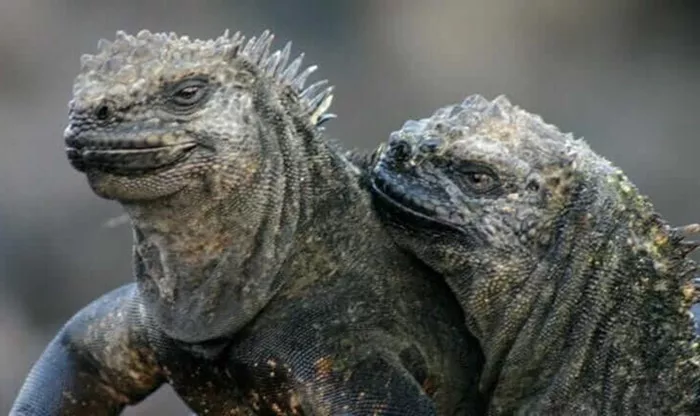
Iguanas and marine iguanas are both fascinating reptiles, but they inhabit different environments and have distinct characteristics that set them apart. While both belong to the same family, Iguanidae, marine iguanas have evolved specific adaptations that allow them to thrive in the harsh conditions of the Galápagos Islands, where they are found. Understanding these differences can enhance our appreciation of these unique species and their roles in the ecosystems they occupy.
Introduction: Iguanas and Marine Iguanas
Iguanas are a group of large lizards that can be found in various parts of the world, particularly in Central and South America. They are famous for their impressive size, beautiful green or grayish skin, and long tails. Marine iguanas, on the other hand, are a special species of iguana that have adapted to life in coastal environments, spending much of their time in the ocean.
While both iguanas and marine iguanas share many similarities, they also have several key differences in terms of behavior, habitat, physical appearance, and diet. In this article, we will explore these differences in detail, providing insights into their evolutionary adaptations and how they have managed to survive in their respective environments.
Physical Differences: Size, Shape, and Color
One of the most noticeable differences between iguanas and marine iguanas is their size and body structure. While iguanas tend to be larger, with some species growing up to 6.5 feet in length, marine iguanas are generally smaller. The largest species of marine iguana reaches about 5 feet in length. This size difference is not only a result of genetic factors but also a reflection of the animals’ differing lifestyles.
Marine iguanas also have a more streamlined body, which helps them swim more efficiently in the ocean. Their limbs are shorter and adapted for both land and aquatic environments. In contrast, terrestrial iguanas have longer legs designed for walking, climbing, and navigating through dense vegetation. Marine iguanas also have flattened tails, which they use as a rudder when swimming. These adaptations are essential for their survival in the ocean.
In terms of color, marine iguanas tend to be darker, with shades of black or dark gray. This coloration helps them absorb heat from the sun, which is vital for their thermoregulation, especially after swimming in the cold waters of the Pacific Ocean. Iguanas, on the other hand, can vary widely in color, depending on the species. They can be green, brown, or even a vibrant orange or blue, which helps them blend into their tropical habitats.
Habitat: Land vs. Sea
Iguanas are primarily terrestrial reptiles, living in forests, deserts, and grasslands. They are adapted to survive in a variety of environments, including tropical rainforests and arid areas. Some species, like the green iguana, are arboreal and spend much of their time in trees, while others prefer to stay on the ground.
Marine iguanas, however, are unique in that they have adapted to life in the sea. Native to the Galápagos Islands, marine iguanas live along rocky shorelines, where they can easily access the ocean. They are the only known species of iguana to have evolved to live in such an environment. Unlike other iguanas that rely on land for food and shelter, marine iguanas forage in the ocean, diving to find algae and other marine plants to eat.
Marine iguanas have specialized behaviors and physical adaptations that allow them to survive in such an extreme environment. For example, they can dive to depths of up to 30 meters (about 98 feet) to graze on algae growing on the ocean floor. After spending time in the cold waters, marine iguanas return to land to warm up in the sun, using large rocks and boulders to bask in the warmth.
Dietary Differences: Herbivores vs. Marine Vegetation
Both iguanas and marine iguanas are herbivores, but their diets are quite different. Iguanas typically eat a variety of plants, including leaves, flowers, and fruit. They are particularly fond of tender leaves from trees and shrubs, which make up the majority of their diet. Iguanas are also known to feed on flowers, seeds, and even the occasional insect or small animal, especially when food is scarce.
Marine iguanas, however, have adapted to feed on marine vegetation, specifically algae. They are the only iguana species that can dive into the ocean to graze on underwater plants. Their diet consists mostly of green algae, although they may also consume red and brown algae. Marine iguanas have specialized digestive systems that help them process the saltwater and extract the nutrients they need from marine plants.
While both species are herbivores, the availability of food sources is a critical factor that drives the difference in their diets. Iguanas rely on land-based vegetation, while marine iguanas have evolved to forage in the ocean, making their diet more specialized.
Behavioral Differences: Territoriality and Social Structures
Iguanas and marine iguanas also differ in terms of their behavior and social structures. Iguanas are known for their territorial nature. Male iguanas, in particular, are highly protective of their territories and will often engage in physical displays or combat to defend their space. These displays may include head bobbing, body posturing, and even fighting with other males. Female iguanas, on the other hand, tend to be more solitary and are less likely to engage in territorial disputes.
Marine iguanas, on the other hand, are not as territorial as their land-dwelling cousins. They form loose social groups, particularly during the breeding season. These groups are often centered around basking spots or areas where food is abundant. While marine iguanas may interact with one another, they are not as aggressive in defending territory. Instead, they focus on survival in their harsh, resource-limited environment.
Additionally, marine iguanas are well known for their unique behavior of basking in the sun after coming out of the water. This sunbathing allows them to warm up after diving into the cold ocean. Iguanas, in contrast, spend more time in trees or on the ground, depending on the species, and do not have the same need for sunbathing after physical exertion.
Reproduction: Nesting and Offspring
Both iguanas and marine iguanas reproduce by laying eggs, but their reproductive strategies vary. Iguanas lay their eggs in burrows or hidden areas on land, where the female digs a hole and deposits her eggs. Afterward, the female leaves, and the eggs incubate until they hatch. The eggs typically take several months to hatch, and the young iguanas are independent from birth.
Marine iguanas have a similar reproductive strategy, but there are some key differences due to their aquatic lifestyle. Marine iguanas lay their eggs in burrows on land, but they are more likely to nest in areas with high humidity, which helps maintain the necessary temperature for egg incubation. The female marine iguana will often return to the same nesting site year after year.
Marine iguanas also have a fascinating breeding behavior. During the breeding season, males will compete for access to females by displaying their size and strength. The larger males, with the most vibrant colors, are usually the most successful in attracting mates.
Adaptations for Survival: Evolution and Specialization
Iguanas and marine iguanas have evolved unique adaptations that help them survive in their respective environments. Iguanas have developed strong limbs and claws for climbing trees, as well as a prehensile tail that allows them to navigate through dense vegetation. Their ability to regulate body temperature through basking in the sun is another key adaptation that enables them to thrive in a variety of climates.
Marine iguanas, on the other hand, have developed specialized features that make them perfectly suited for life in the ocean. Their flattened tails, short limbs, and streamlined bodies are all adaptations that aid in swimming. Additionally, marine iguanas have a unique ability to excrete excess salt from their bodies through specialized glands located near their eyes, which allows them to thrive in the salty waters of the ocean.
Conclusion: A Fascinating Contrast
In conclusion, while iguanas and marine iguanas share some similarities, they are distinct species with unique adaptations that reflect their respective environments. Iguanas are land-dwelling reptiles, well-suited to forests, deserts, and grasslands. Marine iguanas, on the other hand, have evolved to thrive in the harsh, coastal environment of the Galápagos Islands, where they have become specialized ocean foragers. Both species are remarkable in their own right, showcasing the diversity and adaptability of life on Earth..
Related topics: