
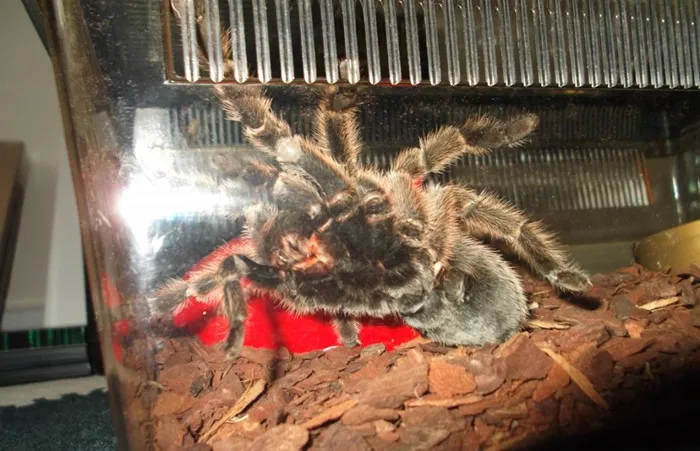
If you’ve recently welcomed a Chilean rose tarantula (Grammostola rosea) into your home, you might be wondering: How do I properly set up its tank? It may look like just a spider in a box, but the truth is far more exciting—and crucial. Tarantulas might not bark or meow, but they rely on their environment to survive and thrive. Setting up the right tank isn’t just about putting dirt in a box. It’s about replicating the natural habitat of a desert-dwelling, slow-paced, ground-loving spider. In this guide, I’ll walk you through everything you need to know, from the right tank size to lighting, humidity, and even decoration ideas.
We’ll go step by step so that even complete beginners can feel confident. You’ll understand why substrate depth matters, how temperature affects activity, and even how to decorate without causing stress. As a reptile expert and someone who has worked with arachnids for years, I promise this process is easier than it seems—once you know what to focus on.
Tank Size: How Big Is Big Enough?
A Chilean rose tarantula doesn’t need a mansion. It needs a space that allows it to move around without stress but not so large that it feels lost. A good rule is to choose a tank that is three times the spider’s leg span in width, twice the leg span in length, and not more than one foot high. Most adult females can be kept comfortably in a 5 to 10-gallon glass or acrylic enclosure.
Why not go bigger? Because this species is a terrestrial spider. They spend most of their lives on the ground. If you provide too much vertical space, there’s a risk the tarantula may climb and fall—a serious injury for a creature with such a delicate abdomen. Just think of it like a hamster in a maze: too many empty spaces, and it gets confused and stressed.
Also, tanks with secure lids are essential. These spiders are surprisingly good at pushing open loose tops. Always choose enclosures with tight, ventilated lids.
Substrate: What to Put at the Bottom of the Tank
Your tarantula doesn’t want a soft bed; it wants something more like desert soil. The substrate, or material at the bottom of the tank, needs to mimic the dry, firm ground of its natural Chilean habitat. Good options include:
Coconut fiber (coir)
Peat moss
Organic topsoil (chemical-free)
Avoid anything with added fertilizers or bark mulch, as these can be toxic. The goal is to make the substrate at least 3 to 4 inches deep. For larger females, go up to 5 inches. This gives your tarantula the chance to burrow slightly or dig a shallow retreat, which makes it feel safe and secure.
Compact the substrate gently with your hands. You want it firm enough to hold its shape if your spider decides to dig, but not rock hard. Think of it like slightly damp coffee grounds—easy to shape but not messy.
See Also: Can You Safely Hold This Tarantula?
Temperature: Keeping Things Warm, But Not Hot
Chilean rose tarantulas thrive in room temperatures ranging from 68°F to 75°F (20°C to 24°C). This makes them ideal pets for most homes, as they don’t need complex heating equipment. However, if your room falls below 65°F consistently, you may want to add a low-wattage heat mat mounted to the side of the enclosure—not underneath, as these spiders burrow and could overheat if the bottom gets too warm.
Don’t use heat lamps or overhead lights. Not only do they dry out the tank too quickly, but tarantulas are nocturnal. Bright light can stress them out. A gentle ambient temperature and a dark, quiet corner are more than enough to keep your pet comfortable.
Tip: If you’re unsure of your tank’s internal temperature, place a digital thermometer at ground level. That’s where your tarantula lives, and that’s where it matters most.
Humidity: Dry, But Not Dusty
Chilean rose tarantulas come from semi-arid scrublands, so they don’t like it too moist. Unlike rainforest species, they prefer low humidity, usually around 50% to 60%. Over-humidifying the enclosure can lead to mold or respiratory stress. Instead, focus on keeping the air dry but not bone-dry.
To maintain this balance, lightly mist one corner of the tank once or twice a week. Not the whole tank. Just a small patch. This gives your tarantula the choice to seek out a slightly more humid area if needed. Always provide a shallow water dish with clean water, refilled every few days. If you see your spider standing over the dish, don’t be alarmed—it’s drinking.
Tip: Mold growth or a musty smell usually means you’re misting too much. If your substrate feels wet to the touch, give it more time to dry out.
Ventilation: Don’t Let the Air Get Stale
Proper air circulation is critical. Without it, mold can grow, and your spider may suffer from respiratory problems. Choose a tank that has cross-ventilation holes, meaning holes on the sides of the enclosure as well as on top.
Avoid fully sealed containers, even if they look secure. Your tarantula needs airflow, not just containment. If you’re using a converted plastic bin or acrylic case, drill small ventilation holes—about the size of a pencil tip—on opposite sides for passive airflow.
Good airflow also helps maintain the low humidity levels this species prefers. A good trick? Fog up the tank lid with your breath. If the condensation stays there for more than five minutes, you likely need better airflow.
Lighting: Keep It Natural and Subtle
You might think your tarantula would enjoy a spotlight or a decorative glow, but that’s more for us than them. In the wild, Chilean rose tarantulas spend most of their time hiding under rocks or in burrows. Bright lights can stress them out or throw off their natural rhythm.
Use only ambient room lighting. If your tarantula’s enclosure is in a dark corner, indirect light from a nearby lamp is enough. Never shine direct light into the tank. If you want to view your spider during evening hours, use a red light bulb or low-level blue moonlight bulb—tarantulas can’t detect red light well, so it doesn’t disturb them.
This keeps the tarantula calm while allowing you to enjoy your pet.
Hides and Decorations: Function Over Flash
It’s tempting to make your tarantula’s home look like a jungle, but Chilean rose tarantulas are more introverted than you might think. They want a simple, dark hiding spot, like a piece of cork bark, a half-buried flower pot, or a curved ceramic shelter.
Don’t overfill the tank with plastic plants or fake vines. These add visual clutter and can interfere with cleaning. A few natural-looking items, like rocks (not sharp), dried leaves, and one or two pieces of bark, will do the trick. The main goal is to provide cover.
If you want a more natural aesthetic, aim for a desert-style setup with sand-colored substrate, a small dried branch, and a gentle slope to the terrain.
Tank Maintenance: Clean, But Not Sterile
Unlike reptiles or fish, tarantulas are low-maintenance in terms of hygiene. They don’t produce much waste, but that doesn’t mean you can forget about cleaning. Spot-clean any leftover prey parts, molts, or moldy substrate. Replace water every 2–3 days and check for algae or substrate contamination around the dish.
You don’t need to do full substrate changes often—once every 6 to 12 months is enough, unless you notice mites or mold. Be gentle during cleaning. Avoid disturbing the spider, especially if it’s molting or hiding.
If your tarantula has just molted, wait at least a week before cleaning anything near it. They’re extra sensitive during this time, almost like a soft-shelled crab.
Special Notes for Juveniles and Spiderlings
Young Chilean rose tarantulas have slightly different needs. They’re more sensitive to humidity and more likely to dry out. For slings (spiderlings), use small enclosures with less ventilation and slightly higher humidity, around 70%, until they grow.
Use smaller hides and make sure their prey is appropriately sized. If you’re feeding live prey, it should be no larger than the spider’s abdomen.
These tiny spiders can molt more often, so make sure they’re not disturbed during that phase. Once they hit about 2 inches in size, you can transition them to the adult tank setup.
Conclusion
Creating the perfect Chilean rose tarantula tank setup is not about making a fancy display—it’s about providing a space that mirrors the spider’s needs in the wild. With the right size tank, dry substrate, minimal humidity, and proper hides, your tarantula will feel safe, calm, and healthy.
What’s truly amazing about keeping these creatures is how low-maintenance yet deeply fascinating they are. As long as you respect their natural instincts and avoid overhandling, your rosy friend will reward you with years of unique behavior and quiet companionship. A well-set-up tank is not just a home—it’s the foundation of your tarantula’s well-being.
Related topics: