
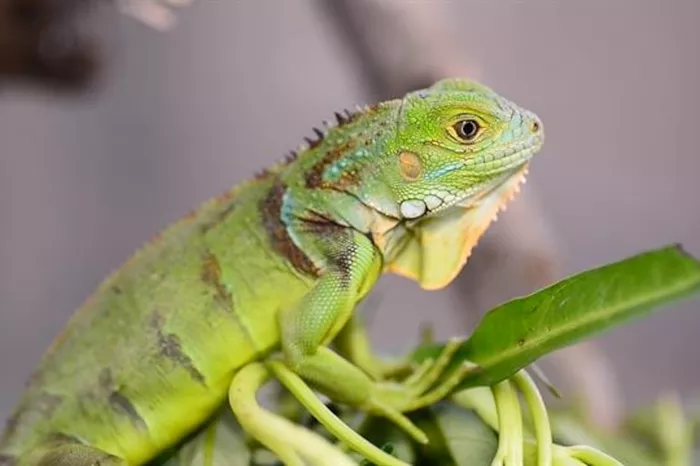
What if the tropical giant relaxing on a tree branch isn’t just a lizard but a leaf-eating marvel with ancient roots? You may know the green iguana as a scaly pet or a zoo exhibit, but in the wild, it leads a surprisingly complex life. Many first-time owners and nature lovers find themselves puzzled by this animal’s behavior, needs, and biology. So let’s dive deep into the world of the green iguana—with everything from habitat and diet to care tips and conservation. Ready to meet the real green iguana? Let’s go!
Introduction: The Rainforest Dinosaur in Your Backyard
Green iguanas (scientific name: Iguana iguana) are large herbivorous lizards that come from Central and South America. They often grow over 5 feet long, tail included, and have a body covered in green, gray, or even orange scales. With their spiny backs and expressive eyes, they look like tiny dinosaurs—and in a way, they are! They belong to an ancient lineage of reptiles that thrived long before mammals walked the Earth.
These lizards aren’t just pretty to look at. They play important roles in their ecosystem and have become surprisingly popular pets in recent decades. However, their care is more complex than many people realize. So whether you want to observe them in nature, keep one at home, or just learn more, it’s time to get to know this fascinating creature.
Natural Habitat: Life in the Canopy
Imagine walking through a humid rainforest. High above the ground, where leaves filter sunlight into golden streaks, lives the green iguana. These reptiles are arboreal, meaning they spend most of their time in trees. Their long toes and sharp claws are perfect for gripping bark and branches.
Their native range stretches from southern Mexico through Central America and into much of South America. You might even spot them on Caribbean islands. In the wild, they prefer areas near rivers and lakes. Why? Because if threatened, they can leap from a branch and splash into the water below to escape predators. They are excellent swimmers!
Appearance: More Than Just Green
Despite the name “green” iguana, not all of them are purely green. Young iguanas are often bright green, but as they grow, their color can darken into gray, brown, or even rusty orange. Males, especially during mating season, often become more vibrant.
They have a row of spines running down their back, a large dewlap (the flap of skin under the chin), and long tails that can be used for defense. Some people mistake their calm appearance for laziness, but don’t be fooled. They can move quickly if they want to.
Diet: The Leaf-Loving Lizard
Here’s something you might not expect: green iguanas are strict herbivores. That means they eat only plants. No bugs, no meat, no cheese (yes, some owners have tried).
In the wild, they feed on leaves, flowers, fruits, and shoots. In captivity, their diet should mimic this as much as possible. Dark leafy greens, such as collard greens, mustard greens, and dandelion leaves, are ideal. You can also offer squash, mango, and hibiscus flowers for variety.
You might wonder: why no animal protein? The answer lies in their digestion. Green iguanas rely on a complex fermentation process in their gut to break down plant matter. Animal protein can overwhelm their system and lead to gout, a painful condition caused by too much uric acid.
Behavior: What Is the Iguana Thinking?
Green iguanas are diurnal, meaning they are active during the day. They spend a lot of time basking in the sun to regulate their body temperature. Like many reptiles, they are ectothermic (cold-blooded), so they depend on external heat to stay active.
In the wild, they are usually solitary. Males can be territorial, especially during the breeding season. They use head bobs, dewlap displays, and tail whipping to communicate. In captivity, understanding this body language is key to avoiding bites or aggression.
Many iguanas form routines. They might bask in the same spot every day or expect food at a certain time. Once they trust their owner, they can become tame, though usually not cuddly. Think of them more like roommates than lap pets.
Reproduction: Laying the Future in Sand
Breeding season usually occurs during the dry months. Males display vivid colors and become more aggressive to compete for females. Once mating occurs, the female will look for sandy or soft soil to lay her eggs.
A female iguana can lay between 20 to 70 eggs in one clutch. She buries them and leaves. After about 10 to 15 weeks, the eggs hatch. The baby iguanas emerge fully independent. Unlike mammals, reptiles don’t provide parental care.
Only a small number of these hatchlings survive to adulthood due to predators like snakes, birds, and even other iguanas.
Health: The Challenges of Captivity
In captivity, green iguanas often suffer from health problems, especially when their needs aren’t met. One common issue is metabolic bone disease (MBD), a condition caused by lack of calcium and insufficient UVB lighting. MBD weakens their bones, making movement painful or even impossible.
Think of UVB lamps as “artificial sunlight” for reptiles. Without them, iguanas can’t make vitamin D3, which is crucial for absorbing calcium.
Other health risks include:
Respiratory infections (often due to low humidity)
Burns (from hot lamps placed too close)
Dehydration (they need daily misting and access to clean water)
Regular vet checkups, proper lighting, and a correct diet can prevent most issues.
Temperature and Lighting: The Sun and Shade Balance
Green iguanas need warmth to thrive. Their enclosure should offer a gradient—warm on one side, cooler on the other. The basking area should reach about 95°F (35°C), while the cooler side can drop to around 75°F (24°C).
UVB lighting must be on for about 10-12 hours daily. Replace the bulbs every 6 months even if they still light up—the UV output diminishes over time.
Humidity matters, too. Aim for 60-80%. You can achieve this by misting the enclosure or using a fogger. Without proper humidity, your iguana may shed poorly or become dehydrated.
Housing: More Than Just a Cage
These lizards grow large. Adults need a custom-built enclosure that is at least 6 feet tall, 8 feet long, and 4 feet wide. Vertical space is important because they love to climb. Use branches, hammocks, and sturdy platforms.
The enclosure should also have:
A substrate (floor material) that’s easy to clean
Secure doors (iguana escapes are surprisingly common!)
Plants (live or fake) for mental stimulation
Cleaning is crucial. Spot-clean daily and do a full cleaning once a week. Green iguanas poop a lot, and it smells bad.
Handling: The Right Way to Bond
Handling a green iguana requires patience. Start slow, allowing it to get used to your presence. Avoid grabbing from above (it feels like a predator attack). Instead, scoop from underneath and support its body.
Some iguanas never fully tame, while others tolerate light handling. Each has its own personality. Watch for signs of stress: tail whipping, puffing up, or trying to escape.
Never forget: they have sharp claws and strong tails. Respect goes a long way in building trust.
Conservation: When Wild Meets Urban
While green iguanas are common in the pet trade, their populations in the wild face challenges. Habitat destruction from agriculture and urban development reduces their natural homes.
On the flip side, in places like Florida and Puerto Rico, released pet iguanas have become invasive species. They damage local plants, dig up roads, and compete with native animals.
So what can you do? Support conservation programs, avoid releasing pets into the wild, and educate others about responsible ownership.
Fun Facts: Surprises About the Green Iguana
Their tails can regrow if broken off—though the new one may look different.
They can hold their breath for up to 30 minutes underwater!
They have a “third eye” on top of their head—a light-sensitive organ called the parietal eye that helps them detect predators from above.
Conclusion
The green iguana is more than a tropical ornament. It is a clever, sensitive reptile that demands respect, attention, and care. From their role in rainforest ecosystems to the unique challenges of keeping them as pets, these lizards are as complex as they are beautiful.
If you’re planning to bring one into your home, be prepared to offer not just food and shelter, but an environment that mirrors their jungle origins. If you simply admire them from afar, you now have a deeper understanding of their world.
Isn’t it amazing how a scaly creature from the treetops can teach us so much?
Related topics: