
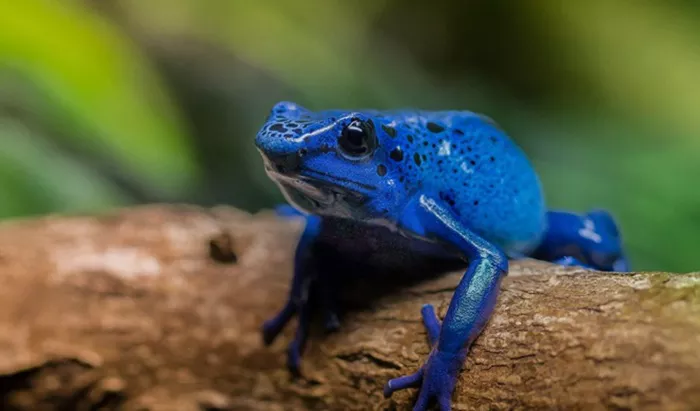
Blue poison dart frogs, scientifically known as Dendrobatoides tinctorius, are some of the most striking and colorful creatures in the amphibian world. With their vivid, electric blue appearance and an intriguing mix of patterns, these frogs have captivated nature enthusiasts and reptile owners alike. Whether you are a seasoned zoologist or just a curious nature lover, this article will provide an in-depth exploration of what makes blue poison dart frogs so unique.
Introduction: A Glimpse into the Blue Mystery
Imagine walking through a dense tropical rainforest, where the air is humid, the sounds of insects echo all around, and bright colors are splashed across the forest floor. Among the vibrant greens, browns, and yellows, you spot a small, striking creature hopping across the leaves: a blue poison dart frog. The brilliant blue hue catches your eye, and you wonder, how does such a small creature maintain such a bold and distinct appearance?
Blue poison dart frogs stand out not only because of their color but also due to their fascinating biology and unique adaptations. Their striking blue coloration is a powerful defense mechanism, a warning to predators that they are toxic and should not be eaten. But what else contributes to their vivid look? Let’s dive in to understand this incredible species better!
The Dazzling Blue: What Makes It So Bright?
Coloration
One of the most defining characteristics of the blue poison dart frog is, of course, its blue color. The shade of blue can vary slightly depending on the individual frog, but it generally ranges from a vivid, cobalt blue to a deeper, almost indigo shade. This color is not merely for show—it serves a critical function in the frog’s survival.
In the wild, blue poison dart frogs accumulate toxins from their diet, which includes ants, termites, and other small arthropods. These toxins, known as batrachotoxins, are harmful to predators and give the frog its bright coloration as a visual warning. Think of it like a neon “Do Not Eat” sign flashing in the eyes of any potential predators, such as birds, snakes, or larger amphibians.
Patterns and Spots
Apart from the bold blue base, blue poison dart frogs also feature darker spots or speckles scattered across their bodies. These spots can range from black to dark blue or even green. The distribution of these spots varies from frog to frog, making each one unique.
Imagine looking at a work of art—a canvas painted with a bright blue background and dotted with dark spots. These markings not only contribute to the frog’s visual appeal but also help camouflage it in the complex environments of the rainforest. The combination of blue and black patterns disrupts the frog’s outline, making it harder for predators to spot.
See Also: Discover the Best Sleeping Spots of Blue Poison Dart Frogs
Size and Shape: Tiny but Mighty
Blue poison dart frogs are small creatures, with an average size ranging from 1.5 to 2 inches (3.8 to 5 cm) in length. Despite their small size, their vibrant color and striking features make them stand out in their environment. To put this into perspective, they are about the size of a human pinky finger!
Their bodies are slender, and their legs are slightly elongated, giving them an agile and nimble appearance. Blue poison dart frogs are excellent jumpers, and their strong legs help them leap from leaf to leaf or branch to branch. Their small size and compact body help them move quickly through the forest, escaping potential threats and quickly finding food.
Comparison to Other Dart Frogs
While blue poison dart frogs are undeniably eye-catching, they belong to a group of frogs known as “dart frogs.” This group is known for their brilliant colors, which range from bright yellows and reds to oranges and greens. However, the blue variant stands out as one of the most beautiful and, in some cases, the most toxic of them all. So, if you’ve seen dart frogs in other colors, you can compare them to the blue variety, which takes vibrancy to a whole new level.
Habitat: Where Do These Frogs Live?
Blue poison dart frogs are native to the rainforests of Central and South America, specifically in regions such as Panama and western Colombia. These habitats are humid, warm, and offer dense vegetation, perfect for hiding from predators. If you were to visit these rainforests, you might find them living in areas with plenty of leaf litter, small pools of water, and sheltered nooks in the forest floor.
Living Amongst the Greenery
When you look at a rainforest, the vast greenery might make it seem like an impenetrable maze. However, blue poison dart frogs are skilled at hiding in plain sight. Their blue coloration contrasts sharply with the dark green leaves, but the black spots break up their shape and make them blend into the environment. When looking for these frogs in the wild, you’d need to have a keen eye, as their tiny size and clever camouflage make them hard to find.
Behavior and Movement: A Dance of Survival
Though small, blue poison dart frogs are incredibly active. You might often see them hopping around, searching for food, or defending their territory. They communicate with each other using high-pitched calls, which can sound like little chirps. However, their most remarkable behavior is how they interact with their environment to stay safe.
How Do They Avoid Predators?
When it comes to predators, blue poison dart frogs have an ingenious survival strategy: they don’t need to outrun them. Instead, they rely on their toxins and their distinctive color to ward off potential threats. This method, known as aposematism, is one of nature’s most fascinating survival strategies. Their poison makes them unpalatable to many animals, ensuring that they’re rarely attacked by predators.
In some cases, however, the frogs may use their environment to hide as well. They seek refuge under the dense foliage or within small crevices, where their colors blend in seamlessly with the surroundings. These frogs are also known for their secretive nature, typically avoiding open spaces unless absolutely necessary.
Diet and Feeding: The Toxic Ingredients
What’s on the menu for a blue poison dart frog? Surprisingly, these frogs feed on ants, termites, small beetles, and other tiny invertebrates found in their rainforest habitat. It is this diet that plays a crucial role in their toxic defense system.
The frogs ingest toxic compounds from their prey, particularly from ants. Over time, these toxins accumulate in their bodies, making them highly toxic to would-be predators. If you were to imagine it, it’s like eating a highly potent, naturally occurring chemical cocktail, which, in turn, gives the frog its toxic properties. This dietary link to their toxicity is one of the most fascinating aspects of their biology.
Reproduction: Tiny Tadpoles in a Huge World
Blue poison dart frogs, like most other dart frogs, engage in interesting and unique mating rituals. The males are known to call out to attract females, and once they’ve paired up, the female lays her eggs in a moist, protected location. After the eggs hatch, the male transports the tiny tadpoles to water-filled pools, where they develop into juvenile frogs.
Interestingly, the tadpoles of blue poison dart frogs are not born with the toxins that make the adults so poisonous. The toxins they accumulate come later, as they feed on the same insects that contributed to the adults’ toxicity. This is one of the reasons why blue poison dart frogs in captivity do not exhibit the same levels of toxicity—they lack the specific diet that would trigger toxin production.
Fun Facts About Blue Poison Dart Frogs
They Don’t Start Off Toxic: As mentioned, blue poison dart frog tadpoles are not born toxic. The toxic compounds are obtained as they mature and consume their typical diet of ants and termites.
Lifespan: In the wild, these frogs can live up to 10 years, while in captivity, their lifespan can be slightly shorter, usually around 5-7 years.
Bright Blue Is Not Always Safe: While the blue coloration of the frog serves as a warning to predators, it also makes them highly visible to other animals, which is why they rely on their toxins so heavily for defense.
Conclusion
The Blue Poison Dart Frog, with its stunning blue hue, is a remarkable example of nature’s ingenuity. From its vibrant coloration to its toxic defenses, it is a creature that commands attention and respect. While it may be tiny, its beauty and fascinating biological adaptations make it one of the most remarkable amphibians on the planet.
Related topics: