
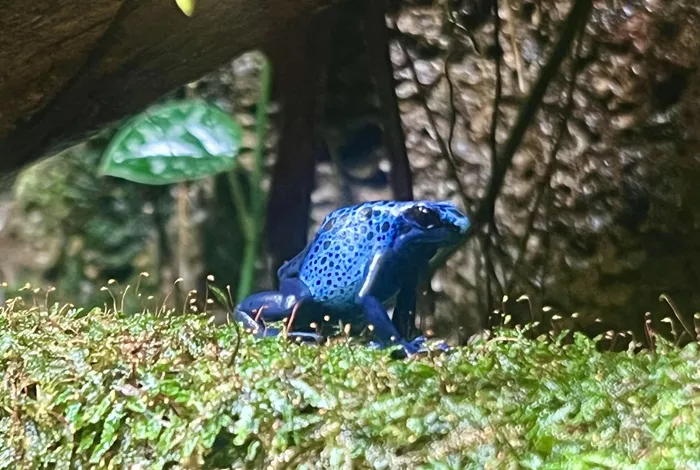
Blue poison dart frogs (Dendrobates tinctorius “azureus”) are some of the most striking creatures in the animal kingdom, with their vivid blue colors and intricate patterns that seem to shout, “Look at me!” But, behind their bright exterior lies a fascinating world of behavior and adaptation that is as interesting as their appearance. One of the many questions that people often ask is: where do blue poison dart frogs sleep?
Understanding the sleeping habits of this exotic amphibian isn’t just about curiosity—it helps us understand their habitat, their survival strategies, and how they thrive in the wild. But don’t worry, this isn’t going to be an academic lecture filled with complex terms. Instead, we’ll take a journey through the blue poison dart frog’s world, with simple language and relatable examples to make the topic easy for everyone to grasp.
So, let’s dive in and explore where these little creatures go when the sun sets, and what their sleeping habits tell us about their lifestyles!
The Blue Poison Dart Frog’s Natural Habitat: Where They Live and Why It Matters for Sleep
Before we talk about where they sleep, it’s important to understand where these frogs live. Blue poison dart frogs are native to the rainforests of Suriname, a small country in South America, and parts of Brazil. Imagine a place filled with lush green trees, thick moss, and streams that glisten under the tropical sun. That’s their home!
These frogs spend most of their time on the forest floor, hopping among the leaves and moss, or sometimes on trees near the ground. They thrive in humid, moist environments, which means they need shelter and protection, especially when the night falls. But where do they go to sleep when the temperatures drop, and the world around them grows quieter?
Natural Sleeping Spots: Hiding in Plain Sight
The first thing you should know is that blue poison dart frogs are not fans of wide-open spaces. They prefer hidden, secure spots that provide them with both safety from predators and the right conditions for resting. Their primary choice of sleeping locations is often in cool, moist areas like leaf litter, crevices between rocks, and small nooks in trees.
Think of it like this: Imagine you’re a tiny frog in a giant, wild forest. The last thing you’d want is to sleep in an open space where a predator might spot you. Instead, you’d look for a cozy hideaway—much like how you might retreat to your bedroom when you want to feel safe and relaxed.
In the wild, blue poison dart frogs have adapted to use the natural elements around them. When night falls, they will often find a sheltered spot under large leaves or between the damp roots of trees. These spots keep them safe and provide the right temperature and moisture levels they need to survive.
Why Moisture is Key: Why Do They Need Humidity to Sleep?
One of the key factors in their sleep behavior is moisture. Blue poison dart frogs, like all amphibians, breathe through their skin. This means that keeping their skin moist is crucial for their survival. If their skin dries out, it can lead to dehydration, making them vulnerable to illness or even death.
See Also: How Do Blue Poison Dart Frogs Thrive in the Wild?
Imagine you’re sitting in a dry room for hours—you’d probably start feeling uncomfortable, right? Now, think of these frogs as living in a constant state of needing to stay hydrated. That’s why moist environments are essential, especially when they sleep. Their ideal sleeping spots are usually under thick layers of moss or in cool, shaded areas, where the moisture in the air helps keep their skin hydrated overnight. Without this moisture, they wouldn’t be able to function properly during the day, either.
The Importance of Safety: Keeping Away from Predators
Just like any other creature, blue poison dart frogs have natural predators. Birds, snakes, and larger animals are constantly on the lookout for a tasty meal. To avoid becoming dinner, these frogs choose sleeping spots that offer excellent camouflage and safe cover.
Imagine playing a game of hide-and-seek, where your goal is to blend into your surroundings so that no one can find you. That’s exactly how these frogs operate. Their bright blue colors might be striking, but they use the shadows and underbrush to hide from predators.
At night, they often sleep in places where they can’t be easily spotted—inside small nooks or hidden spots in the dense forest floor. The moist, cool spaces around leaf litter and rocks provide a perfect spot for them to sleep, safely tucked away from danger.
Sleeping Behavior: Do They Hibernate?
Unlike some frogs that hibernate through the colder months, blue poison dart frogs don’t need to go into hibernation because their tropical home doesn’t experience extreme temperature changes. However, they do become less active at night, as their primary activities happen during the day. This means they sleep through the night, usually from dusk to dawn.
See Also: What Is the Blue Poison Dart Frog’s Favorite Meal?
But don’t think they’re just lounging around and doing nothing. Even while they sleep, their bodies remain alert to their environment. If a predator or sudden threat appears, they’ll wake up, ready to jump away to safety. Their sleep may seem peaceful, but like a light sleeper, they are always ready to take action.
Blue Poison Dart Frog Sleep in Captivity
Now, what about blue poison dart frogs kept in captivity? Whether you have one as a pet or you’re observing them in a zoo, the environment plays a huge role in their sleep behavior. In a terrarium or enclosed habitat, pet owners often recreate the humid, mossy conditions of their natural habitat. These frogs will seek out similar sleeping spots—small shelters made of rocks, plants, or hollow logs.
Interestingly, captive blue poison dart frogs may not exhibit the same level of toxicity as their wild counterparts. This is because the poison they produce comes from their diet—specifically, the toxic insects they eat. When these frogs are fed a non-toxic diet, they won’t produce the same toxins. However, their sleep patterns and shelter-seeking behavior are quite similar, whether in the wild or in a controlled environment.
Why Does Where They Sleep Matter?
Understanding where blue poison dart frogs sleep gives us insight into their habitat requirements, survival mechanisms, and overall behavior. By knowing the conditions they need to thrive, we can better protect these amazing creatures.
Their need for moist, hidden environments shows us how essential it is to maintain healthy rainforests, free from deforestation. Without such environments, these frogs—and many other creatures—would struggle to survive.
Conclusion
Blue poison dart frogs sleep in some of the most clever and effective hiding spots imaginable. They make use of their environment in ways that not only help them stay safe from predators but also keep them hydrated and healthy. Whether in the wild or in captivity, their behavior is a testament to their adaptability and survival skills.
Next time you learn about these fascinating frogs, remember that their sleeping habits are just one small but significant part of their incredible lifestyle. It’s not just about finding a place to rest; it’s about choosing the perfect spot that keeps them safe, healthy, and ready for the next day.
Related topics: