
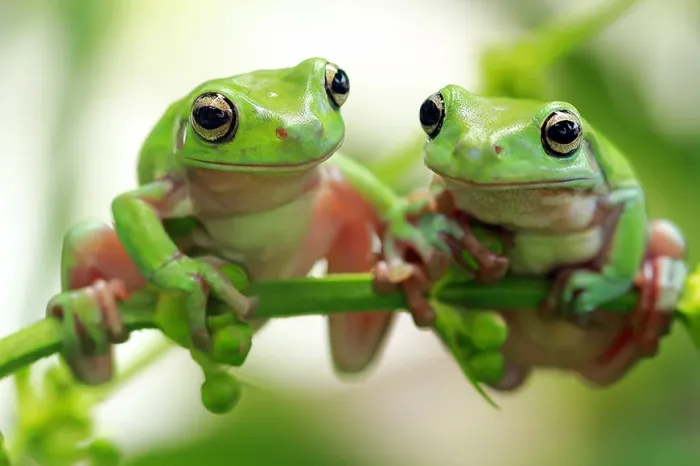
The common green treefrog is a small frog species famous for its bright green color and its ability to climb trees and plants with ease. It lives mainly in warm, humid environments like forests, wetlands, and sometimes near human dwellings where moisture is abundant. This frog is not only visually striking but also plays an important role in controlling insect populations.
Appearance and Physical Characteristics
Typically, the common green treefrog has smooth skin that can range from bright green to yellowish-green. Its size usually measures between one to two inches long. One of its most noticeable features is its large toe pads, which help it stick to leaves and branches as it moves. These toe pads are covered with tiny structures that create adhesion, allowing the frog to climb vertically and even hang upside down.
Habitat and Distribution
This frog prefers areas with plenty of vegetation and water sources. You will often find it in swamps, marshes, ponds, and forests where humidity stays high. The common green treefrog is native to parts of the southeastern United States but has adapted well to different environments within this range. It can sometimes be found near homes or gardens if there is enough moisture.
Behavior and Diet
The common green treefrog is mostly active at night when it hunts for food. Its diet consists mainly of insects such as flies, moths, crickets, and spiders. Thanks to its excellent camouflage, blending in with leaves and plants, it can avoid predators while waiting patiently for prey. During the day, it tends to rest in shaded areas to stay cool and hydrated.
Reproduction and Life Cycle
In spring and summer, males call out with a distinctive loud trill to attract females. Once mating occurs, females lay eggs in clusters on leaves or in water near vegetation. The eggs hatch into tadpoles that live underwater before gradually transforming into adult frogs. This life cycle ensures the species continues thriving in its natural habitat.
Ecological Importance
The common green treefrog helps maintain a balanced ecosystem by controlling insect populations that might otherwise become pests. Additionally, it serves as prey for birds, snakes, and larger amphibians, contributing to the food web. Its presence indicates a healthy environment because frogs are sensitive to pollution and changes in water quality.
Conclusion
The common green treefrog is more than just a pretty amphibian; it is an essential part of many ecosystems thanks to its role as both predator and prey. Its adaptability to different habitats and unique physical traits make it an interesting subject for study and observation. Understanding this frog helps us appreciate biodiversity and the delicate balance of nature.
Frequently Asked Questions
What does a common green treefrog eat?
It mainly feeds on insects like flies, moths, crickets, and spiders.
Where do common green treefrogs live?
They are found in humid environments such as swamps, forests, ponds, and sometimes near human homes.
How does the common green treefrog climb so well?
Its large toe pads have tiny structures that allow it to stick firmly to surfaces like leaves and branches.
Why is the common green treefrog important for the environment?
It controls insect populations and serves as food for other animals, helping maintain ecological balance.