
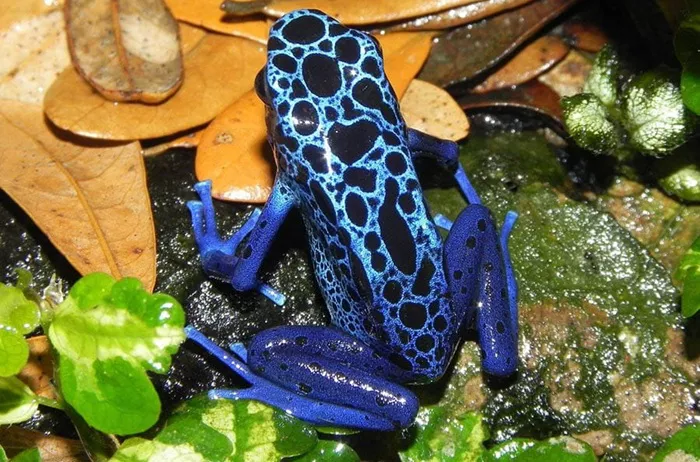
Blue poison dart frogs, with their striking azure skin, are some of the most captivating creatures in the amphibian world. When we think about frogs, the image of leaping and hopping might immediately come to mind, but the way these tiny creatures move is anything but simple. Their movements are an intricate dance of biological adaptations, environment interactions, and evolutionary design.
In this article, we will dive deep into how blue poison dart frogs move. We’ll break down their unique locomotion styles, the muscles and structure behind them, and the reasons behind their distinctive, yet efficient, way of traveling. This will not only enrich your understanding of these fascinating creatures but also give you an appreciation for the wonders of nature.
Let’s begin with a fundamental question: How do blue poison dart frogs move?
The Basics of Frog Movement
To understand how the blue poison dart frog moves, it’s crucial to look at the basics of frog locomotion. Most amphibians, especially frogs, use a combination of jumping, hopping, and swimming to get around. But unlike other frogs, the blue poison dart frog has a more unique way of moving, thanks to its small size and habitat preferences.
Jumping vs. Hopping:
You might be wondering, “What’s the difference between jumping and hopping?” The distinction is subtle but interesting. Jumping generally involves a frog propelling itself in the air with more force, covering greater distances, whereas hopping is smaller, shorter movements, typically done when the frog wants to get over small obstacles or move more conservatively.
The blue poison dart frog, due to its size (roughly 1.5 inches long), prefers short, quick hops, especially when navigating the underbrush of the tropical rainforests in Central and South America. Think of it like how you might take small, careful steps on a rocky path versus a leap over a puddle.
What Makes Their Movement Unique?
When you observe a blue poison dart frog, you’ll notice that it moves very quickly compared to some other frog species. The blue dart frog’s primary mode of transportation is hopping. But what makes their hopping different is not just the speed, but also their ability to leap in unpredictable directions.
This ability to change direction is a survival mechanism. In the wild, predators such as birds and snakes are always on the lookout for these small creatures. The dart frog’s erratic hopping pattern helps it evade predators.
Another fascinating aspect of their movement is their quick startle response. If you ever find yourself watching one of these frogs in the wild, you might notice that it suddenly leaps into action the moment it senses a threat. This rapid reaction is made possible by a powerful muscle system in the frog’s hind legs, built specifically for explosive movement.
The Science Behind Frog Movement
Now that we know they move in hops and jumps, let’s take a look at the mechanics behind it. Frogs have specialized muscle structures that help them jump. The blue poison dart frog’s hind legs, which are significantly larger than its front legs, are built for this explosive movement. The powerful muscles in the legs contract, storing energy in a way that allows them to release it quickly, propelling them forward.
Muscle Power and Leg Structure
The blue dart frog’s large hind legs are the key to its jumping ability. These legs contain muscle fibers that are different from the fibers in their front legs. These muscles are designed for fast-twitch actions, which means they can contract and release quickly, allowing the frog to generate enough force for a high jump.
Imagine using a slingshot: you pull the rubber band back, storing energy, and release it, sending the object flying. Similarly, the frog’s muscles work like the rubber band, storing energy and releasing it when needed.
See Also: Who Threatens the Blue Poison Dart Frog? Discover Its Natural Enemies
Tendons and Their Role
The tendons, which connect muscles to bones, play a crucial role in the frog’s movement. In frogs, the tendons are specifically adapted to help store and release energy during a jump. The blue poison dart frog has elongated tendons in its hind legs that stretch and store energy when the muscles contract. This allows them to leap far with minimal energy consumption.
Balance and Coordination
When a frog jumps, it needs excellent balance and coordination. The blue poison dart frog relies on its body position and flexible limbs to land safely after a jump. Its toes, which are slightly webbed, help to stabilize the frog during both the leap and the landing.
Why Do Blue Poison Dart Frogs Move the Way They Do?
The blue poison dart frog’s specific movement style isn’t just a random evolution — it’s designed for survival. These frogs are highly toxic, which is a defense mechanism against predators. But that doesn’t mean they aren’t at risk. In fact, they still face threats from animals that are immune to their toxins, which is why their speed and agility are so important.
Evading Predators
As mentioned earlier, the dart frog’s rapid, unpredictable hopping movements are a direct response to the threat of predators. A slow-moving frog is easy prey, but one that can leap quickly in any direction has a better chance of escaping danger.
This agility is especially important in the wild, where the dense jungle floor presents many obstacles and potential predators. The dart frog’s movement helps it stay out of harm’s way by providing multiple escape routes.
Navigating the Terrain
The dense and often slippery terrain of the rainforest requires excellent jumping ability. The blue poison dart frog often moves from leaf to leaf, or across moist, damp surfaces. This type of movement helps it avoid danger and also reach different areas to forage for food.
When you see the frog hop from one surface to another, it’s not just moving for the sake of moving—it’s looking for shelter, food, and perhaps mates. It needs agility to travel efficiently through its environment.
What Can We Learn from the Blue Poison Dart Frog’s Movement?
The blue poison dart frog offers fascinating insights into how animals adapt their movement to their environment. Its agility, strength, and unique hopping abilities are a perfect example of nature’s efficiency.
As a frog owner or someone interested in amphibians, observing the way these creatures move can enhance your appreciation for their biology. In captivity, dart frogs also display similar agility and hopping behavior. Understanding how they move in the wild helps us create environments that encourage natural behaviors, providing better care for these incredible creatures.
What Makes Their Movement So Special?
The short answer is: everything. Their ability to navigate through dense environments at high speeds while evading predators makes their movement not just a skill, but a critical life-saving tool. The evolutionary perfection of their body structure ensures they stay agile in the ever-threatening wild.
Conclusion
In summary, the movement of the blue poison dart frog is a brilliant example of evolutionary adaptation. These frogs’ ability to hop swiftly, change direction on a dime, and use explosive muscle power allows them to survive in an environment filled with predators. Their jumping, combined with their agility and balance, makes them one of the most fascinating creatures to observe.
Understanding how these frogs move not only enhances our knowledge of their biology but also highlights the intricate ways in which nature shapes species for survival.
Related topics: