
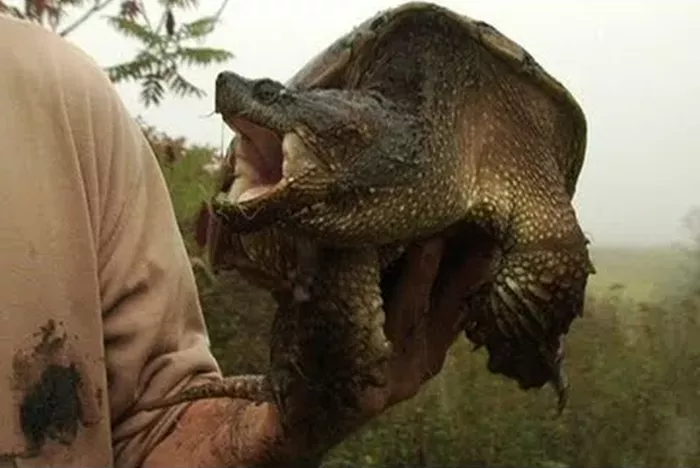
Let’s paint a picture: You’re out fishing, checking your pond filter, or maybe just rescuing a turtle from the road. Then snap!—a snapping turtle latches onto your boot, finger, or tool. Panic sets in. The turtle won’t let go. What do you do?
This guide dives into the surprisingly tricky issue of how to get a snapping turtle to let go safely and humanely. Whether you’re a reptile enthusiast, a wildlife rescuer, or just someone who crossed paths with these prehistoric power-biters, this article walks you through the essential facts, science-backed methods, and expert handling techniques you can trust. We’ll also bust a few myths, share real-life stories from turtle keepers, and make sure you never have to Google this under duress again.
Understanding the Snapping Turtle: What Makes Them Bite and Hold?
Snapping turtles (Chelydra serpentina) are freshwater reptiles known for their strong bite and defensive nature. But before we talk about getting one to release its grip, let’s understand why it latched on in the first place.
Why Do Snapping Turtles Bite?
Think of a snapping turtle like a medieval knight in armor—but with a short temper. They’re not aggressive for sport. They bite because:
They feel threatened: Out of water, a snapper feels vulnerable. It doesn’t have a hard shell like tortoises. It has a mobile, flat shell and a strong bite as its main defense.
They’re handled improperly: Grabbing one from the front or sides often triggers a defensive response.
You’re close to their face: Like many reptiles, they respond to fast movements. Fingers resemble prey or intruders.
Mistaken identity: Sometimes, they bite objects by accident while feeding.
Why Won’t They Let Go?
Once a snapping turtle clamps down, it may hold on for several reasons:
Reflex: Like a bulldog, their jaw muscles are designed to clamp and stay clamped.
Fear: They’re holding on until the danger passes.
Pain or irritation: If they feel attacked, they might go into “lockjaw” mode.
This behavior is not out of spite—it’s survival instinct. Think of it like you holding tightly to a ledge during an earthquake.
How Strong Is a Snapping Turtle’s Bite?
This isn’t just a little nibble. A common snapping turtle can exert about 209 Newtons (around 47 pounds) of force, according to studies published in The Journal of Evolutionary Biology. For comparison:
Human bite force: Around 150-200 Newtons.
Alligator snapper: Even stronger—up to 1000 Newtons!
That kind of force can easily pierce skin, damage tendons, or crush small bones. That’s why you should never underestimate a snapping turtle, even a young one.
Step-by-Step: How to Get a Snapping Turtle to Let Go
Now that we know the ‘why,’ here’s the ‘how.’ Let’s walk through what you should do—and what you should absolutely avoid.
1. Don’t Pull or Shake It
When panic hits, it’s tempting to yank your hand or object away. That’s a big no-no.
−Pulling can worsen the injury. The turtle’s jaw might tear flesh or lock tighter.
−Shaking may scare it further, strengthening its grip.
Think of it like a dog with a chew toy—pulling makes them want to win the tug-of-war.
See Also: What’s the Real Growth Limit of a Snapping Turtle?
2. Submerge the Turtle in Water
Snapping turtles are aquatic animals. Their comfort zone is water. Here’s how to use that to your advantage:
−If the turtle is biting your shoe, hand, or a tool, slowly lower the area into water.
−They often let go because they feel safer in water.
−Water helps them reorient and reduces panic.
Caution: Use gloves or tongs to avoid further contact.
Real-life tip from a herpetologist: “One time, a turtle bit a rake handle and wouldn’t let go. I dipped it in the pond, and it let go in five seconds flat.”
3. Pour Alcohol or Vinegar Near Its Nose
Some keepers use a small splash of rubbing alcohol or white vinegar near the turtle’s nostrils to break the grip.
−The smell is unpleasant, not harmful.
−It often triggers a release reflex.
Never pour it into the turtle’s mouth or eyes. The goal is discomfort, not injury.
4. Use Cold Water or Ice Pack Nearby
Another method is using cold stimulation:
−Place a cold pack or spray cool water near (not on) the turtle’s face.
−Cold can cause brief muscle relaxation.
This method is slower but safer than prying their mouth open.
5. Let It Tire Out (Time + Calm)
Turtles may hold on for minutes or even over an hour if stressed. But like any muscle, the jaw tires out eventually.
−Sit still and minimize movement.
−Once the turtle feels there’s no more danger, it might release naturally.
Patience is not easy, but it’s often the safest option.
6. Using a Tool to Gently Wedge the Jaw (Last Resort)
This should be your absolute last option. If you must separate a turtle manually:
−Use a wooden spatula or soft rubber wedge—never metal.
−Gently insert it from the back of the jaw hinge.
−Apply slight pressure to pry the mouth open.
Risk of injuring the turtle or yourself is high. Don’t do this unless medically necessary.
How to Prevent Snapping Turtle Bites
As they say, prevention is better than cure. Here’s how to avoid getting snapped in the first place.
Use the Right Handling Technique
−Pick up from the rear—grab the shell just above the hind legs.
−Never pick up from the sides or tail.
−Use turtle tongs, nets, or buckets for large snappers.
Think of picking up a snapping turtle like lifting a heavy shopping bag from the bottom—not grabbing the sides.
Wear Protective Gear
−Use thick gloves (like welding gloves) if handling is needed.
−Avoid barefoot pond walks—especially in muddy, shallow water.
Recognize Body Language
A turtle about to bite will:
−Raise its body
−Hiss
−Open its mouth wide
−Snap its head back and forth quickly
Learn their cues, just like you’d learn a dog’s growl or a cat’s hiss.
What to Do If You’re Bitten
If a snapping turtle gets you:
−Stay calm. Don’t panic or yank.
−Try the water or vinegar method.
−Clean the wound immediately after release with antiseptic.
−See a doctor. Turtle bites carry risk of Salmonella and other infections.
According to the CDC, reptile bites or contact are responsible for about 74,000 Salmonella cases in the U.S. each year.
Stories from the Field: Real Turtle Encounters
Case 1: Fishing Trip Gone Wrong
A Louisiana fisherman reported a juvenile snapper clamped onto his wading boots while walking near a swampy bank. He carried the turtle—still attached—back to the boat and submerged the boot. It released instantly.
Case 2: Rescue Mission Snap
A volunteer at a wildlife rehab tried to rescue a turtle crossing the road. She picked it up from the side—snap. The turtle latched onto her glove. She calmly sat down, waited 15 minutes, and it finally let go.
Conclusion
Snapping turtles are amazing reptiles—ancient, powerful, and built for survival. While their bite can be intense and even frightening, knowing how to respond makes all the difference. With a little calm, a bit of science, and a lot of respect, you can resolve the situation without harm to you or the turtle.
Next time you see one of these armored warriors in the wild, give it the space it deserves. But if fate has other plans, at least now you’ll be prepared.
Related topics: