
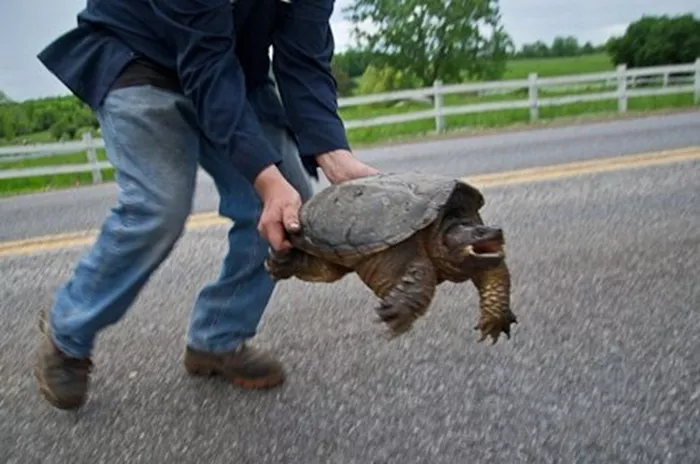
If you’ve ever seen a snapping turtle up close, you probably noticed something right away—it looks like a prehistoric creature with a serious attitude. It has a powerful jaw, lightning-fast reflexes, and a reputation for being one of the feistiest reptiles in North America. So, if you’re asking, “How do I pick up a snapping turtle safely?”—you’re already being smart. This isn’t like picking up your neighbor’s sleepy tortoise.
Snapping turtles can and will bite, and that bite isn’t just a pinch. These reptiles have strong jaws that have been compared to a pair of bolt cutters—yes, the kind used to snap metal. One wrong move and you could be nursing a serious injury. But don’t worry—by the end of this article, you’ll know exactly how to handle a snapping turtle safely, whether you’re helping one cross the road or relocating one from your pond.
This guide is your all-in-one, no-nonsense walkthrough for how to pick up a snapping turtle the right way. We’ll keep it simple, straight, and a little fun—because learning should be awesome.
What Is a Snapping Turtle, Anyway?
Let’s break it down. A snapping turtle is a type of freshwater turtle known for its aggressive behavior when out of water. There are two main types:
Common snapping turtle (Chelydra serpentina)
Alligator snapping turtle (Macrochelys temminckii)
The common snapping turtle is found across most of North America. The alligator snapper, with its dinosaur-like ridges and massive head, lives mostly in the southeastern U.S. and can weigh over 150 pounds. That’s heavier than a Great Dane.
Key Traits of Snapping Turtles:
- Strong, hooked beak
- Long tail (often with saw-tooth ridges)
- Thick, armored shell
- Webbed feet with claws
- Incredible neck reach (they can strike backward, unlike most turtles)
Think of them like the pit bulls of the reptile world—built for power and attitude, not cuddles.
Fun fact: A snapping turtle’s neck can stretch almost the length of its body in some directions. That means it can bite your hand even if you’re holding it by the back of the shell—so don’t get too confident.
Why You Might Need to Pick One Up
There are only a few good reasons to physically move a snapping turtle:
To help it cross a road safely (this is common in spring and summer)
To relocate it from your backyard, pond, or garden
To assist in rescue or rehabilitation
To remove it from harm’s way (e.g., if it’s in danger of being run over)
Whatever your reason, don’t pick it up unless you absolutely need to. These animals are not meant to be handled like puppies or parrots. They’re wild, and they like to stay that way.
Gear Up: What You’ll Need Before You Try
Before you even go near the turtle, grab these items. It’s like assembling a toolkit, and trust me—you don’t want to be caught without them.
Heavy-duty gloves: Not gardening gloves—get thick, bite-resistant ones (like those used for falconry or snake handling).
Towel or blanket: To cover or calm the turtle.
Large bucket, bin, or sturdy box: For transportation.
Shovel or flat object: For lifting or nudging.
A calm mindset: Panic = mistakes. You need steady hands and a clear head.
This isn’t a ninja move—it’s more like a delicate operation with a cranky dinosaur.
Step-by-Step: How to Pick Up a Snapping Turtle Safely
Step 1: Approach Slowly (But From the Right Angle)
Don’t rush. A startled turtle will defend itself. Walk slowly toward the turtle from behind. Never, ever approach from the front or the sides—remember that surprisingly flexible neck?
Analogy Time: Imagine trying to grab a cat from the front when it’s mad. You’ll get scratched. Now multiply that by 10.
See Also: Are Snapping Turtles Fierce Defenders or Misunderstood?
Step 2: Observe the Turtle’s Behavior
Is it hissing? Lunging? Staying still? A calm turtle is safer to handle, but even then, always assume it can bite.
Step 3: Grab at the Back of the Shell—But Not the Tail
This is the golden rule: NEVER grab a snapping turtle by its tail.
Doing so can injure its spine—permanently. Instead, grab the shell just above the hind legs, one hand on each side. Imagine picking up a heavy loaf of bread—wide grip, firm hold.
Think of the shell like a coffee table. Grab the back corners—not the fragile stuff in the middle or front.
Step 4: Lift Carefully and Keep It Low
Once you’ve got a good grip, lift gently. Hold the turtle close to the ground. If it thrashes and you drop it, better it falls 6 inches than 6 feet.
If it’s too big (some males can weigh over 35 pounds), don’t lift it at all—use a shovel or board to slide it into a bin.
Step 5: Move in the Direction the Turtle Was Facing
Turtles are determined creatures. If you put them on the opposite side of the road from where they were headed, they’ll just try again.
Always place them on the side they were already heading toward.
Extra Caution with Alligator Snapping Turtles
These are the kingpins of the snapping turtle world.
They can weigh over 100 pounds and have jaws that can break broomsticks. Do not attempt to pick one up unless you are trained or absolutely have to.
For large alligator snappers:
−Use a large plastic tub or flat dolly
−Wear thick boots and leather gloves
−Keep people and pets far away
Common Mistakes to Avoid
Even seasoned reptile enthusiasts make errors. Here are a few to dodge:
−Tail-grabbing (just don’t)
−Picking up from the sides—they can still reach you
−Using bare hands
−Not knowing the direction it’s traveling
−Panicking when it hisses (it’s a warning, not a guarantee)
Real Story: One rescue volunteer tried to pick up a 25-pound snapper with bare hands “just to be fast.” One bite later, they needed stitches and a tetanus shot. Don’t be that person.
What If the Turtle Is in Water?
If the turtle is in shallow water (like a puddle or road ditch), you can still use the rear shell grip method—just be ready for more thrashing.
In deep water, leave it alone unless it’s trapped or in distress. In this case:
−Use a long-handled net if available
−Guide it to shore
−Avoid diving or swimming after it—snappers are strong underwater and can be aggressive
What About Baby Snapping Turtles?
They’re tiny, cute, and harmless-looking—but they can still nip.
For hatchlings:
−You can pick them up gently between two fingers or use a plastic spoon
−Avoid squeezing their tiny bodies
−Place them gently in safe, shallow water or soft grass
They grow fast. That little coin-sized critter? In a few years, it’ll be a mini tank.
Legal and Ethical Considerations
Before handling or relocating any reptile, check your local laws. Some states protect snapping turtles as native wildlife. Others allow removal under specific circumstances.
Never keep a snapping turtle as a pet unless it’s legal where you live.
Also, don’t relocate snapping turtles miles away. These animals have strong territorial memory. Moving them too far can cause confusion, starvation, or worse.
Aftercare: What to Do Once You’ve Moved the Turtle
Once the turtle is safe:
−Wash your hands thoroughly, even if you wore gloves.
−Disinfect any gear used (bucket, gloves, tools).
−Watch for signs of injury—if you notice the turtle was hit or bleeding, call a local wildlife rescue or vet immediately.
The Big Takeaway: Respect the Reptile
Snapping turtles may seem scary, but they’re not monsters. They’re just ancient survivors doing their thing.
By learning how to handle them safely, you’re helping protect a vital part of the ecosystem. And that’s pretty awesome.
Conclusion
Handling a snapping turtle might seem intimidating at first—but once you understand their behavior and follow the right steps, it’s totally doable.
Stay respectful, move slowly, and always prioritize safety—for both you and the turtle. With this guide, you’re ready to do it right.
Related topics: