
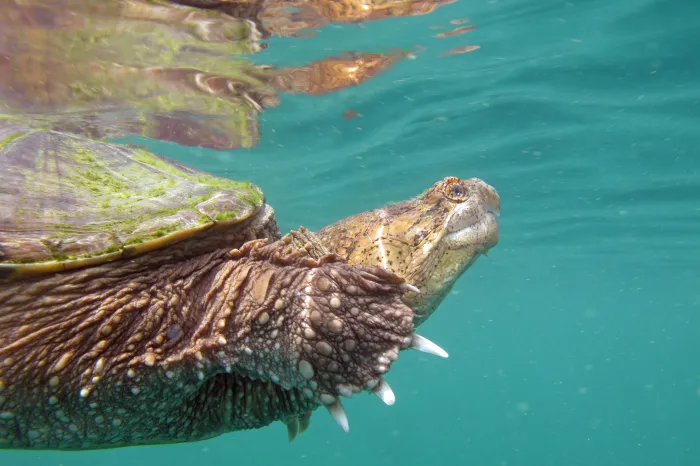
Snapping turtles are often associated with water, but understanding their habitat requires a closer look. These turtles spend a significant amount of time in aquatic environments, yet they also venture onto land. This balance between water and land living is key to their survival.
Aquatic Habits of Snapping Turtles
Snapping turtles primarily inhabit freshwater bodies such as ponds, lakes, rivers, and marshes. They prefer slow-moving or still waters where they can easily hide under mud or vegetation. Their strong legs and webbed feet help them swim efficiently, while their streamlined shells reduce resistance in the water. This aquatic lifestyle allows them to hunt for food like fish, amphibians, and aquatic plants.
Land Activity and Nesting Behavior
Despite their strong connection to water, snapping turtles do spend time on land. They often leave the water to bask in the sun, which helps regulate their body temperature. Female snapping turtles also travel onto land during nesting season to lay eggs in sandy or soft soil areas close to water sources. This terrestrial activity is essential for reproduction.
Adaptations Supporting Dual Living
Snapping turtles have evolved features that support both aquatic and terrestrial life. Their powerful jaws serve as effective tools for catching prey both underwater and on land. Their tough shells offer protection against predators whether they are submerged or walking on shorelines.
Conclusion
In summary, snapping turtles live mainly in freshwater environments but are not strictly aquatic creatures. They rely on water for feeding and safety but also need land for basking and nesting. Understanding this dual lifestyle helps us appreciate how these turtles adapt to their environment.
Frequently Asked Questions
Do snapping turtles stay underwater all the time?
No, snapping turtles spend a lot of time underwater but come onto land for basking and nesting.
Can snapping turtles live outside water?
They can survive on land for short periods but depend on water for most of their daily activities.
Where do snapping turtles lay their eggs?
Females lay eggs on land, usually near the edge of a water body in soft soil or sand.
Are snapping turtles dangerous to humans?
While they have strong jaws, snapping turtles usually avoid humans unless threatened.