
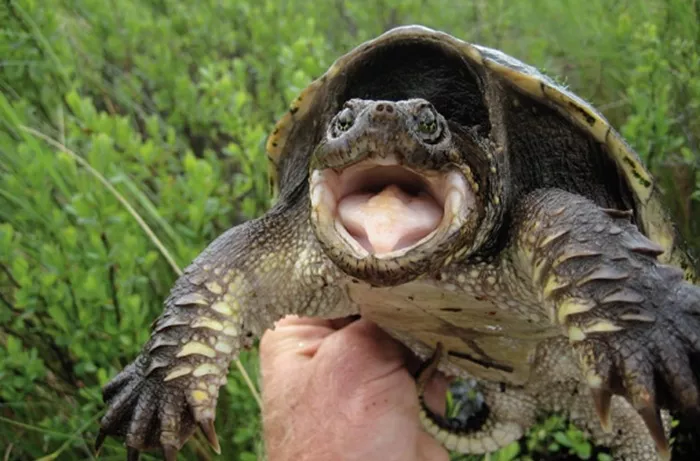
Ever stumbled upon a turtle and wondered, “Is this a snapping turtle? Should I be careful?” That’s a smart question — and a pretty common one among nature lovers, hikers, or even curious backyard explorers. Here’s the deal: snapping turtles look similar to other turtles at first glance, but they carry some serious differences — and some of them might just bite if you get too close!
Knowing how to identify a snapping turtle is super helpful. It keeps you safe, protects the animal, and lets you better understand one of North America’s coolest reptiles. This article will walk you through everything you need to spot a snapping turtle with confidence — even if you’re a complete newbie to reptiles.
Why Identifying a Snapping Turtle Matters
Telling a snapping turtle apart from other turtle species isn’t just a fun guessing game. It can be crucial for safety — and conservation. Many people accidentally harm turtles by handling them the wrong way, or they confuse gentle species with the feisty snapping turtle.
Snapping turtles, especially the common snapping turtle (Chelydra serpentina) and the alligator snapping turtle (Macrochelys temminckii), have unique personalities, behaviors, and body traits. Some are shy and chill — others? Well, they might just take a bite out of your shoe if they feel threatened!
So whether you’re a pet owner, a wildlife fan, or someone who just wants to know what’s living near their pond, learning to identify these turtles will give you a big advantage.
What Is a Snapping Turtle, Exactly?
Snapping turtles are a type of aquatic reptile in the family Chelydridae. They’ve been around since the time of the dinosaurs and have some prehistoric vibes to prove it.
There are two main species:
Common Snapping Turtle (Chelydra serpentina)
Alligator Snapping Turtle (Macrochelys temminckii)
They both live in freshwater environments, especially in the United States and parts of Canada.
🧠 Fun Fact: Alligator snapping turtles can weigh over 150 pounds (70 kg) — that’s heavier than most dogs!
| Feature | Common Snapping Turtle | Alligator Snapping Turtle |
|---|---|---|
| Size | 10-20 inches, up to 35 lbs | Up to 31 inches, 150+ lbs |
| Tail | Very long, dinosaur-like | Shorter but thick |
| Shell (Carapace) | Smooth, dark, with jagged back edge | Rugged, 3 ridges like dinosaur plates |
| Head and Mouth | Sharp beak, strong jaw | HUGE head, hooked beak, worm-like lure |
| Habitat | Lakes, ponds, slow rivers | Mostly in southern U.S. river systems |
Now that we’ve got the basics down, let’s zoom in and talk about how you can spot a snapping turtle — in the wild, in a pond, or even on a roadside.
Look at the Turtle’s Head: The Bite Zone
One of the best ways to tell if a turtle is a snapping turtle is by looking at its head and mouth.
Head Shape and Size
Snapping turtles have large, thick heads compared to most turtles. If you see a turtle whose head looks like it belongs in a Jurassic Park movie — wide skull, tough jawline — you’re likely looking at a snapper.
Common snapping turtles have a blunt, slightly upturned snout.
Alligator snapping turtles have a more pointed, fierce-looking face with a deep hook on the nose, like a parrot’s beak.
Their eyes are set forward, giving them a predatory stare. Unlike other turtles, whose eyes sit on the sides of their heads (like prey animals), snapping turtles’ eyes suggest they mean business.
See Also: Found Snapping Turtle Eggs? Do This First!
The Mouth That Bites
Snapping turtles have strong, curved jaws. These jaws can crush bones, and they won’t hesitate to use them if they feel cornered. Imagine a nutcracker but for fingers — that’s how powerful their bite can be.
🧠 Real Talk from a Turtle Owner:
“Once I tried to move a snapping turtle across the road using a stick. It didn’t snap until I got too close — then BAM! It was like a mini bear trap. I learned my lesson.” — Derek, turtle enthusiast, Texas
If the head makes you think “predator,” you’re probably right. But don’t stop there — the shell tells another important part of the story.
Examine the Turtle’s Shell: It’s Not Just a Backpack
A snapping turtle’s shell (also called a carapace) is one of the easiest ways to tell it apart from other turtles.
Shape and Texture
Most turtles have smooth, round shells. But not snappers!
Common snapping turtles have rougher, slightly arched shells with saw-like ridges on the back edge — almost like the back of a dinosaur toy.
Alligator snapping turtles are even more intense: their shells have three raised ridges running from front to back, making them look like living tanks.
Think of it this way: if the turtle’s shell looks like it could plow through a forest, it’s probably an alligator snapping turtle.
Color
The shell color varies from dark brown to almost black. Sometimes it has algae or mud covering it — they love camouflage.
🧠 Pro Tip: If you’re not sure what kind of turtle you’re looking at, imagine picking it up (don’t actually do this unless you’re trained). If it feels heavy, rugged, and dinosaur-like, chances are it’s a snapper.
So far, you’ve checked the head and the shell. But we’re not done — there’s another giveaway feature that’s hard to miss.
Check the Tail: Think “Mini-Dinosaur”
Snapping turtles have long, muscular tails — especially the common snapping turtle. It’s one of their standout features.
Tail Length and Shape
The tail can be as long as the shell itself in many snapping turtles. It’s thick at the base and covered in sharp, pointed scales, kind of like a stegosaurus.
This tail is different from other turtles, whose tails are short and stubby.
🧠 Fun Fact: Snapping turtles use their tails for balance and protection, especially when they’re moving on land.
Now that you’ve looked at physical traits, let’s talk about behavior. Because snapping turtles act different — and once you see it, you’ll know.
Watch the Behavior: Snappers Are Not Shy
Defensive Posture
If you approach a turtle and it:
Hisses
Stretches its neck toward you
Bites or lunges
…it’s probably a snapping turtle. These guys don’t hide in their shells. They stand their ground — especially on land.
Why? Because their shells don’t completely protect their bodies like other turtles. So instead of retreating, they fight back.
In Water: Calm and Chill
Surprisingly, in the water, snapping turtles are relaxed and reclusive. They prefer to hide in muddy bottoms and only poke their heads out to breathe. Most snapping turtle attacks happen on land when the turtle feels cornered.
Their behavior tells a lot, but it helps to know where they like to live. Their home base gives you another clue.
Know the Habitat: Where Snapping Turtles Thrive
Preferred Locations
Snapping turtles love:
Slow-moving rivers
Ponds
Lakes
Marshes
Swamps
They prefer muddy, weedy environments where they can hide and ambush prey.
🧠 Fun Fact: One snapping turtle was recorded living in the same pond for over 40 years!
Now that you know where they live, what they look like, and how they act, let’s clear up common mix-ups.
Common Turtle Lookalikes: Don’t Be Fooled
You might confuse a snapping turtle with:
Painted turtles (colorful, smaller)
Box turtles (terrestrial, dome-shaped shell)
Softshell turtles (flat, pancake-like appearance)
These turtles:
Are more colorful
Have smaller heads
Don’t snap or hiss
Pull into their shells when scared
If a turtle looks gentle and polished — it’s likely not a snapper.
Want a shortcut to ID a snapping turtle? Here’s a checklist you can use anytime.
Quick ID Checklist: Is It a Snapping Turtle?
✅ Large, rugged body
✅ Long, pointy tail
✅ Big, scary head with hooked jaw
✅ Doesn’t hide in shell
✅ Saw-like or ridged shell
✅ Hisses or lunges when threatened
✅ Found near freshwater areas
We’ve covered the features — now let’s address safety and why you should respect (but not fear) snapping turtles.
Handling Snapping Turtles: Caution Is Key
Never pick up a snapping turtle by the tail — this can injure its spine.
If you need to help one across a road:
Use a shovel or sturdy board
Gently push it from behind
Let it walk away on its own
Remember: they’re wild animals, not aggressive pets.
Conclusion
Snapping turtles are majestic and powerful reptiles that deserve our curiosity — and our caution. With their strong jaws, prehistoric shells, and ancient behavior, they’re like living fossils in your local pond.
So next time you see a turtle and wonder, “Is this a snapping turtle?” — now you know how to tell. And even better, you’ll understand why they’re special.
Related topics: