
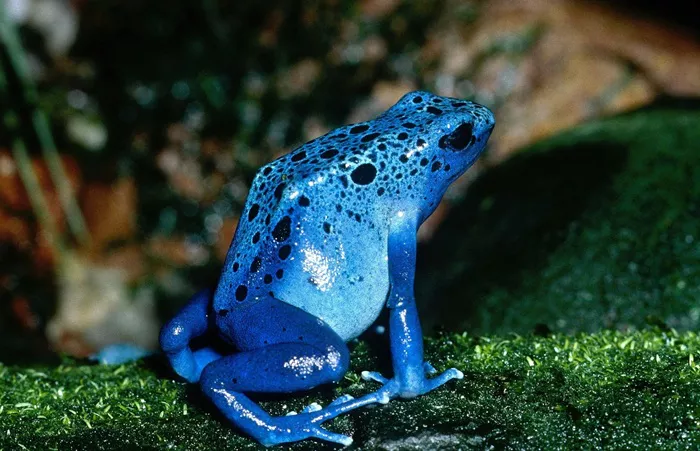
The Blue Poison Dart Frog is one of the most fascinating and colorful amphibians in the world. Its bright blue color attracts attention and curiosity. These frogs belong to the family of poison dart frogs, which are famous for their poisonous skin secretions. Many people wonder if these frogs are dangerous to humans. Can their poison harm us? This article will explore the biology, behavior, and toxicity of Blue Poison Dart Frogs. We will explain how poisonous they are, how they use their poison, and what risks they pose to humans. By the end of this article, you will have a clear understanding of whether Blue Poison Dart Frogs are poisonous to humans and how to safely interact with them.
What Are Blue Poison Dart Frogs?
Blue Poison Dart Frogs, scientifically named Dendrobates tinctorius “azureus”, are a subspecies of the dyeing poison dart frog. They are native to the rainforests of Suriname and parts of northern Brazil in South America. These frogs are small but striking. They typically measure about 1.5 to 2 inches (3.8 to 5 cm) long. Their vivid blue skin with black spots or patterns makes them easily recognizable.
These frogs live in humid environments, mainly near streams or in the leaf litter on the forest floor. They are active during the day and spend much of their time searching for food. Blue Poison Dart Frogs mainly eat small insects such as ants, termites, and mites.
Why Are Poison Dart Frogs Called “Poisonous”?
The term “poison dart frog” comes from the fact that some indigenous tribes in South America used their toxins on the tips of blow darts for hunting. These toxins can paralyze or kill small animals. The frogs themselves are not aggressive and do not use their poison to attack predators. Instead, the poison acts as a defense mechanism.
The skin of poison dart frogs contains alkaloid toxins. These chemicals make the frogs taste bad or cause harm to animals that try to eat them. The intensity of the poison varies between species. Some species are extremely toxic, while others have milder toxins.
How Do Blue Poison Dart Frogs Become Poisonous?
One interesting fact about Blue Poison Dart Frogs is that they are not born poisonous in captivity. Scientists have learned that these frogs get their toxins from their diet in the wild. The insects they eat, such as ants and mites, contain alkaloid compounds. When the frogs consume these insects, they accumulate the toxins in their skin glands.
In captivity, where the frogs are fed a diet of fruit flies and other insects raised in controlled environments, they lose their toxicity over time. Without the wild diet, captive Blue Poison Dart Frogs are not poisonous.
This means the poisonous nature of Blue Poison Dart Frogs depends on their environment and diet. The toxins are natural chemical defenses gained from eating certain insects.
What Toxins Do Blue Poison Dart Frogs Have?
The main toxins found in Blue Poison Dart Frogs belong to a group called batrachotoxins. These are very powerful neurotoxins. Batrachotoxins interfere with the way nerve cells send signals. They cause paralysis by preventing nerves from working properly.
However, the toxicity of Dendrobates tinctorius “azureus” is lower than some other poison dart frog species. The golden poison dart frog (Phyllobates terribilis), for example, is considered the most toxic frog on Earth.
Still, the Blue Poison Dart Frog’s toxins are strong enough to deter many predators. Birds, snakes, and mammals avoid eating them because of the risk.
Are Blue Poison Dart Frogs Poisonous to Humans?
This question is the heart of the matter. The answer is: yes, Blue Poison Dart Frogs can be poisonous to humans, but under very specific conditions. Their toxins can cause harm if they enter the body through broken skin, mucous membranes, or if the poison is ingested.
In the wild, these frogs pose little threat to humans because their toxins are contained in their skin secretions, and the poison is not easily absorbed through intact skin. Simply touching a healthy Blue Poison Dart Frog with bare skin will not usually cause poisoning.
However, if the frog’s toxins come into contact with open wounds, eyes, mouth, or nose, they can be dangerous. The alkaloids can cause irritation, numbness, and in rare cases, more severe symptoms such as muscle paralysis or heart irregularities.
It is important to emphasize that poison dart frogs do not bite or inject venom like snakes or spiders. Their toxicity comes only from skin contact or ingestion.
Has There Been Any Case of Human Poisoning?
There are very few documented cases of human poisoning by Blue Poison Dart Frogs. This is because these frogs generally do not produce enough toxin to seriously harm a person, and because people usually handle them with care or avoid them in the wild.
The indigenous tribes that used poison dart frog toxins for hunting specifically collected the most toxic species, such as the golden poison dart frog. Blue Poison Dart Frogs were not typically used for this purpose.
In captivity, the risk is even lower. Since captive frogs lose their poison over time, there is almost no risk of poisoning from captive-bred Blue Poison Dart Frogs.
Still, it is wise to handle these frogs gently and avoid touching your face or any wounds after contact. Washing hands thoroughly after handling them is also a good practice.
How Do Blue Poison Dart Frogs Use Their Poison in Nature?
The poison of Blue Poison Dart Frogs serves as a protective shield. When a predator tries to eat or attack the frog, the unpleasant taste and toxic effect cause the predator to release it quickly.
This defense helps the frogs survive in a dangerous environment filled with many predators. Bright coloration is also a warning signal. This is called aposematism. The frog’s blue color warns predators that it is poisonous.
This strategy benefits both the frog and potential predators. Predators learn to avoid eating these frogs, reducing the risk of injury to themselves.
Can You Keep Blue Poison Dart Frogs as Pets?
Blue Poison Dart Frogs are popular in the exotic pet trade. Many people admire their bright colors and interesting behavior. They can make good pets if cared for properly.
Because captive-bred Blue Poison Dart Frogs do not have the toxins, they are considered safe to keep. They do not pose a poisoning risk to owners or family members.
However, it is essential to provide them with the right environment. This includes high humidity, proper temperature, clean water, and appropriate food. Handling should still be minimal to avoid stressing the frogs.
Owners should always wash their hands before and after handling, to protect both the frog and themselves.
What Should You Do if You Are Poisoned?
Although poisoning from Blue Poison Dart Frogs is rare, if someone suspects they have been poisoned after contact with the frog, they should take immediate action: thoroughly wash the affected area with soap and water to remove any toxins, avoid touching their eyes, mouth, or open wounds, and seek medical attention right away if symptoms like numbness, difficulty breathing, muscle weakness, or irregular heartbeat occur. Medical professionals can provide treatment to manage symptoms and prevent complications.
How Do Scientists Study the Poison of Blue Poison Dart Frogs?
Scientists are very interested in the chemicals produced by poison dart frogs. The alkaloid toxins have potential uses in medicine and research. Some of these compounds may help develop new painkillers, heart medicines, or nerve treatments.
Researchers study how the frogs produce and store their toxins. They also investigate how the toxins affect nerves and muscles. These studies require careful handling of frogs and strict safety protocols.
Understanding frog toxins can also help protect the frogs. Conservation efforts aim to preserve their natural habitats and ensure healthy populations.
Conservation Status of Blue Poison Dart Frogs
Blue Poison Dart Frogs face threats in the wild. Habitat destruction, pollution, and illegal collection for the pet trade affect their numbers. While currently not endangered, their populations are declining in some areas.
Protecting rainforests and regulating the pet trade are crucial for their survival. Captive breeding programs also help maintain healthy frog populations.
Educating the public about these frogs reduces fear and misinformation. Knowing that these frogs are not a major threat to humans encourages respect and care.
Conclusion
Blue Poison Dart Frogs are indeed poisonous, but their poison is generally not harmful to humans unless it enters the body through cuts or mucous membranes. Their toxins come from their diet in the wild, making captive frogs safe to handle with care. The poison serves mainly as a defense mechanism against predators, and their bright blue color warns others of their toxicity.
While they can be kept as pets safely if captive-bred, it is essential to treat these frogs with respect and caution. In rare cases of poisoning, immediate medical help is necessary. Studying these frogs helps scientists find new medicines and protect the species.
In conclusion, Blue Poison Dart Frogs are remarkable animals with a unique defense system. They are poisonous, but not a serious danger to humans when treated properly.
Related topics