
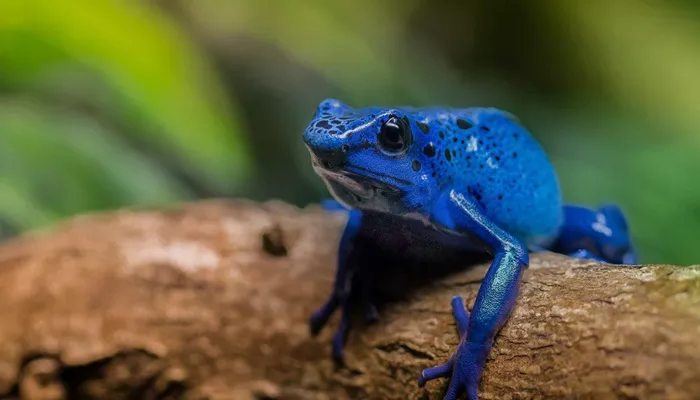
Poison dart frogs are some of the most colorful and fascinating creatures in the animal kingdom. Among their many bright colors, blue poison dart frogs often capture our attention. Their striking blue color seems almost unreal, shining vividly in the tropical rainforests where they live. But why are poison dart frogs blue? What makes their skin such a beautiful shade of blue? This article explores the biology, ecology, and evolutionary reasons behind their blue coloration.
Introduction to Poison Dart Frogs
Poison dart frogs belong to the family Dendrobatidae. These small amphibians are famous for their bright colors and toxic skin. They live mostly in Central and South America, in rainforests where humidity and warmth support their survival. The bright colors of these frogs serve many purposes, primarily warning predators that they are poisonous.
There are more than 170 species of poison dart frogs. They come in many colors, including yellow, red, green, orange, and blue. The blue ones, such as the famous Dendrobates tinctorius “Azureus”, are especially popular among scientists and amphibian lovers.
The blue color of these frogs is not caused by pigments alone. It involves a special kind of structural coloration. Understanding why poison dart frogs are blue requires a look at their skin structure, the way light interacts with it, and the evolutionary advantages of this color.
What Makes an Animal Blue?
Before discussing poison dart frogs specifically, it helps to understand how animals show blue color in general. Blue is a rare color in nature. Many animals do not have blue pigments in their skin or feathers. Instead, blue often comes from the way light interacts with tiny structures on or inside the skin or feathers.
Pigments vs. Structural Coloration
Colors in animals usually come from two main sources:
Pigments: These are chemicals that absorb some wavelengths of light and reflect others. For example, melanin is a pigment that makes skin brown or black.
Structural coloration: This is color created by microscopic structures that reflect and scatter light in specific ways, often producing bright blues and greens.
In the case of blue poison dart frogs, their blue color comes mostly from structural coloration, not blue pigment. Their skin has tiny structures that scatter blue light, making the frogs appear bright blue to our eyes.
The Skin Structure of Blue Poison Dart Frogs
The skin of poison dart frogs has multiple layers. The top layer is called the epidermis, and below it lies the dermis. The dermis contains specialized cells called iridophores, which are crucial for producing blue coloration.
Iridophores and Light Reflection
Iridophores contain stacks of tiny, flat, reflective crystals made of a substance called guanine. These crystals are arranged in layers, and they act like tiny mirrors. When light hits the skin, these guanine crystals reflect and scatter the light, especially in the blue part of the spectrum.
The thickness and spacing of these crystals determine the exact color reflected. In blue poison dart frogs, the crystals reflect mainly blue light, making the frogs appear bright blue.
Interaction with Other Skin Cells
Under the iridophores are melanophores, cells that contain dark pigment melanin. The melanin absorbs other wavelengths of light and enhances the blue color by increasing contrast. This combination of reflective crystals and dark pigments creates a vivid and intense blue color.
This effect is similar to how the blue feathers of some birds and the scales of certain fish are produced. It is not a pigment but a physical structure that bends and reflects light.
Why Are Blue Poison Dart Frogs Blue?
Now that we know the biological mechanism behind the blue color, we can explore why these frogs evolved to be blue in the first place.
Aposematism: Warning Coloration
One main reason poison dart frogs are colorful is aposematism. Aposematism is the use of bright colors to warn predators that an animal is toxic or dangerous. Predators learn to avoid animals with certain colors because they associate those colors with bad taste, poison, or harm.
Blue is a rare and bright color in the rainforest environment. It stands out against green leaves and brown tree trunks. This makes it a very effective warning signal.
For example, the Dendrobates tinctorius “Azureus” is bright blue with black spots. Its blue color warns birds, snakes, and other predators that it is poisonous and not safe to eat.
Mimicry and Species Recognition
Besides warning predators, blue coloration may also help frogs recognize each other. Many poison dart frogs are territorial. Bright colors help them find mates of the same species and avoid fights with other species.
In some cases, non-toxic frogs mimic the blue coloration of toxic species to avoid predators. This is called Batesian mimicry. The presence of blue poison dart frogs can influence the evolution of other frogs’ colors in the area.
Camouflage? Not Likely for Blue
Unlike green or brown frogs that blend into leaves or dirt, blue poison dart frogs do not rely on camouflage. Their blue color makes them easy to see. This supports the idea that the blue color is primarily for warning and communication rather than hiding.
Habitat Influence
Blue poison dart frogs live in specific parts of the rainforest where light conditions can enhance their color. The dappled sunlight filtering through the canopy can make their blue skin shine even more, strengthening the warning signal to predators.
The Chemistry Behind Poison in Poison Dart Frogs
While not directly related to their blue color, understanding the poison of these frogs helps explain the importance of their warning coloration.
Poison dart frogs produce toxins called alkaloids in their skin. These chemicals can cause pain, paralysis, or death in predators. The frogs do not produce these toxins themselves; instead, they get alkaloids from their diet, mainly ants, mites, and other small insects.
Because the frogs are poisonous, they can afford to be bright and conspicuous. Predators quickly learn to avoid these colorful frogs, which increases their survival.
How Does Blue Color Affect the Frog’s Survival?
The blue color plays several roles in helping the frog survive:
Warning predators: The bright blue signals toxicity clearly.
Mate attraction: The color helps males and females find each other in dense forests.
Species identification: Different poison dart frog species have unique color patterns.
Thermoregulation: Some research suggests skin color can affect heat absorption, though this is less studied in blue poison dart frogs.
Are All Blue Frogs Poisonous?
Not all blue frogs are poisonous. While many blue poison dart frogs are toxic, some other frog species are blue but lack poison. This shows that blue coloration can evolve for different reasons in different frogs.
In poison dart frogs, the combination of blue color and toxicity is common, making them a great example of aposematic coloration.
Blue Color and Captivity
In captivity, the blue color of poison dart frogs can sometimes fade. This happens because captive frogs do not eat the same diet as wild frogs, missing the alkaloids they get from insects. Without their natural diet, their skin toxins reduce, and their color can become duller.
This shows that diet influences not just poison production but can indirectly affect skin coloration and brightness.
The Role of Genetics in Blue Coloration
The blue color is genetically determined. Different genes control the development and arrangement of iridophores and melanophores in the skin. Scientists study these genes to understand how blue coloration evolved.
By comparing the DNA of blue and non-blue poison dart frogs, researchers have learned how small genetic changes can create big differences in skin color.
Scientific Studies on Blue Poison Dart Frogs
Scientists have used advanced tools like electron microscopes to look closely at the skin layers of blue poison dart frogs. These studies confirm the presence of guanine crystals in iridophores and the way they reflect light.
Behavioral studies also show that predators avoid blue frogs more than dull-colored frogs, proving the warning function of their bright color.
Conclusion
The blue color of poison dart frogs is a beautiful example of nature’s complexity. It results from tiny reflective crystals in their skin that scatter blue light. This structural coloration is enhanced by dark pigments underneath. Evolution favors this bright blue color because it serves as a warning to predators, helps frogs find mates, and defines species identity.
In the wild, blue poison dart frogs are a living combination of biology, chemistry, and ecology. Their brilliant blue skin reminds us how animals adapt to their environment in amazing ways. Understanding why these frogs are blue helps us appreciate the delicate balance of rainforest ecosystems and the importance of preserving these unique creatures.
Related topic