
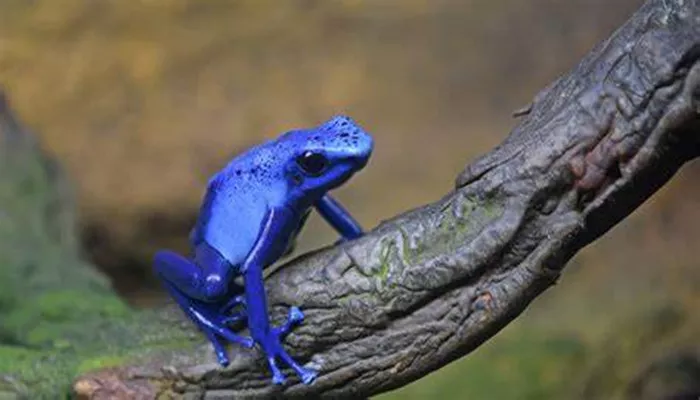
Blue poison dart frogs are among the most striking and fascinating amphibians in the world. Known for their bright blue color and potent toxicity, these small frogs attract much attention from scientists, nature lovers, and exotic pet enthusiasts. Understanding where these frogs live helps us appreciate their unique biology and the important role they play in their ecosystems. This article will explore in detail the natural habitat, geographic range, environmental conditions, and conservation status of the blue poison dart frog.
Introduction to Blue Poison Dart Frogs
Blue poison dart frogs, scientifically known as Dendrobates tinctorius “azureus”, are a type of poison dart frog famous for their vibrant blue skin covered with black spots. They belong to the family Dendrobatidae. These frogs are small, typically growing to about 4 to 5 centimeters (1.5 to 2 inches) in length. Their brilliant blue coloration warns predators that they are poisonous.
The poison comes from their diet in the wild, which includes ants, termites, and other small insects containing toxic alkaloids. In captivity, where their diet is controlled, they lose much of their toxicity. This natural adaptation helps protect them from predators, making them one of nature’s most interesting examples of warning coloration, also called aposematism.
Geographic Range of Blue Poison Dart Frogs
Blue poison dart frogs are native to South America. More specifically, they are found only in a small region of the continent called the Sipaliwini Savanna, located in southern Suriname and northern Brazil. This limited geographic range makes them a species of particular interest for conservationists.
Suriname is a small country on the northeastern coast of South America, bordered by Brazil to the south and west, French Guiana to the east, and the Atlantic Ocean to the north. The Sipaliwini Savanna is part of the Guiana Shield, an ancient geological formation known for its rich biodiversity and unique ecosystems.
The limited distribution of blue poison dart frogs means that they have very specialized habitat needs. They do not live in many other places outside this region. This narrow range also makes their populations vulnerable to habitat loss and environmental changes.
Natural Habitat of Blue Poison Dart Frogs
The blue poison dart frog’s habitat is mainly tropical rainforest and tropical savanna, specifically areas known as the Sipaliwini Savanna. This region features a mix of forested areas, open grasslands, and small freshwater bodies. The frogs live mostly on the forest floor, where they find shelter and food.
Tropical rainforests provide the ideal environment for these frogs because of the humidity, temperature, and dense vegetation. The constant moisture is essential for amphibians since their skin must stay moist for breathing and hydration. The thick leaf litter on the forest floor offers hiding places from predators and a rich supply of insects, which form the frog’s diet.
These frogs often live near small streams or temporary pools of water. The availability of water is critical for their reproduction. Male blue poison dart frogs guard the eggs laid on leaves or moist surfaces near water. After the eggs hatch, the male transports the tadpoles on his back to a safe water source to continue development.
Climate and Environmental Conditions
The climate of the blue poison dart frog’s habitat is warm and humid throughout the year. Average temperatures range from 24°C to 28°C (75°F to 82°F), with little variation between seasons. Rainfall is abundant, usually between 2,000 and 3,000 millimeters (about 80 to 120 inches) annually.
This high humidity and consistent warmth create perfect conditions for amphibians to thrive. The moist environment prevents the frogs’ skin from drying out and supports the growth of insects they eat. It also helps maintain the small pools and streams necessary for their breeding.
The forest floor in these areas is covered with dead leaves, moss, and other organic matter. This layer keeps the soil moist and provides habitat for many small invertebrates. Blue poison dart frogs rely heavily on these insects for food and on the moist substrate for egg-laying and tadpole development.
Behavior and Territory
Blue poison dart frogs are territorial animals. Males establish and defend territories, especially during the breeding season. They use calls or vocalizations to communicate with rivals and potential mates. These calls are often short, high-pitched, and repeated frequently.
The size of a male’s territory depends on the availability of resources such as food and suitable egg-laying sites. Males actively patrol their territory to chase away other males. The territorial behavior ensures that each male has enough resources to attract females and successfully reproduce.
The frogs are diurnal, meaning they are active during the day. Their bright blue color makes them easy to spot under daylight, but it also serves as a warning to predators that they are toxic. At night, they usually hide in moist leaf litter or small crevices to stay safe.
Diet and Toxicity
The blue poison dart frog’s diet consists mainly of small insects and arthropods. Ants, termites, beetles, mites, and small spiders are common prey. The frogs’ ability to produce toxins comes from consuming specific types of ants and other invertebrates that contain poisonous alkaloids.
In the wild, the frogs accumulate these toxins in their skin, which acts as a chemical defense against predators. The skin toxins are powerful enough to deter or even kill animals that try to eat them. Indigenous people in South America historically used the poison from these frogs to tip their blow darts, hence the name “poison dart frog.”
When kept in captivity, blue poison dart frogs are fed diets lacking these toxic insects. As a result, captive frogs do not develop the same level of toxicity. This makes them safer to handle, but it also shows how the environment directly influences their natural defenses.
Reproduction and Life Cycle
Reproduction for blue poison dart frogs is closely tied to their habitat. Males call to attract females during the breeding season, usually after heavy rains. Once a female chooses a mate, she lays her eggs on moist surfaces such as leaves or in small crevices near water.
The male then guards the eggs and keeps them moist by regularly wetting them with his body or by bringing water. When the eggs hatch, the male carries the tadpoles on his back to nearby water pools or small streams. This parental care helps protect the young frogs during their vulnerable early stages.
Tadpoles live in the water and feed on algae and small organisms until they metamorphose into juvenile frogs. This stage can last several weeks, depending on environmental conditions like temperature and food availability.
Threats and Conservation Status
Blue poison dart frogs face several threats in the wild. Their limited range and specialized habitat requirements make them sensitive to environmental changes. Habitat destruction due to logging, mining, and agriculture is the biggest threat to their survival.
In Suriname and Brazil, deforestation has reduced the size of suitable habitats. Pollution and climate change may also affect the small freshwater bodies the frogs depend on for breeding.
Fortunately, blue poison dart frogs are listed as “Least Concern” on the International Union for Conservation of Nature (IUCN) Red List, but their populations are closely monitored due to habitat pressures. Conservation efforts include protecting their natural habitat through national parks and reserves, as well as captive breeding programs to reduce pressure on wild populations.
Conclusion
Blue poison dart frogs live in a small part of South America, specifically the Sipaliwini Savanna in Suriname and northern Brazil. They thrive in warm, humid tropical rainforests with access to freshwater. Their unique blue color and toxic skin make them remarkable animals adapted to a specialized environment. Despite being relatively secure now, they face threats from habitat destruction and environmental changes. Conservation efforts are important to protect these amazing frogs and the ecosystems they inhabit.
Related topic