
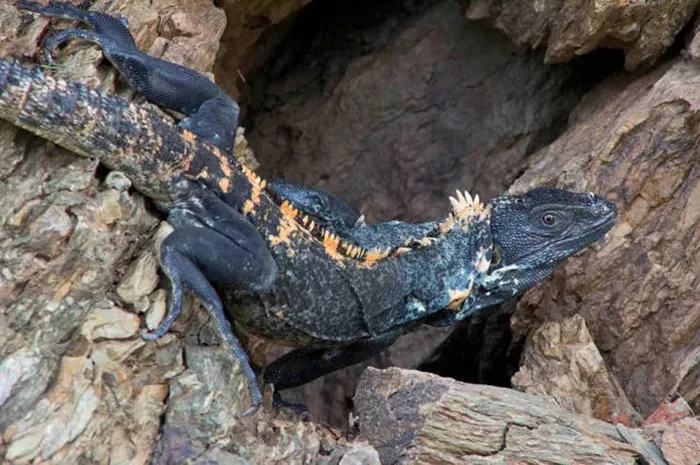
The black iguana is a fascinating reptile found in parts of Central America. It belongs to a group of lizards known for their impressive appearance, agile movements, and strong adaptability. Scientifically, the black iguana is known as Ctenosaura similis. It is also commonly called the black spiny-tailed iguana. This lizard is a member of the family Iguanidae, which includes many types of iguanas found across the Americas.
Black iguanas are known for their rough scales and spiny tails, which they use for defense. They are among the fastest lizards on Earth, which helps them escape from predators. Their coloration and behavior have also made them popular subjects of ecological studies.
This article will explore the black iguana in detail. We will discuss its appearance, habitat, diet, behavior, reproduction, threats, and its role in the ecosystem. By the end of this article, readers will gain a full understanding of this remarkable reptile.
Physical Appearance
The black iguana has a strong and muscular body. Adult males are usually larger than females. A fully grown male can reach up to 1.3 meters (about 4.3 feet) in length, including the tail. Females are usually smaller, around 0.8 to 1 meter in length.
Their bodies are covered with tough, overlapping scales. These scales give them protection from predators and environmental hazards. Along the back and tail, they have a row of pointed spines. These spines are especially noticeable on the tail, giving the species its name: spiny-tailed iguana.
The coloration of the black iguana can vary. Young iguanas are often light brown or gray with dark bands. As they age, their color may become darker. Adult males often develop a black or very dark gray tone. Females tend to remain lighter. Some individuals may also show a slight orange or yellow tint during the breeding season.
The tail is long and powerful. It is not just used for balance but also serves as a weapon. When threatened, the black iguana can lash its tail forcefully to defend itself.
Habitat and Geographic Distribution
Black iguanas are native to Central America. Their natural range extends from southern Mexico through Guatemala, El Salvador, Honduras, and Nicaragua. They are also found in Costa Rica and parts of Panama. In recent decades, black iguanas have been introduced to other regions, including the islands of southern Florida.
These iguanas prefer hot, dry environments. They are commonly found in open woodlands, rocky hillsides, and savannas. However, they can also be seen near human settlements. They often bask on stone walls, rooftops, and roadsides. Because of their ability to climb and adapt, black iguanas are frequently spotted in both urban and rural areas.
They are diurnal animals, meaning they are active during the day. At night, they seek shelter in crevices, tree hollows, or underground burrows. In hot climates, they may rest during the hottest part of the day and become more active in the early morning or late afternoon.
Diet and Feeding Habits
Black iguanas are mainly herbivorous, but their diet can vary. As juveniles, they tend to be more omnivorous. They feed on insects, spiders, and small invertebrates. This high-protein diet helps them grow quickly.
As they mature, their diet becomes more plant-based. Adult black iguanas eat a wide variety of leaves, flowers, fruits, and seeds. They have strong jaws that allow them to chew tough plant materials. In some regions, they feed on cactus pads, hibiscus flowers, and fig fruits.
However, they are opportunistic feeders. If they come across small animals or carrion, they may eat it. In urban areas, they may even feed on food scraps left by humans.
Their digestive system is adapted to break down plant cellulose. They rely on fermentation in their gut, aided by special bacteria, to extract nutrients from fibrous plants.
Behavior and Social Structure
Black iguanas are known for their alertness and agility. They are very fast runners and can escape danger quickly. When threatened, they will first try to flee. If cornered, they may hiss, puff up their body, and lash out with their tail.
These lizards are territorial, especially the males. A dominant male will control a specific area and guard it against rivals. He may use body displays, such as head bobbing and push-ups, to warn intruders. Fights between males can occur, especially during the mating season.
They communicate using body language. Head bobs can signal aggression, curiosity, or even courtship. Tail flicks and body posture are also important in iguana communication.
In some areas, black iguanas live in loose colonies. While each individual has its own space, they may gather in the same area to bask or feed. This semi-social behavior helps them stay alert to predators.
Reproduction and Life Cycle
Black iguanas breed during the dry season. Mating usually takes place in late winter or early spring. The exact timing can vary based on the local climate.
Males become more aggressive during the breeding season. They chase females, perform courtship displays, and fight with other males. After mating, the female will dig a nesting hole in sandy or loose soil.
She lays between 20 and 30 eggs in the nest. The eggs are oval and have a leathery shell. The female may guard the nest for a short time, but she does not provide further care. The eggs are left to incubate for about 90 to 100 days, depending on the temperature and humidity.
When the young hatch, they are completely independent. They are about 15 to 20 centimeters long and are very fast and alert. Their main goal is to avoid predators and find food.
Juvenile iguanas grow quickly in their first year. They reach sexual maturity in about three years, although this can vary based on food availability and environmental conditions.
Predators and Threats
Young black iguanas face many natural predators. Birds of prey, snakes, and mammals such as raccoons and coatis are common threats. Even domestic cats and dogs can catch juvenile iguanas.
Adults have fewer predators due to their size and speed. However, large birds, wildcats, and humans can still pose a danger.
In many regions, habitat loss is a major threat. Deforestation, urbanization, and agriculture reduce the number of safe places where iguanas can live and breed.
Hunting is another problem. In some parts of Central America, black iguanas are hunted for food. They are considered a delicacy in certain local traditions. The eggs are also collected and eaten.
In areas where they have been introduced, such as Florida, black iguanas can become invasive. They may compete with native wildlife and cause damage to plants and buildings. As a result, they are sometimes removed or controlled by local authorities.
Role in the Ecosystem
Despite the challenges they face, black iguanas play an important role in the ecosystem. As herbivores, they help control plant growth. Their feeding can shape the composition of plant communities.
They also act as seed dispersers. Many fruits they eat contain seeds that pass through their digestive system and are deposited in different locations. This helps plants spread and grow in new areas.
In turn, they provide food for many predators. Their eggs and hatchlings support a variety of carnivorous animals. This makes them a key part of the food web.
Their burrows also serve as shelters for other animals. After an iguana leaves a burrow, smaller creatures may move in. These include insects, amphibians, and even birds.
Human Interaction and Conservation
Humans have a mixed relationship with black iguanas. In rural areas, they are sometimes seen as pests because they eat crops or invade gardens. In urban settings, they may damage ornamental plants or enter buildings in search of warmth.
However, they are also admired for their appearance and behavior. Some people keep black iguanas as pets, although they require special care. They need proper heating, lighting, and a spacious enclosure.
Conservation efforts for black iguanas focus mainly on habitat protection. Preserving dry forests, open woodlands, and rocky outcrops is essential for their survival. In some areas, hunting regulations have been introduced to limit overharvesting.
Conclusion
The black iguana is a remarkable reptile with many interesting traits. Its tough appearance, quick reflexes, and strong adaptability have helped it survive in a variety of environments. From open forests to city walls, it finds ways to live and thrive.
Its role in the ecosystem is valuable, both as a consumer of plants and as prey for other animals. While it faces threats from habitat loss and hunting, it continues to be a resilient species.
Understanding and protecting the black iguana can help preserve biodiversity in the regions it inhabits. By learning about this species, we also learn about the delicate balance of nature and the importance of every creature within it.
Related topics