
If you’re a reptile enthusiast or just curious about snapping turtles, you might wonder: How do you determine the age of a snapping turtle? It’s a question that many pet owners, researchers, and wildlife enthusiasts ask. Turtles, particularly the common snapping turtle (Chelydra serpentina), have long lifespans, and knowing their age can tell you a lot about their growth and health.
Just like in human life, age matters for turtles. It can give us clues about their behavior, size, and overall wellbeing. So, let’s dive into this fascinating topic and learn how to tell the age of a snapping turtle in a way that’s easy to understand and full of real-world examples.
Why is Knowing the Age of a Snapping Turtle Important?
Understanding the age of a snapping turtle is crucial for a few key reasons. First, it helps in wildlife conservation efforts. Knowing how old a turtle is can aid scientists in monitoring populations and ensuring their protection. Secondly, for pet owners, knowing the age helps you understand how to care for your snapping turtle properly, especially in terms of diet, habitat, and medical care.
If you’ve ever wondered whether your pet snapping turtle is a juvenile or an adult, or how much longer they might live, this guide will help you answer that question.
The Basics of Snapping Turtle Growth
Before we jump into specific techniques, let’s break down the basics of how snapping turtles grow. Snapping turtles grow at a fairly steady rate, but this growth is slow, especially once they reach adulthood. Like many reptiles, their growth can be affected by the environment, including factors like temperature, food availability, and habitat.
Here’s an interesting comparison to help you understand: Imagine a child growing up. They might shoot up in height quickly at a certain age, but after they hit their teenage years, growth slows down. Similarly, snapping turtles grow rapidly in their early years, but as they mature, their growth slows.
Method 1: Counting Growth Rings on the Shell (Scute Rings)
One of the most common ways to determine a snapping turtle’s age is by counting the growth rings on its scutes (the bony plates on its shell). This method is similar to how we count tree rings to determine the age of a tree.
How It Works:
Examine the Scutes: Look at the scutes, especially the marginal scutes along the edge of the turtle’s shell. As the turtle grows, it adds new layers to its scutes, much like a tree adds new rings as it grows.
Count the Rings: Each ring on the scute represents a year of growth. So, by counting the rings, you can estimate the turtle’s age.
However, just like a tree, these rings can sometimes be misleading. For instance, in warmer climates, turtles might grow more rapidly, leading to fewer rings or even misleading growth patterns. In colder areas, growth may slow down, resulting in more rings in a single year.
The Pros and Cons:
Pros: It’s a simple and natural method.
Cons: Growth rings can sometimes be difficult to distinguish or inconsistent depending on environmental factors.
Method 2: Measuring the Size of the Turtle
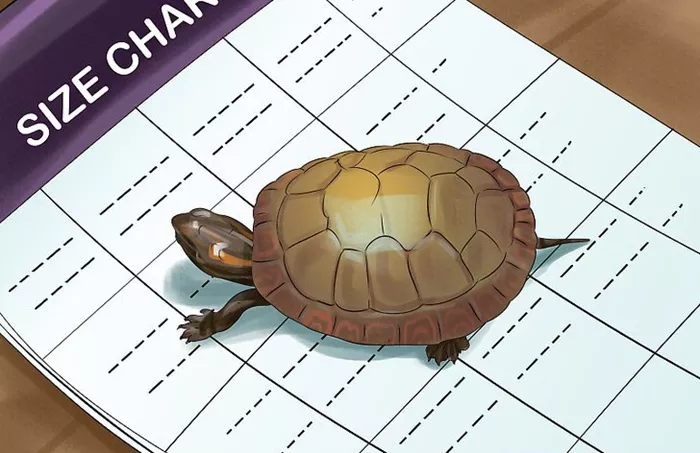
Another way to estimate the age of a snapping turtle is by looking at its size. While this isn’t a foolproof method, it can provide you with a rough idea of how old the turtle might be. Larger turtles are usually older, but there’s a lot of variability depending on the environment and diet.
See Also: Could That Be a Snapping Turtle in Your Pond? Here’s How to Know
General Size Ranges for Snapping Turtles:
Hatchlings: Typically, snapping turtle hatchlings are only about 2-3 inches in length.
Juveniles (1-5 years old): They can grow to around 4-8 inches in length.
Adults: Snapping turtles reach maturity at around 10-12 inches, and larger individuals may grow up to 20 inches or more, especially females.
Again, this method is not perfect. A snapping turtle in a rich, abundant environment might grow faster than one in a less optimal habitat. So, while size can give you a general idea, it doesn’t provide an exact age.
Method 3: Observing Behavior and Activity Levels
Sometimes, the age of a snapping turtle can be inferred based on its behavior. Young turtles are generally more active and energetic, while older turtles tend to be slower and more sluggish.
How to Tell by Behavior:
Young Snapping Turtles (Under 10 years): They are often seen swimming around rapidly, exploring their environment, and showing an overall energetic demeanor.
Adult Snapping Turtles (Over 10 years): They become more territorial and less mobile. If you notice a snapping turtle that isn’t as quick to move and spends more time in one spot, it’s likely older.
This method is a bit more abstract, but it gives you clues based on how the turtle moves, interacts with its environment, and even eats.
Method 4: Growth Rate and Environmental Factors
The growth rate of snapping turtles can be influenced by environmental factors such as temperature, food availability, and even water quality. In warmer waters, snapping turtles tend to grow faster, meaning they might reach a certain size at a younger age.
How to Use This Information:
If you know the temperature and other environmental factors of where the turtle lives, you can make educated guesses about how old it might be. In colder climates, for example, snapping turtles grow slower, so a large turtle might be older than one of the same size in a warmer climate.
This method works well when you have knowledge about the specific environment of the turtle, but it can be tricky without exact data.
Interesting Fact: Can You Determine a Snapping Turtle’s Age by Its Beak?
Here’s a fun little tidbit that might surprise you: Some reptile enthusiasts believe that you can even guess a turtle’s age based on the condition of its beak. Younger snapping turtles have a more pointed, sharp beak, while older turtles’ beaks become more rounded and worn down. This isn’t a perfect method, but it’s a cool extra detail to consider!
Conclusion
In summary, determining the age of a snapping turtle involves a few different methods. By counting the rings on their scutes, observing their size, behavior, and even considering environmental factors, you can get a rough idea of their age. However, none of these methods are 100% accurate, and each comes with its own set of challenges.
For pet owners, understanding your turtle’s age helps ensure that you provide the best care possible. For wildlife enthusiasts and scientists, it aids in the study of turtle populations and conservation efforts. No matter your reason, being able to estimate the age of a snapping turtle is an awesome skill to have!
Related topics: