
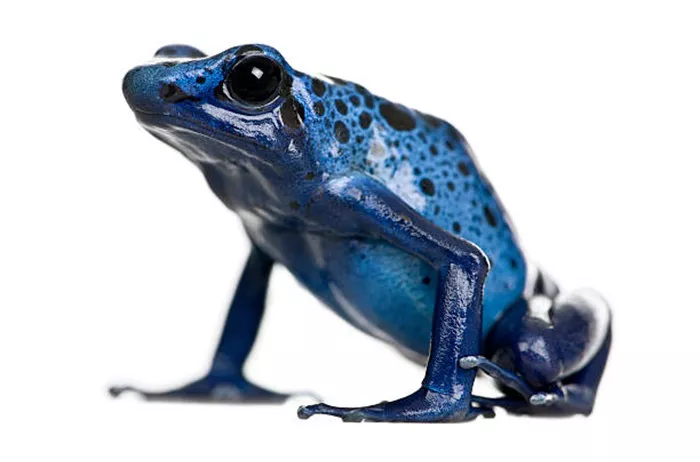
Have you ever wondered why the vibrant blue poison dart frog is so colorful? Why do these little creatures, measuring just a few centimeters long, carry such a dangerous punch? It’s not magic, but a fascinating combination of biology and nature’s survival tactics.
Blue poison dart frogs (Dendrobates tinctorius “azureus”) are renowned for their brilliant color and potent poison. Found in the rainforests of Suriname, they are more than just a beautiful amphibian; they’re living examples of nature’s clever adaptations. But what’s the secret behind their poison?
In this article, we’ll explore how blue poison dart frogs get their venom, the role of their diet in this process, and why their bright colors are more than just for show. Let’s dive into the science behind these incredible creatures.
The Basics of Blue Poison Dart Frogs
Before we jump into the nitty-gritty of how blue poison dart frogs get their poison, let’s first understand these frogs a little better.
What Are Blue Poison Dart Frogs?
Blue poison dart frogs are small, strikingly blue amphibians that belong to the family Dendrobatidae. They are native to the rainforests of Suriname, and while they are stunningly beautiful, their vibrant color acts as a warning to predators about their toxicity. These frogs are often referred to as azureus, a nod to their striking blue hue.
These frogs are typically about 3.5 cm to 4.5 cm in length and have distinct black spots on their skin. These spots are unique to each individual, much like human fingerprints. The blue color and black markings serve as a powerful visual warning known as aposematic coloration, which signals to potential predators that the frog is not safe to eat.
The Poison: What Makes Blue Poison Dart Frogs Toxic?
Here’s the big question—why do blue poison dart frogs have poison, and how do they produce it? To understand this, we need to look into their diet and biology.
What Exactly is Poison in Blue Poison Dart Frogs?
The poison found in blue poison dart frogs comes from toxins known as pumiliotoxins. These toxins are strong neurotoxins, which means they interfere with nerve signals, causing paralysis or even death to predators that try to eat them.
You might think of it like a car that runs smoothly with all the right parts, but if you put in the wrong kind of fuel, it starts to sputter and break down. Similarly, these toxins break down the ability of an animal’s nervous system to function properly.
But here’s the twist: blue poison dart frogs don’t actually make these toxins on their own. Unlike some animals that can create their own venom, these frogs rely on their diet to “produce” their poison.
See Also: Why Are Poison Dart Frogs So Blue? The Science Explained
How Do Blue Poison Dart Frogs Get Their Poison?
The Role of Their Diet: A Natural “Storage System”
So, how do these little frogs get their poison? Well, they “collect” toxins through their diet. The key to their venomous power lies in the insects they eat, specifically ants.
Blue poison dart frogs mainly consume ants, termites, beetles, and other small invertebrates found in the rainforest. Many of these insects carry toxins in their bodies, and when the frogs consume them, they store these toxins in their skin. The process is similar to how a sponge soaks up water.
This phenomenon is known as dietary sequestration, which means that the frogs absorb and store toxins found in their prey. To make it simpler: think of it like this—when you eat food, your body absorbs nutrients, but with these frogs, they absorb toxins from their meals, making them toxic to predators.
What Happens in Captivity?
Now, here’s where things get interesting. When blue poison dart frogs are kept in captivity, they often lose their toxicity. This is because the insects they consume in the wild are full of the toxic compounds the frogs need to survive. In captivity, without access to these toxic insects, the frogs become non-toxic.
It’s like when you go to the gym and work out with weights—you build muscle. But if you stop lifting weights, those muscles start to shrink. For these frogs, their diet is their “workout” for producing poison.
The Science Behind the Toxins
You might be asking, “What exactly are these toxins, and how do they affect predators?” Let’s break it down:
What Are Pumiliotoxins?
Pumiliotoxins are a group of chemical compounds found in the skin of certain species of dart frogs. These toxins are potent enough to paralyze small predators like lizards, snakes, and birds. They work by interfering with the ion channels in nerve cells, essentially preventing nerves from sending messages between the brain and muscles. The result? Paralysis or death for the predator.
Interestingly, not all dart frogs produce the same type of toxin. The toxicity level varies based on what the frog eats. Some species, like the golden poison dart frog (Phyllobates terribilis), have even stronger toxins. But in the case of the blue poison dart frog, while their toxin is potent, it’s not the most dangerous in the dart frog family.
The Bright Blue Color: More Than Just a Pretty Hue
The vibrant blue color of these frogs isn’t just for decoration. This coloration serves a specific purpose in nature. Known as aposematism, bright colors in animals serve as a warning to predators. The bright blue color of the blue poison dart frog signals to potential predators that the frog is toxic and should be avoided.
Think of it like a neon sign flashing the word “danger.” It’s an effective survival strategy. The more vivid the color, the more likely a predator will avoid it. After all, why take a chance on a meal that could harm you?
A Warning to Potential Predators
It’s not just about looking pretty. The color is a biological signal that communicates danger. Even animals that don’t know what the frog is can learn through experience that the frog is not a safe snack.
Why Are Blue Poison Dart Frogs So Special?
The fact that blue poison dart frogs can store toxins in their skin is a remarkable survival adaptation. These frogs use their poisonous nature to defend themselves against predators. But here’s the catch: their poison is also a result of their environment. The rainforest ecosystem plays a vital role in shaping the frog’s biology.
Blue poison dart frogs are a testament to how closely animals are connected to their environment. By feeding on specific insects and absorbing toxins, they become formidable survivors in a world full of predators.
Conclusion
In summary, blue poison dart frogs are extraordinary creatures with an incredible method of survival. They don’t produce their own poison; instead, they gather toxins from the insects they consume. This unique adaptation makes them one of the most fascinating amphibians in the world. Their vibrant blue color and toxic skin are powerful defenses against predators, allowing them to thrive in the wild.
These frogs are living proof that nature has its own way of creating complex and efficient survival strategies. Next time you see a blue poison dart frog, you’ll know that the vibrant blue color is much more than just eye-catching—it’s a warning to potential predators that this tiny amphibian is not to be messed with!
Related topics: