
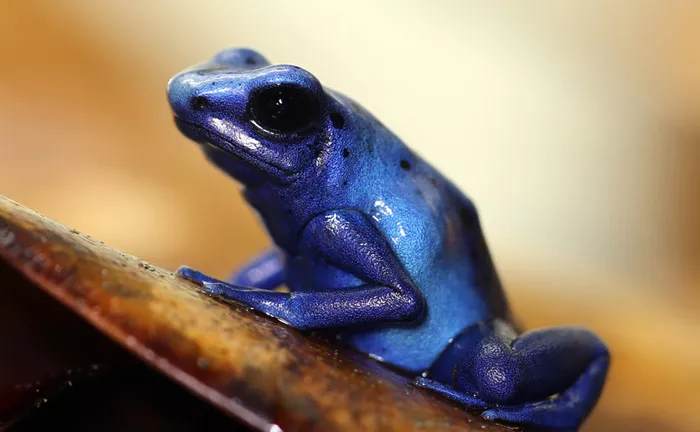
Imagine stepping into the dense, humid rainforest of Central or South America. The air is thick with the earthy smell of wet foliage, and the sound of chirping insects fills your ears. In the midst of this vibrant ecosystem, you spot a bright blue creature hopping across the leaves. This is no ordinary frog. This is the Dendrobatoides tinctorius, better known as the Blue Poison Dart Frog.
If you’ve ever wondered when this extraordinary amphibian was discovered, you’re not alone. It’s an animal that blends beauty, mystery, and a dash of danger. But how long has it been since this tiny, vibrant frog was first documented by scientists? Let’s take a journey through time to unravel the story of its discovery.
The Origins of the Blue Poison Dart Frog: A Natural Wonder
Before diving into its discovery, let’s quickly go over what makes the Blue Poison Dart Frog so fascinating. The name “poison dart” is not just a catchy title. It refers to the toxic chemicals these frogs secrete, which are strong enough to be used by indigenous people on their blow darts for hunting. However, they only produce this toxin when raised in the wild, eating a specific diet of ants and other small arthropods.
Their skin is a brilliant, almost fluorescent blue, and in some cases, they can have orange, yellow, or even green markings. But it’s not just the color that makes them stand out. They have been the subject of study for decades due to their unique biological traits.
Now, you may be thinking, “That sounds amazing! But when did we first find out about these creatures?”
The Early Days: Discovering the Blue Poison Dart Frog
The exact moment when the Blue Poison Dart Frog was first discovered isn’t as simple as one might think. The frog was first recorded in the wild by scientists in the mid-20th century. However, it’s important to know that indigenous people had been aware of these frogs long before that. For them, the brightly colored frogs were part of their everyday lives, but they didn’t have the scientific knowledge to classify and study them as we do today.
In the 1950s, researchers began to take an interest in these amphibians. The first documented scientific encounter with the Blue Poison Dart Frog occurred in the 1950s when American biologists started to study the species in the wild. It was around this time that the frog’s vibrant blue coloration caught the attention of zoologists.
Early Scientific Exploration: Bringing the Frog into the Spotlight
It wasn’t until the late 1950s and early 1960s that the Blue Poison Dart Frog began to gain more attention in the scientific community. During this period, herpetologists – scientists who study amphibians and reptiles – began visiting the rainforests of Central and South America, including regions like French Guiana, Suriname, and the Amazon Basin, in search of new species.
The key breakthrough came in the 1960s when researchers classified the species scientifically and gave it the name Dendrobatoides tinctorius. This was a huge step in the exploration of amphibians because it allowed the Blue Poison Dart Frog to be recognized as a distinct species, worthy of further research and study.
The name “Dendrobatoides” refers to a group of frogs known for their toxic secretions, while “tinctorius” comes from the Latin word for “dye,” which refers to the frog’s strikingly colorful skin. It’s amazing to think that the vibrant blue of the frog’s skin might have been an adaptation to warn predators of its toxicity.
Fascinating Discoveries: A Closer Look at Its Habits and Toxins
One of the most fascinating things about the Blue Poison Dart Frog is the mystery of its toxicity. It wasn’t until the 1970s and 1980s that researchers began to understand why these frogs were toxic. They discovered that the frog’s diet was a key factor. In captivity, Blue Poison Dart Frogs do not produce the toxins found in the wild, leading scientists to the conclusion that the frogs acquire their poison from the insects and plants they eat.
This revelation led to even more studies, as herpetologists sought to unravel the exact relationship between the frog’s diet and its toxic secretion. The secret was found in the alkaloids – naturally occurring chemical compounds that the frogs acquire from consuming certain ants, beetles, and mites in the wild. These alkaloids are what make the frog’s skin toxic, a defense mechanism to ward off potential predators.
See Also: How Do Blue Poison Dart Frogs Get Their Color?
The Global Interest: Expanding Research and Public Fascination
By the 1990s, the Blue Poison Dart Frog had caught the interest of both the scientific community and the public. As researchers learned more about the frog’s behavior, breeding habits, and toxins, it became a staple in research about amphibians and chemical defenses in the animal kingdom.
At the same time, the Blue Poison Dart Frog began to appear in zoos and private collections. This sparked a fascination with the species, especially due to its brilliant blue color and its status as one of the most iconic dart frogs. People started to realize that the species was not just a simple amphibian – it was a living, breathing work of art from nature.
Interestingly, it wasn’t just the frog’s vivid color that made it famous. Its role in environmental conservation also grew in importance. Many species of dart frogs, including the Blue Poison Dart Frog, have been used to illustrate the fragility of ecosystems and the importance of biodiversity. Scientists warned that destruction of the frogs’ habitats in the rainforest could lead to a decline in their populations, as well as other species that depend on the same ecosystem.
The Role of the Blue Poison Dart Frog in the Modern-Day Scientific Community
Today, the Blue Poison Dart Frog is considered a symbol of ecological conservation. Its discovery opened the door to understanding the delicate balance of ecosystems in rainforests. More importantly, it highlighted the complexity of natural toxins and how they play a role in animal survival.
Additionally, the frog’s vibrant coloration and poisonous nature have made it a popular subject of scientific research, particularly in the fields of pharmacology and toxicology. It’s being studied for potential medicinal properties that could be used in the development of new drugs, particularly those related to pain management.
Conclusion
From its first discovery by indigenous peoples to its classification by Western scientists in the 1950s, the Blue Poison Dart Frog has come a long way. It has captivated the imaginations of people all over the world with its beauty, its mystery, and its toxic secretions. Whether you’re a fan of reptiles, a budding herpetologist, or simply someone who enjoys the wonders of nature, the Blue Poison Dart Frog is an animal that holds a special place in the heart of the scientific community.
Though its discovery is rooted in the mid-20th century, the story of the Blue Poison Dart Frog is far from over. Researchers continue to study its habits, its toxins, and its potential applications in modern science. If you’re lucky enough to catch a glimpse of one of these fascinating creatures in the wild, you’ll be witnessing not just a frog, but a symbol of the incredible biodiversity our planet has to offer.
Related topics: