
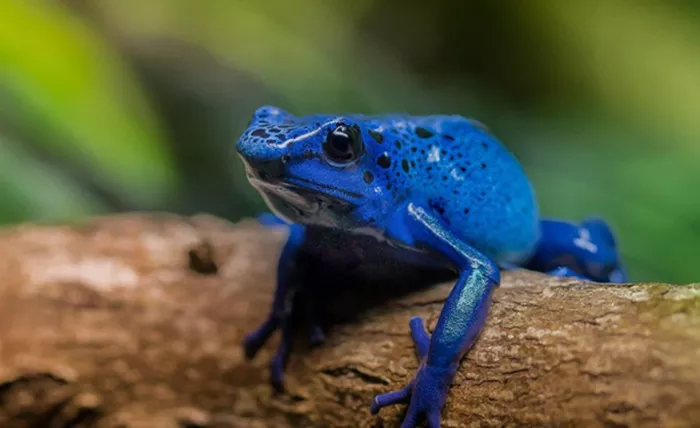
Have you ever wondered why some frogs, particularly the famous poison dart frogs, have such dazzling blue skin? It’s one of nature’s most fascinating phenomena. These little creatures, often seen as the embodiment of danger, are beautiful but deadly. But what’s the real reason behind their strikingly vibrant blue colors? Let’s dive into this mystery and uncover the secrets behind one of nature’s most stunning adaptations.
The Blue Dart Frog: A Natural Wonder
Before we dive into the “why,” let’s first get to know the blue poison dart frog a bit better. This species, Dendrobates tinctorius, is renowned for its bright blue skin. They’re native to the rainforests of Central and South America, particularly in regions like Suriname, French Guiana, and Brazil. These frogs are often described as “living jewels” because of their eye-catching colors, but their appearance isn’t just for show—it’s a survival tactic.
The Fascination with Color
You’ve probably heard the phrase, “don’t judge a book by its cover.” But in nature, appearance can say a lot about an animal, especially when it comes to poison dart frogs. Their bright blue (or sometimes yellow, red, and orange) colors serve a very specific purpose: warning coloration. In other words, these frogs advertise to potential predators that they are not safe to eat. This is a phenomenon known as aposematism.
Imagine you’re in the wild, and you come across a brightly colored frog. What do you think? You probably instinctively avoid it. That’s because bright colors in the animal kingdom are often a signal of danger—poison, toxins, or an unpleasant taste. Poison dart frogs take advantage of this and use their bright blue skin to tell predators, “I’m toxic. Stay away.”
But the question remains: Why specifically blue? Let’s dive deeper.
The Science Behind Their Blue Color
To understand why these frogs are blue, we need to take a look at biology and chemistry. You might think that their blue skin is just a natural pigment, like the blue of a bluejay’s feathers. However, it’s a bit more complicated than that.
Toxins and Chemical Compounds
Poison dart frogs owe their toxicity to the diet they consume. They eat insects, especially ants, that contain alkaloid toxins. These toxins are absorbed into the frog’s system and stored in its skin, giving it its deadly properties. The alkaloids vary depending on the species of frog and the insects it eats. Interestingly, captive-bred poison dart frogs often lose their toxic traits because they don’t have access to the same diet as wild frogs.
But what does this have to do with the color blue? The answer lies in the chemistry of these alkaloids. Certain alkaloid compounds can interact with light in such a way that they create a blue hue on the frog’s skin. This doesn’t mean that the frog’s skin is made up of blue pigment in the traditional sense. Instead, the way light reflects off their skin, combined with the chemical compounds in their skin, creates that vibrant blue color.
The Role of Structural Coloration
Now here’s a cool scientific concept to wrap your head around: structural coloration. Unlike pigment-based colors, structural colors don’t come from chemicals but from the microscopic structures on the skin or feathers. When light hits these structures, it bends in a way that produces certain colors. For the blue dart frog, the microscopic arrangement of its skin cells may contribute to the blue effect.
Imagine holding a bubble up to the sunlight. It shimmers with all the colors of the rainbow, right? That’s structural coloration at work. For poison dart frogs, their skin acts somewhat like the surface of a bubble, refracting light and creating their stunning blue hue.
See Also: Unveiling the Blue Poison Dart Frog: Class and Classification Explained
Why Blue? Is There a Specific Advantage?
So, now you might be asking, “Why blue and not just bright yellow or red like some of their relatives?” Good question!
The Importance of Blue in the Wild
While many poison dart frogs come in vibrant yellow or red, the blue dart frog’s color might have evolved for specific environmental reasons. Blue may offer the perfect combination of visibility and effectiveness for warding off predators. Here’s why:
Visibility: In the dark, damp, and often shadowy environment of the rainforest floor, blue is one of the most visible colors. It’s bright and stands out against the dark greens and browns of the forest. This high contrast makes it easy for predators to spot the frogs, but that’s the point! The blue serves as a clear warning.
Camouflage from Predators: While blue stands out, it also helps blend with certain parts of the frog’s habitat. For example, many dart frogs live near pools or on mossy rocks, where the blue can blend in with the surroundings, especially when viewed from a distance.
Efficacy of Toxic Warning: Bright blue coloration might be more effective in signaling toxicity to predators in the rainforest. Blue could be linked to an even more potent warning system than other colors, making it more likely that predators will leave these frogs alone.
Environmental and Evolutionary Factors
From an evolutionary standpoint, blue might simply have been the most successful coloration. Over millions of years, the frogs with the brightest, most visible blue survived longer because predators avoided them. This led to the continuation of blue in the gene pool.
It’s all about natural selection—traits that give an animal an advantage for survival tend to get passed down through generations. So, blue became a dominant trait for this species, and it stuck.
What About the Other Colors?
Now, it’s important to note that not all poison dart frogs are blue. In fact, they come in a wide range of colors, including yellow, green, red, and orange. But why the variation? What makes some frogs yellow and others blue?
The different colors might have evolved based on similar survival tactics, but the toxins in their skin, along with their habitats, could explain why some frogs are blue and others are a different color.
The Significance of Each Color
Yellow Dart Frogs: Yellow frogs are highly visible too, and their bright color is often associated with batrachotoxin, one of the most toxic substances in the animal kingdom. They may use this coloration as an even more potent warning.
Red Dart Frogs: Red is another color associated with toxicity, but it’s also a more common color in nature. As a result, red frogs might need additional strategies (like louder calls) to stand out from the crowd.
While the blue coloration works wonders for one species, other species have adapted their own shades of color to protect themselves, based on their environment and the predators they face.
Conclusion
To wrap things up, the blue of poison dart frogs is a beautiful and complex adaptation. It’s not just for show—it’s a survival mechanism, carefully crafted by evolution over thousands of years. From their diet of toxic insects to the way their skin reflects light, everything about their appearance is designed to send a loud and clear message: “I’m dangerous. Don’t mess with me.”
So, next time you see a vibrant blue dart frog, remember: that color is more than just a pretty sight. It’s a life-or-death strategy that ensures these frogs survive in the wild.
Related topics: