
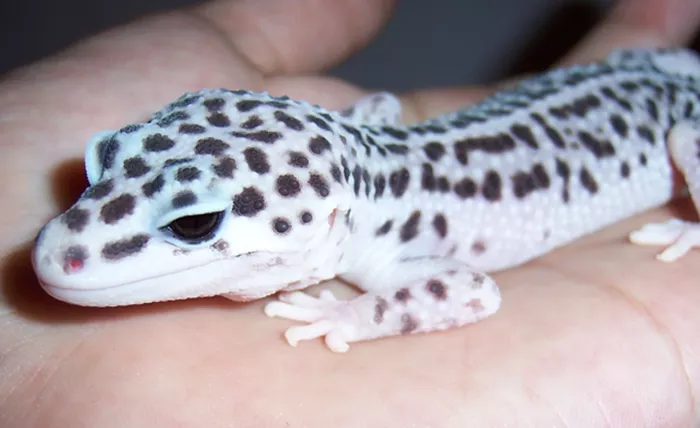
The Mack Snow Leopard Gecko is one of the most fascinating morphs of the common Leopard Gecko (Eublepharis macularius), not only for its unique physical traits but also for its intriguing history and genetic makeup. If you’ve heard of this morph, you probably know that it’s distinguished by its stunning pale body and dark eyes. But what you may not know is that the Mack Snow was an accidental discovery by John and Amy Mack of Reptiles by Mack.
In this article, we’ll explore the history of the Mack Snow Leopard Gecko, its genetic inheritance, care requirements, and breeding practices. Whether you’re a novice or an experienced reptile keeper, you’ll find everything you need to know about these incredible geckos.
The History of the Mack Snow Leopard Gecko
The Mack Snow Leopard Gecko owes its existence to an unexpected genetic discovery by breeders John and Amy Mack. During a breeding season, they came across some hatchlings that exhibited unusual coloration compared to the typical Leopard Gecko hatchlings. These hatchlings had a pale, almost “snowy” appearance instead of the usual yellow or orange bands, which were later identified as the beginning of the Mack Snow morph.
The Macks began breeding these pale geckos back to each other, and over time, they produced three distinct genetic outcomes: Super Snows, Mack Snows, and Normals. This genetic combination marked the birth of the Mack Snow morph, which would go on to become one of the most sought-after variants of Leopard Geckos.
Genetics of the Mack Snow Leopard Gecko
Understanding the genetics behind the Mack Snow Leopard Gecko is essential, especially if you plan on breeding these unique creatures. Originally, Mack Snows were thought to be a co-dominant trait, but after further research, it was concluded that the Mack Snow is actually incomplete dominant. This means that the Mack Snow morph is the heterozygous form of the gene, while the Super Snow is the homozygous form.
The Three Genetic Forms
Super Snow: The homozygous form (two copies of the Mack Snow gene). Super Snows typically exhibit an all-purple or silver hue at birth, and as they mature, they develop a white body with black, broken pinstripes and solid black eyes.
Mack Snow: The heterozygous form (one copy of the Mack Snow gene). These geckos exhibit the characteristic pale color but with more variation compared to the Super Snow, and they do not have solid black eyes.
Wild Type: The standard form of Leopard Geckos without any Mack Snow genes. Wild Type Leopard Geckos generally have yellow or orange bodies and normal markings, which are quite distinct from the pale Mack Snow variants.
Key Features of Mack Snows
Hatchling Appearance: As hatchlings, Mack Snow Leopard Geckos often have white or pale bands instead of the usual yellow bands seen in typical Leopard Geckos. This color will generally fade as they grow, turning into a yellowish hue.
Eye Color: One of the most noticeable characteristics of the Mack Snow morph is its eye color. While the Super Snows have solid black eyes, the Mack Snows can have dark eyes, though they don’t exhibit the same intensity of color as the Super Snows.
Temperature Sexing: Unlike many other Leopard Gecko morphs that are temperature-sexed (where higher temperatures typically produce males and lower temperatures produce females), Mack Snow Leopard Geckos have not been proven to consistently follow this pattern. This means that temperature fluctuations do not have the same predictable impact on their sex ratio.
How to Care for a Mack Snow Leopard Gecko
Now that you understand the genetic aspects, let’s dive into how to properly care for a Mack Snow Leopard Gecko. These geckos, while relatively easy to care for, do require specific environmental conditions to thrive. Whether you are a beginner or a seasoned reptile keeper, following these guidelines will ensure that your Mack Snow is healthy and happy.
Enclosure Setup
The enclosure for a Mack Snow Leopard Gecko should mimic its natural habitat as closely as possible. Here’s what you need to get started:
Tank Size: A 20-gallon tank is typically sufficient for a single adult Mack Snow Leopard Gecko. If you plan to house more than one, a larger tank is required.
Substrate: Use reptile-safe substrates like ceramic tiles, reptile carpet, or paper towels. Avoid loose sand, as it can cause impaction if ingested.
Temperature: Mack Snow Leopard Geckos require a temperature gradient to regulate their body heat. During the day, the temperature should range from 75°F to 85°F, with a basking spot heated to around 90°F to 95°F.
Humidity: Keep the humidity level around 30% to 40%. Providing a humidity hide can help with shedding.
Diet and Feeding
Mack Snow Leopard Geckos are insectivores, meaning their diet consists primarily of live insects. Offer them a variety of insects, such as:
Crickets
Mealworms
Dubia Roaches
Waxworms (as an occasional treat)
Be sure to dust their food with calcium powder to ensure they receive the necessary nutrients for healthy bone development. Fresh water should always be available in their enclosure.
Handling
Mack Snow Leopard Geckos are known for being calm and friendly. They make excellent pets due to their docile nature, but it’s important to handle them gently. Begin by letting your gecko get accustomed to your presence, and start slow by offering your hand for them to crawl onto.
Breeding Mack Snow Leopard Geckos
Breeding Mack Snow Leopard Geckos can be an exciting and rewarding experience, but it requires careful planning and attention to genetic details. Let’s take a look at the possible breeding outcomes and combinations.
Breeding Combinations and Genetic Outcomes
Mack Snow x Mack Snow:
25% Super Snow
50% Mack Snow
25% Wild Type
Mack Snow x Normal:
50% Mack Snow
50% Wild Type
Super Snow x Normal:
100% Mack Snow
Super Snow x Mack Snow:
50% Super Snow
50% Mack Snow
Super Snow x Super Snow:
100% Super Snow
Crossbreeding with Other Morphs
Many breeders are experimenting with crossing Mack Snows into different morphs, creating exciting new combinations:
Super R.A.P.T.O.R.: Created by Ron Tremper by crossing Mack Snows with R.A.P.T.O.R. geckos, resulting in a completely white Leopard Gecko with red eyes.
Mack Snow/Fasciolatus: Alberto Cadolini has worked on crossing Mack Snows with Line Bred Fasciolatus females, resulting in larger hatchlings with longer tails.
Mack Snow Enigma: Kelli Hammack has bred Mack Snow Leopard Geckos with the Enigma morph, leading to unique combinations like the Red Eye Mack Snow Enigmas.
Super Snow Bells and Super Snow Blizzards: Paul Sage has crossed Mack Snows with Bell Albinos and Blizzards, producing Super Snow Bells, which are all white with red eyes, and Super Snow Blizzards, which resemble Blizzards with a frosted appearance.
Conclusion
The Mack Snow Leopard Gecko is an incredibly unique morph with a fascinating genetic background. Its pale coloration, striking eye color, and relatively easy care requirements make it a standout choice for both beginners and seasoned reptile enthusiasts. Whether you’re captivated by its beauty or excited to experiment with breeding, the Mack Snow is sure to impress.
By understanding its genetic makeup, care requirements, and potential breeding outcomes, you’ll be well on your way to keeping a happy, healthy Mack Snow Leopard Gecko. Happy gecko keeping!
Related topics: