
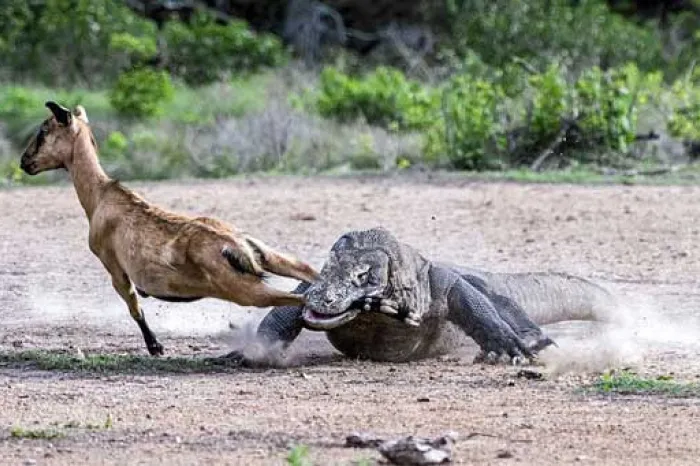
Komodo dragons are the largest living lizards on Earth, and they have evolved impressive methods to hunt and kill their prey. These reptiles rely on a combination of sharp senses, physical power, and venom to subdue animals much larger than themselves.
Sensing Their Prey
Komodo dragons use their keen sense of smell to detect potential prey from several kilometers away. They flick their long, forked tongues to pick up scent particles in the air. These particles are then analyzed by an organ in the roof of their mouth called the Jacobson’s organ, which helps them identify the exact location of their target.
The Approach
Once a Komodo dragon locates its prey, it moves cautiously and slowly to avoid detection. Despite their bulky appearance, they can sprint quickly over short distances if needed. They often rely on ambush tactics, waiting patiently for the right moment to strike.
The Attack
When the dragon is close enough, it lunges at its prey with powerful jaws and sharp teeth designed for tearing flesh. Unlike many predators that kill instantly with a bite to the neck or throat, Komodo dragons deliver a bite that causes significant damage but does not always result in immediate death.
The Role of Venom
Komodo dragons have venom glands loaded with toxic proteins that prevent blood clotting and lower blood pressure in their victims. When bitten, the prey begins to weaken due to blood loss and shock caused by the venom. This venomous bite works alongside harmful bacteria naturally present in the dragon’s mouth, making infections more likely if the prey escapes initially.
Tracking the Prey
If the animal manages to run away after being bitten, the Komodo dragon patiently follows it for hours or even days. Thanks to their excellent sense of smell, they can track wounded prey until it becomes too weak to escape.
Final Kill and Feeding
Once the prey collapses from blood loss or venom effects, the Komodo dragon moves in for the final kill. They use their strong limbs and sharp claws to hold down the animal while delivering fatal bites. Afterward, they feed on the carcass using their serrated teeth to tear through tough skin and muscle.
Conclusion
Komodo dragons combine stealth, physical strength, venomous bites, and patient tracking to effectively hunt large prey. Their unique hunting strategy allows them to survive as apex predators in their island habitats. Understanding these behaviors sheds light on how these remarkable reptiles maintain their role at the top of the food chain.
Frequently Asked Questions
How strong is a Komodo dragon’s bite?
A Komodo dragon has a powerful bite capable of tearing flesh and breaking bones. Their jaws exert significant force, which helps them subdue large animals.
Is the venom of a Komodo dragon deadly?
Yes, their venom contains toxins that disrupt blood clotting and lower blood pressure, contributing to shock and eventual death of their prey.
Can Komodo dragons run fast?
They can sprint up to speeds of around 20 kilometers per hour (12 mph) over short distances despite their large size.
Do Komodo dragons only hunt live prey?
While they prefer live prey, Komodo dragons are also scavengers and will feed on carrion if available.