
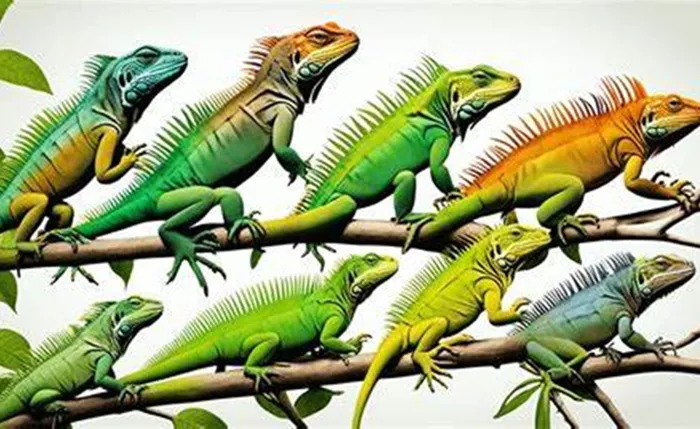
Iguanas are one of the most recognizable reptiles in the world. Known for their long tails, distinctive crests, and often vibrant green colors, they are a fascinating subject of study. But where do these creatures come from? To answer this, we need to dive into the world of reptilian evolution. Understanding the ancestors of iguanas can provide us with insight into how these animals have evolved over millions of years to become the creatures we recognize today. This article will explore the deep evolutionary history of iguanas, tracing their lineage back to their earliest ancestors and examining the key stages in their development.
In this article, we will examine the evolutionary tree that leads to the modern iguana. By studying their ancestors, we will understand how iguanas fit into the broader picture of reptilian evolution and their role in the ecosystem.
What Are Iguanas?
Before we explore their ancestors, it’s important to define what an iguana is. Iguanas are members of the Iguanidae family, which includes a variety of species known for their herbivorous diets and unique physical features. These reptiles are native to the Americas, with species found from North America all the way to South America and the Caribbean. Iguanas are often characterized by their long tails, large body size, and a row of spines running down their backs.
Modern iguanas fall into several groups, such as the green iguana (Iguana iguana), the marine iguana (Amblyrhynchus cristatus), and the rock iguana (Cyclura). However, these species share a common ancestry that goes back millions of years.
Evolution of Reptiles
To trace the ancestors of iguanas, we need to look at the broader evolution of reptiles. The evolutionary history of reptiles dates back to the late Carboniferous period, around 300 million years ago, when the first reptiles emerged from amphibians. These early reptiles were different from the amphibians that had dominated the Earth up to that point. They were fully adapted to life on land, with tough, scaly skin that helped prevent water loss, and hard-shelled eggs that allowed them to reproduce without the need for water.
The reptilian lineage split into various groups, including the ancestors of modern snakes, lizards, and turtles. One of the key groups in this early diversification was the archosaurs, which eventually gave rise to crocodiles, birds, and dinosaurs. Meanwhile, other reptiles evolved into the lepidosaurs, which include lizards and snakes.
Iguanas belong to the order Squamata, which includes lizards and snakes. The evolutionary divergence of squamates happened around 250 million years ago, during the Triassic period.
The Early Ancestors of Iguanas
Iguanas, along with other modern lizards, are descended from a group of reptiles known as the “earliest squamates.” The earliest known squamates date back to the Late Triassic period (around 220 million years ago). These early reptiles were small, lizard-like creatures that resembled modern-day geckos and skinks.
The ancestors of iguanas were likely arboreal, living in trees and adapting to a diet that consisted mainly of plants and insects. This lifestyle is reflected in the structure of their limbs and bodies, which are suited for climbing. It’s believed that these early squamates were one of the first groups of reptiles to adapt to an herbivorous diet, paving the way for modern iguanas to become primarily plant-eaters.
The Rise of the Iguanid Family
The emergence of the iguana family, Iguanidae, occurred around 80 million years ago, during the Cretaceous period. This period was marked by a great diversification of life, especially among the reptiles. The iguanid family includes not only the iguanas but also the closely related chameleons and agamids.
Fossils of early iguanids show that these reptiles were likely similar to modern iguanas but with more primitive features. They were larger, with some species growing as long as 10 feet. Over time, the iguanids evolved into various forms, with some species becoming more adapted to life on the ground, while others, like the marine iguana, adapted to life in coastal regions.
Key Evolutionary Milestones
Several key evolutionary milestones helped shape the ancestors of modern iguanas:
Adaptation to Herbivory: One of the key features of modern iguanas is their herbivorous diet. This trait likely evolved early in their lineage, as the earliest squamates were likely omnivores or insectivores. Over time, the ability to process plant material and extract nutrients from tough, fibrous vegetation became a defining trait of the iguana lineage.
Limbs and Movement: Early squamates had relatively short, stocky bodies and limbs that were adapted for movement in trees and shrubs. Over time, iguanas and their relatives evolved more specialized limbs, including the long, muscular tails that many iguanas use for balance and defense.
Size and Adaptation to Environment: The Cretaceous period saw the emergence of larger reptiles, and iguanids were no exception. Some species of iguanas grew to massive sizes, especially in island environments where they had fewer predators. This adaptation to larger body sizes helped them survive and thrive in a variety of habitats, from tropical forests to coastal regions.
Extinct Iguana Relatives
In addition to the evolution of modern iguanas, there were many extinct relatives that played a role in their evolutionary history. These include the giant lizards of the past, some of which reached sizes much larger than any living iguana today. Fossil evidence suggests that some iguanid species were much larger during the Mesozoic era, possibly reaching lengths of over 10 feet.
One notable extinct species is the Brachylophus vitiensis, a large, herbivorous iguana-like reptile that lived on the islands of Fiji. Although not direct ancestors of modern iguanas, such species provide insight into the evolutionary pressures that shaped the iguana family over millions of years.
Modern Iguanas
Today, the iguana family includes around 45 species, all of which are primarily herbivores. The modern iguana’s evolution has been influenced by a variety of factors, including climate change, geography, and the availability of food sources. For example, the marine iguana of the Galápagos Islands has evolved to dive and feed on algae, a significant departure from the strictly land-based diet of other iguana species.
The evolution of the modern iguana is a perfect example of adaptive radiation, where a species diversifies into many different forms in response to different environmental pressures. This has allowed iguanas to adapt to a wide range of habitats, from the deserts of Mexico to the islands of the Caribbean.
Conclusion
The ancestors of iguanas are a fascinating chapter in the broader story of reptilian evolution. From their early beginnings as small, lizard-like creatures in the Triassic period to their modern forms, iguanas have undergone millions of years of evolution to become the species we know today. Their ancestors, including early squamates and the first iguanids, laid the groundwork for the diverse and adaptable reptiles we see now. By studying these ancient ancestors, we gain a deeper appreciation for the complexity of evolution and the unique place iguanas hold in the animal kingdom.
Related topics: