
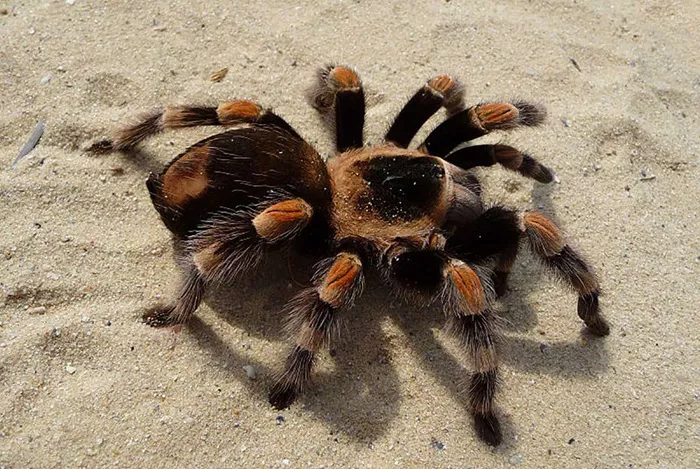
Imagine you’re peacefully observing your pet tarantula, the Mexican Redknee (Brachypelma smithi), a species known for its striking red-orange leg bands. Suddenly, it lunges and bites. What should you do? While these tarantulas are generally docile and rarely bite, it’s essential to understand the potential symptoms and how to handle such an incident.
🕸️ Understanding the Mexican Redknee Tarantula
The Mexican Redknee tarantula is a terrestrial species native to the Pacific coast of Mexico, particularly in the states of Colima, Jalisco, and Michoacán. Adults can have a leg span of up to 6 inches (15 cm) and are characterized by their black bodies with orange-red knee joints. These tarantulas are known for their calm demeanor, making them popular among arachnid enthusiasts.
🐾 Why Would a Mexican Redknee Tarantula Bite?
Despite their generally calm nature, Mexican Redknee tarantulas may bite if they feel threatened or provoked. Common reasons for a bite include:
Sudden Movements: Quick or jerky motions can startle the tarantula.
Improper Handling: Picking up the tarantula incorrectly or without proper support.
Disturbing the Enclosure: Frequent tapping or disturbing their habitat.
It’s important to approach these tarantulas calmly and avoid sudden movements to prevent startling them.
🩸 Symptoms of a Mexican Redknee Tarantula Bite
🔴 Localized Symptoms
Pain: The bite may cause immediate pain, often described as a sharp or burning sensation.
Swelling and Redness: The area around the bite may become swollen and red.
Itching or Numbness: Some individuals report itching or a tingling sensation at the bite site.
😷 Rare Systemic Symptoms
Although uncommon, some individuals may experience more severe reactions, including:
Allergic Reactions: Symptoms like difficulty breathing, swelling of the lips or throat, and dizziness.
Nausea or Vomiting: Some may feel nauseous or vomit after a bite.
Fever or Chills: In rare cases, a mild fever or chills may develop.
It’s essential to monitor for these symptoms and seek medical attention if they occur.
🧰 How to Treat a Mexican Redknee Tarantula Bite
1. Clean the Bite Area
Wash the bite site gently with soap and water to reduce the risk of infection.
2. Apply a Cold Compress
Place a clean, cold compress or ice pack wrapped in a cloth on the bite area to reduce swelling and numb the pain.
3. Take Over-the-Counter Pain Relievers
Non-prescription pain relievers like ibuprofen or acetaminophen can help alleviate discomfort.
4. Monitor for Allergic Reactions
Keep an eye out for signs of an allergic reaction, such as difficulty breathing or swelling of the face.
5. Seek Medical Attention if Necessary
If symptoms worsen or you experience severe reactions, seek medical help promptly.
🧪 Understanding the Venom
The venom of the Mexican Redknee tarantula is relatively mild compared to other species. Most bites result in localized symptoms like pain and swelling. However, individual reactions can vary, and some people may experience more pronounced symptoms.
🧠 Behavioral Traits of the Mexican Redknee Tarantula
Defensive Posture: When threatened, the tarantula may raise its front legs and display its fangs.
Urticating Hairs: Instead of biting, the tarantula may flick irritating hairs from its abdomen towards the threat.
Nocturnal Activity: These tarantulas are primarily active at night and tend to be more docile during the day.
Understanding these behaviors can help in preventing bites and ensuring safe interactions.
🐍 Final Thoughts
While the Mexican Redknee tarantula is generally a calm and non-aggressive species, it’s essential to handle them with care and respect. By understanding their behaviors and potential reactions, you can enjoy observing these fascinating creatures without incident.
Related topics: