
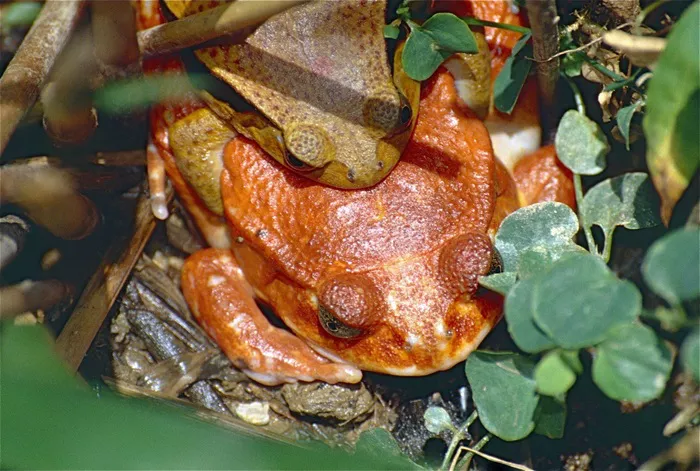
The tomato frog, known for its brilliant red-orange hues and unique defensive behavior, is a fascinating species found in Madagascar. But if you’ve ever wondered, “Do tomato frogs lay eggs?”—you’re not alone! Many reptile enthusiasts are curious about the reproductive habits of these captivating creatures. Whether you’re considering keeping one as a pet or simply exploring the world of amphibians, understanding their reproductive process will not only enrich your knowledge but also enhance your care for these beautiful frogs. Spoiler alert: Yes, tomato frogs do lay eggs, and their reproductive cycle is just as extraordinary as their vibrant skin.
Tomato Frogs: The Basics
Before we dive into their egg-laying habits, let’s familiarize ourselves with this species. Tomato frogs (Dyscophus antongilii) are native to Madagascar, where they inhabit the moist, rain-drenched forests. Their bright coloration serves as a warning to predators, signaling that they are toxic. But the question at hand is—how do these frogs reproduce?
Habitat and Environment:
Tomato frogs thrive in humid, tropical environments, particularly near slow-moving streams, ponds, and marshes. To put it simply, imagine living in a rainforest, surrounded by dense foliage and a variety of water sources—this is the ideal environment for a tomato frog. They’re often found hiding in leaf litter or burrowed in moist soil, emerging at night to hunt and mate.
See Also: 6 Reasons Your Tomato Frog Won’t Eat and How to Fix It
The Reproductive Cycle of Tomato Frogs
Let’s get straight to it—tomato frogs do indeed lay eggs, but how does that happen? Their reproductive process is quite fascinating and is influenced by the changing weather patterns in their native Madagascar.
1. Mating Season: The Rainy Season
The rainy season in Madagascar plays a pivotal role in triggering the breeding cycle of tomato frogs. Think of it like an annual invitation to party—when the rain starts pouring, it’s time for tomato frogs to find a mate. Typically, this period spans from November to March, when the weather is wet and the water sources are replenished. This time is ideal for egg-laying, as the wet environment provides the perfect conditions for the eggs to hatch.
2. The Courtship Ritual
In the wild, when the rainy season begins, male tomato frogs initiate a call to attract females. Picture this as a frog’s version of a love song. The males create a deep, resonant call to signal their presence, often calling out from a hidden spot in the underbrush. The female will then select a mate based on the strength of his call. It’s like picking a partner at a karaoke competition—those with the best performance win!
How Do Tomato Frogs Lay Eggs?
Now to the exciting part! Once mating occurs, female tomato frogs lay their eggs in shallow pools of water. The eggs are deposited in clusters, and within 36 to 48 hours, they hatch into tadpoles.
Egg Clusters: Tiny Marvels of Nature
Tomato frogs lay hundreds of eggs at once. These eggs are usually black with a white coating. When they hatch, the tadpoles are black with a long tail that allows them to swim and navigate their watery environment. Imagine them as tiny, black bean-shaped creatures ready to embark on their own journey of transformation.
Development into Juveniles
As the tadpoles grow, they undergo metamorphosis—a fascinating transformation. Over the next few months, their bodies change: they lose their tails, develop legs, and begin to look more like adult frogs. Once they’ve reached full development, they emerge as small, brownish frogs, ready to start the cycle anew.
Tomato Frogs in Captivity: How to Ensure Successful Egg-Laying
If you’re a reptile enthusiast and are keeping a tomato frog as a pet, you may be curious about how to encourage egg-laying in captivity. Here are a few tips to create an environment where your tomato frog can breed successfully:
1. Simulate the Rainy Season
Tomato frogs rely on environmental cues to initiate their breeding behavior. You can mimic the rainy season by increasing humidity in their enclosure, spraying water frequently, or even setting up a misting system. This helps create the ideal conditions for mating and egg-laying.
2. Provide Ample Space and Water
To promote healthy breeding, you need to make sure the enclosure has enough space for the frogs to move around and ample water. A shallow water dish is essential, but don’t fill it too high—tomato frogs prefer to lay their eggs in shallow pools, not deep water.
3. Monitor Temperature and Humidity
Tomato frogs thrive in temperatures ranging from 65°F to 85°F, so you’ll want to keep the enclosure within that range. Humidity levels should also stay between 65% to 80%. Using a thermometer and hygrometer will help you monitor these conditions effectively.
4. Be Patient
Tomato frogs may not breed immediately in captivity, so be patient. It can take time to simulate their natural environment, and egg-laying may not occur during the first attempt.
Health and Care of Tomato Frogs Post-Egg Laying
Once the eggs hatch, it’s important to care for the tadpoles until they reach maturity. You’ll need to provide clean, dechlorinated water for the tadpoles to swim in, along with a varied diet of algae or commercial tadpole food. The tadpoles should be left undisturbed until they mature into frogs, at which point they can be moved to a more terrestrial environment.
Conclusion
Tomato frogs, with their stunning colors and fascinating reproductive cycle, are a joy to observe, whether in the wild or in captivity. From the rainy season’s cue to their egg-laying process, these frogs provide a glimpse into the incredible adaptability of amphibians. If you’re lucky enough to witness this cycle firsthand, you’ll gain a deeper appreciation for these amazing creatures.
Related topics: