
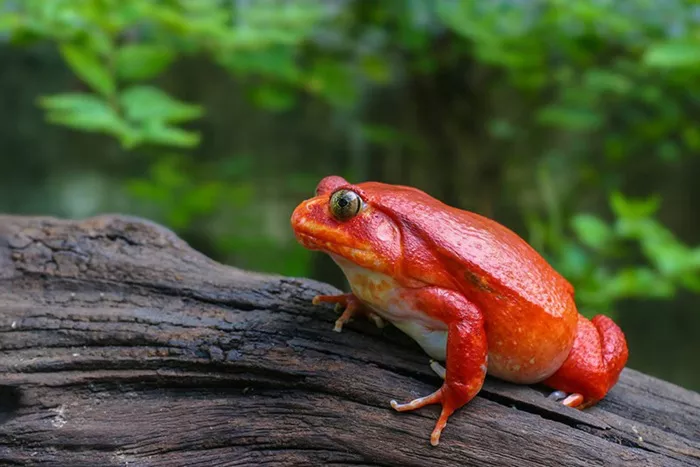
When you first see a tomato frog, you probably smile. Their bright orange‑red bodies look like someone dipped them in paint or, as their name suggests, like a plump tomato sitting on the rainforest floor. But then the question hits you: how long do tomato frogs live for?
It’s a simple question with surprising depth. A tomato frog’s life is shaped by where it lives, how it’s cared for, and even its gender. Some survive only a few years. Others, under the right conditions, become almost long‑term companions—living more than a decade.
This article takes you on a journey through the lifespan of tomato frogs (Dyscophus antongilii), blending scientific research with relatable comparisons and real keeper experiences. Whether you’re a curious beginner, a parent of a frog‑loving kid, or a serious reptile and amphibian hobbyist, you’ll find clear explanations and some “wow” facts you won’t forget.
A Quick Snapshot of Tomato Frog Lifespan
Before we dive deep, let’s hit the core fact:
In the wild: Tomato frogs usually live 6–11 years.
In captivity: They can reach up to 12 years or more with proper care.
If you think about it, that’s like owning a cat that stays the size of your hand. It’s a long‑term responsibility, not a fleeting novelty.
But why the difference between wild and captive life? And what factors shape those numbers? Let’s break it down.
Tomato Frogs 101: Meet the Red Jewel of Madagascar
To understand how long they live, you first need to know what a tomato frog is.
Tomato frogs are amphibians, not reptiles (despite often being grouped in the “exotic pets” section with lizards and snakes). Their scientific name is Dyscophus antongilii. They’re endemic—meaning they naturally live only in northeastern Madagascar.
Think of them as jungle specialists. They thrive in humid lowland forests, swamps, and even roadside ditches and rice paddies. This adaptability explains why they’ve become a pet favorite: they’re hardy little creatures.
Their most famous feature? That tomato‑like body. When threatened, they inflate themselves into a squishy, oversized ball. To a predator like a snake, it’s like trying to swallow a basketball. Sometimes they even ooze a sticky white toxin that irritates attackers. (Owners who’ve handled a stressed frog know this—it can stick to your skin like glue.)
Understanding these traits gives us clues about their lifespan. Hardy species that can defend themselves often live longer, and tomato frogs are no exception.
Wild vs. Captive Lifespan: Why the Gap?
Here’s the fascinating part:
Wild tomato frogs face predators, habitat loss, diseases like chytridiomycosis (a deadly fungus for amphibians), and even pollution. Those dangers mean many won’t make it past six or seven years.
Captive tomato frogs, on the other hand, live in what’s essentially a frog luxury suite—no predators, steady food, filtered water, and someone misting their terrarium like a personal spa. In those conditions, 10 to 12 years is realistic.
One Madagascar field study recorded female tomato frogs living up to 11 years in nature, while males averaged shorter lifespans. (Females are larger and more robust, which often correlates with survival.)
To put it simply:
In the wild, life is a lottery ticket.
In captivity, you can stretch that ticket into a savings bond.
What Determines a Tomato Frog’s Lifespan?
Just like humans, some frogs live longer because of luck, but there are big factors you can control or at least understand.
1. Genetics
Some frog lines are just healthier. Captive‑bred tomato frogs from trusted breeders are often hardier because they come from long‑established bloodlines. Wild‑caught frogs might carry parasites or stress that shortens life.
2. Environment
Imagine living in a room that’s either freezing or blazing hot. That’s what a tomato frog feels if its terrarium isn’t right. They need:
Temperature: 65–85°F (18–29°C)
Humidity: 65–80%
Hiding spaces: logs, cork bark, fake or live plants.
A frog kept in poor conditions may not live long enough to see its sixth birthday. One kept in a proper setup can double that time.
See Also: Why Tomato Frogs Prefer the Night Over Daylight?
3. Diet
A diet of only one insect is like a human eating nothing but white bread. It keeps you alive but doesn’t make you thrive. Healthy tomato frogs get crickets, mealworms, waxworms, and occasional treats like pinky mice (very rarely). Calcium and vitamin dusting is key to prevent bone issues.
4. Stress Levels
Tomato frogs hate being handled frequently. Stress isn’t just an emotion—it affects their immune system. Some keepers notice their frog excretes white mucus when overhandled. That’s its way of saying: “Back off—I’m panicking!”
5. Gender
Interestingly, female tomato frogs outlive males in many cases. Why? They’re larger (up to 10.5 cm vs. 6.5 cm for males) and store more energy. Think of it like a car with a bigger gas tank—it can go further.
What Does “10–12 Years” Look Like? A Frog Life Timeline
Breaking lifespan into stages makes it easier to see the commitment:
Egg stage: Female lays hundreds of sticky black‑and‑white eggs on water surfaces. In 2–4 days, they hatch.
Tadpole stage: Tadpoles swim for about a month, then transform (metamorphose) into froglets.
Juvenile stage (0–2 years): Small, brownish froglets grow, shed skin, and eventually gain that iconic tomato color.
Adult stage (2–10+ years): Fully colored, sexually mature, and at their healthiest.
Senior stage (10+ years): Movements slow, appetite may dip, but they can still live comfortably with good care.
Keeper Stories: Real-Life Frog Longevity
To make this real, here are a couple of true keeper anecdotes from frog forums:
- “My female tomato frog, Pumpkin, is 11 this year,” wrote one owner in a herpetology group. “She’s slower now, but she still puffs up when I change her water. She’s basically family at this point.”
- Another keeper admitted: “I lost my male at six years because I fed him mostly mealworms and didn’t supplement enough. Learned the hard way—nutrition matters.”
These stories highlight the range: with good care, a tomato frog can outlive most pet hamsters, rats, and even some dogs.
Do Tomato Frogs Live Longer Than Other Amphibians?
Great question. Compared to other pet frogs:
Tomato frogs (Dyscophus antongilii): 10–12 years
Pacman frogs: 10–15 years
White’s tree frogs: 12–16 years
African dwarf frogs: 5–8 years
So, tomato frogs are solidly mid‑pack. They don’t break longevity records like some tree frogs, but they definitely outlive the “short‑term” species.
The Science Behind Their Longevity
Amphibians are ectothermic—they rely on external heat. That means their metabolism (how fast they burn energy) slows down in cooler conditions. Lower metabolism often means longer life.
Tomato frogs live in mild tropical zones where conditions are pretty stable. This consistency helps them live longer than, say, a frog that survives harsh winters or droughts.
Also, their defensive strategies—inflating, secreting toxins—keep them from becoming easy meals. Survival equals more birthdays.
Threats to Their Lifespan in the Wild
While we’re celebrating their potential 11‑year lifespan in nature, reality hits hard.
Tomato frogs are classified as Near Threatened by the IUCN. Habitat loss, pollution, and illegal pet trade have chipped away at populations. Diseases like chytrid fungus (Batrachochytrium dendrobatidis) can wipe out entire groups.
In those conditions, even a tough frog may not live long enough to pass on its genes.
How to Help Your Tomato Frog Live Longer (If You Keep One)
If you’re reading this because you own—or dream of owning—a tomato frog, here’s the cheat sheet for maximizing its lifespan:
- Buy captive‑bred to avoid parasites.
- Use a 10‑gallon tank minimum (bigger is better).
- Provide loose substrate for digging (coconut fiber works well).
- Mist daily to maintain humidity.
- Feed a variety of insects dusted with calcium.
- Handle rarely—these are look‑don’t‑touch pets.
- Keep water clean—always dechlorinate.
These steps aren’t just “nice to have.” They’re the difference between a 6‑year frog and a 12‑year frog.
The Emotional Side of Lifespan
When you bring a tomato frog home, you’re signing up for up to a decade of care. That’s a big commitment—but also a joy.
Owners often describe their frogs almost like house spirits: they don’t beg for attention like dogs, but their presence is oddly calming. Watching one slowly blink from its hideout is like watching a living jewel.
Knowing that you might have this small companion for over a decade makes proper care even more rewarding.
Conclusion
So, let’s answer it plainly:
In the wild: 6–11 years
In captivity: 10–12+ years
Tomato frogs are not short‑lived pets. They’re a decade‑long commitment that can bring joy, teach responsibility, and even become a small part of your family.
If you care for them right—balanced diet, proper habitat, minimal stress—you’ll likely have this bright red friend for many years to come.
Related topics: