
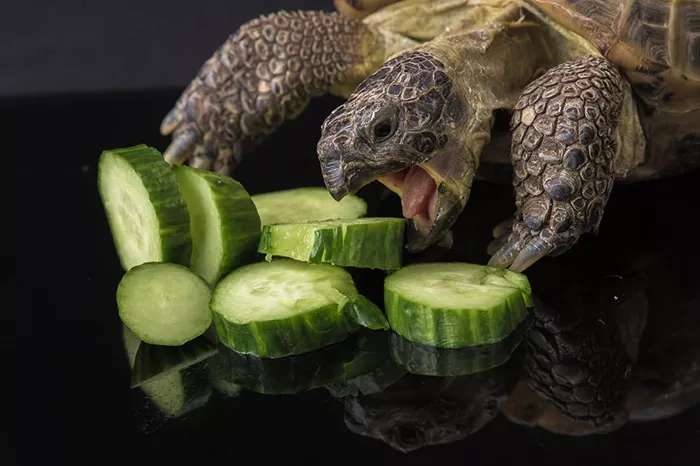
As a loving tortoise owner, you’re likely on the lookout for healthy, hydrating foods to offer your Hermann tortoise. With its mild flavor and crunchy texture, cucumber might seem like a perfect snack for your shelled friend. But is cucumber safe for Hermann tortoises? Does it provide any real nutritional value, or is it just a water-filled snack? In this article, we’ll explore whether cucumbers should be a regular part of your tortoise’s diet and the best way to feed them safely.
By the end, you’ll know when and how to offer cucumbers to your tortoise, along with the potential benefits and risks. Let’s dive in!
What Is Cucumber, and Why Do Tortoises Like It?
Cucumber Overview
Cucumbers (Cucumis sativus) are a widely popular vegetable in salads, sandwiches, and as a refreshing snack. They belong to the gourd family, which includes squashes and melons. Cucumbers are mostly composed of water (about 95%), making them an excellent hydrating food source. However, despite their high water content, cucumbers are not nutrient-dense compared to other vegetables and greens.
Why Do Tortoises Like Cucumber?
Hermann tortoises, like many reptiles, are naturally drawn to moist and hydrating foods. In the wild, they may occasionally eat cucumbers or other fruits when they are available. The cool, crunchy texture of cucumber can be quite appealing to your tortoise, especially during hot summer months when hydration is essential. However, it’s important to remember that while cucumbers are refreshing, they do not provide a lot of essential nutrients.
Nutritional Profile of Cucumber for Hermann Tortoises
Water Content and Hydration
The most notable feature of cucumber is its high water content. This can be beneficial to your Hermann tortoise, particularly if you live in a warmer climate or if your tortoise is not drinking enough water. The water in cucumber helps maintain hydration levels, especially during hot weather when your tortoise may need extra moisture. However, while cucumber helps keep them hydrated, it should not replace the need for fresh water.
Low in Nutrients
Cucumbers are low in calories, fiber, and essential nutrients such as vitamins and minerals. While they do contain small amounts of vitamin K, potassium, and magnesium, these nutrients are not present in significant quantities. Your Hermann tortoise requires more nutrient-dense foods to support healthy bone growth, digestion, and overall well-being. Cucumbers, therefore, should only serve as an occasional treat and not as a primary food source.
High in Fiber, But Not Enough
Although cucumbers do contain some fiber, the amount is relatively low compared to other vegetables that Hermann tortoises need in their daily diet. High-fiber foods like dandelion greens, collard greens, and grasses should make up the bulk of your tortoise’s meals to ensure they are getting enough fiber to promote healthy digestion and prevent constipation.
Should You Feed Cucumbers to Your Hermann Tortoise?
Moderation is Key
Cucumbers are not inherently harmful to Hermann tortoises, but moderation is key. Given their low nutritional value and high water content, cucumbers should be offered sparingly. Offering cucumber too frequently may lead to your tortoise filling up on a low-nutrient food, which could prevent them from eating more beneficial, nutrient-dense vegetables.
As a rule of thumb, cucumbers can be served as a treat about once a week, or less frequently depending on your tortoise’s specific dietary needs. You should always prioritize leafy greens and other vegetables with more robust nutritional profiles to ensure a balanced diet.
The Benefits of Feeding Cucumbers to Your Hermann Tortoise
Hydration Boost
Cucumbers can be an excellent source of hydration, especially in hot weather. When it’s scorching outside, tortoises, like many reptiles, can become dehydrated. Offering a small portion of cucumber can help your tortoise stay hydrated without overloading their digestive system with too much sugar or fat, as some fruits might do.
Digestive Aid
Cucumbers’ high water content can also help with digestion. In combination with other fiber-rich foods, cucumber can aid your tortoise in maintaining healthy bowel movements. However, remember that it should not be the primary food source—leafy greens and other fibrous vegetables will do a better job of ensuring digestive health.
The Risks of Overfeeding Cucumbers
Diarrhea and Digestive Upset
One of the major risks of overfeeding cucumbers is diarrhea. While cucumbers are good for hydration, they are also high in water, which can disrupt your tortoise’s digestion when consumed in excess. The excess moisture may overwhelm your tortoise’s system and lead to loose, watery stools. This can also cause dehydration, as your tortoise may not drink as much water if they are getting enough moisture from their food.
Nutritional Imbalance
Cucumbers do not offer a balanced array of nutrients that your tortoise needs to thrive. Overfeeding cucumbers can lead to an imbalance in your tortoise’s diet, leaving them without the essential vitamins and minerals they need for healthy growth, shell development, and bone strength. For example, tortoises require high levels of calcium, which cucumbers do not provide. Feeding them cucumbers too frequently may prevent them from eating more nutrient-rich foods like dandelion greens, which provide necessary calcium.
Obesity
While cucumbers are low in calories, they do not have enough substance to provide your tortoise with the essential fiber and energy they need. If cucumbers are fed too frequently, your tortoise may become full on a food that provides no real nutritional value, leading to an increased risk of obesity if it reduces their consumption of healthier foods.
How to Safely Feed Cucumbers to Your Hermann Tortoise
Cut into Small Pieces
If you choose to feed your Hermann tortoise cucumber, be sure to cut it into small, manageable pieces. This helps prevent your tortoise from overeating and makes it easier for them to digest. Large pieces of cucumber can also pose a choking hazard, so be cautious about the size and shape of the pieces you offer.
Serve with Nutrient-Dense Foods
The best way to introduce cucumbers into your tortoise’s diet is by pairing them with more nutrient-dense foods. For example, you could mix cucumber with dandelion greens, collard greens, or other leafy vegetables that are rich in calcium and other essential nutrients. This ensures that your tortoise still gets the vitamins and minerals it needs while enjoying the refreshing crunch of cucumber.
Offer in Moderation
Remember that cucumbers should be treated as an occasional snack, not a staple of your Hermann tortoise’s diet. Offering them once or twice a week will provide hydration and variety without compromising your tortoise’s nutritional needs. Be sure to balance their diet with other healthy foods, such as grasses, flowers, and leafy greens.
See Also: 5 Shocking Facts About Tortoises
Alternatives to Cucumber for Your Hermann Tortoise
Leafy Greens
For a more nutritious snack, offer your Hermann tortoise dark leafy greens like kale, mustard greens, collard greens, and dandelion greens. These foods are rich in calcium, fiber, and other important nutrients. These should be the mainstay of your tortoise’s diet.
Edible Flowers
Edible flowers, such as hibiscus, clover, and nasturtiums, are not only a tasty treat for your tortoise but also provide essential vitamins and antioxidants. These can be offered in moderation, just like cucumbers, to add variety to their diet.
Grasses and Weeds
In their natural environment, Hermann tortoises forage on a variety of grasses and weeds. You can replicate this by offering safe, pesticide-free grass hays, like Timothy hay, or common weeds like plantain and clover. These are rich in fiber and essential for digestive health.
Conclusion
Cucumber can be a refreshing and hydrating treat for your Hermann tortoise, especially during hot weather, but it should not be a significant part of their diet. Its low nutritional value means it should be offered sparingly, as an occasional snack rather than a regular meal. Always prioritize nutrient-rich foods, such as dark leafy greens, to ensure your tortoise is getting the essential vitamins and minerals they need for optimal health.
By following these guidelines, you can safely include cucumber in your tortoise’s diet without compromising their overall nutrition. Keep their meals varied and balanced, and your Hermann tortoise will thank you with good health and a long, happy life.
Related topics: