
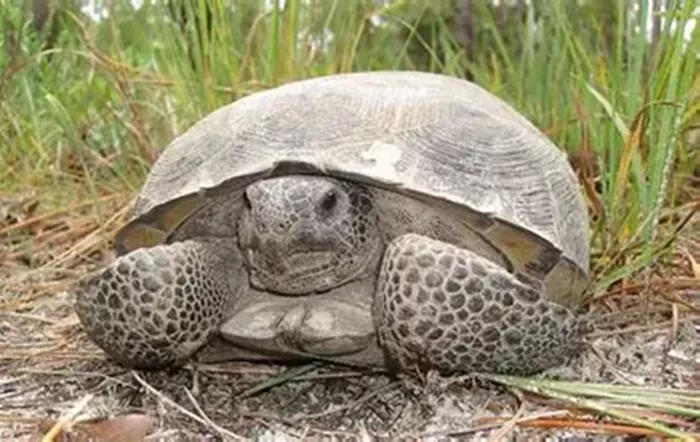
When you first spot a gopher tortoise in the wild, you might wonder: “Is that a turtle or some ancient little armored tank?” Great question! This fascinating reptile doesn’t exactly stand out with flashy colors or dazzling patterns, but its body tells a deep story—of survival, adaptation, and resilience in harsh environments.
In this article, you’ll dive into the visual world of the gopher tortoise. We won’t just tell you what it looks like—we’ll paint a picture in your mind, helping you recognize this species on sight. Whether you’re a wildlife enthusiast, a student, or just curious about the creatures roaming the sandy soils of the American Southeast, this guide is for you.
Introduction: Why the Gopher Tortoise’s Appearance Matters
You might be thinking, “Isn’t it just another tortoise?” Actually, not at all. The gopher tortoise (Gopherus polyphemus) is one of North America’s most important keystone species, which means the survival of other animals depends on it. Its appearance is perfectly suited to its role in the ecosystem. So when we talk about what it looks like, we’re also talking about how it lives, where it digs, and who benefits from its underground homes.
When you learn to recognize this tortoise, you’re not just becoming a better naturalist—you’re becoming part of a growing movement to protect this threatened species. Let’s dig in (pun intended)!
The Gopher Tortoise Shell: Nature’s Armor
The most striking feature of any tortoise is its shell. For the gopher tortoise, the shell is not only protective—it’s a visual signature.
Color and Texture
At first glance, the gopher tortoise’s shell (called a carapace on the top and plastron on the bottom) may look dull. But don’t be fooled. Its colors—usually a dusty brown, grayish tan, or faded black—are perfect for blending into sandy habitats. Think of it like natural camouflage, much like a desert soldier’s uniform.
The shell isn’t shiny or smooth like a sea turtle’s. Instead, it has a rough, matte texture—almost like unpolished stone. This helps reduce visibility to predators like raccoons, foxes, and even humans who might not spot it among dry leaves and soil.
Shape and Structure
The gopher tortoise shell is more domed than flat, shaped a bit like an old-fashioned soldier’s helmet. But what really stands out is its flattened top—like someone gently pressed down on a dome.
This design isn’t just for looks. It helps the tortoise maneuver easily through tunnels. If you’ve ever tried pushing a basketball through a narrow pipe, you’ll understand why a lower profile is helpful underground.
A typical adult gopher tortoise’s shell measures about 9 to 15 inches (23 to 38 cm) long. But some older individuals can reach up to 16 inches (41 cm)!
Growth Rings and Scutes
Ever heard the phrase, “You can tell a tree’s age by its rings”? Gopher tortoises have a similar feature. Their shell is covered in scutes—these are hard plates that form a pattern across the back. Each scute has growth rings that can sometimes give you a rough idea of the tortoise’s age.
Although not always reliable (because wear and weather can erase them), it’s still fun to try and count the rings. Go ahead, take a closer look next time you see one (from a respectful distance, of course!).
The Head: A Serious Look for a Serious Digger
Let’s move to the front. Gopher tortoises have a sturdy head built for work. Unlike some reptiles with colorful crests or flashy frills, the gopher tortoise’s head is all business.
Color and Size
The head is usually a darker shade of brown or gray than the shell. Some have lighter flecks, giving them a speckled appearance, almost like dust particles sticking after a long day of digging.
It’s broad, with a flat nose and small, deep-set eyes that reflect a quiet, watchful nature. These eyes are excellent for spotting danger, but also sensitive to strong light. That’s why tortoises prefer staying underground or in the shade during hot afternoons.
The Beak
No teeth here! Like other tortoises, the gopher tortoise has a beak—a sharp, curved structure made of keratin (the same stuff in your nails). Think of it like a garden shear. With this tool, they can slice through thick vegetation, grasses, and wildflowers.
The Limbs: Built for the Underground
Here’s where things get really cool. The gopher tortoise is like the bulldozer of the reptile world.
Front Legs: Shovel-Like and Scaly
The front legs are thick and powerful, ending in flattened, scaly “hands” that look like miniature spades. They use these to dig deep, spiraling burrows that can reach up to 40 feet (12 meters) in length and 10 feet (3 meters) deep.
These burrows are safe spaces—not just for the tortoise, but for over 350 other species, including frogs, snakes, and even burrowing owls. Amazing, right?
The thick scales also serve a purpose: they protect the tortoise’s legs from sharp roots and debris while digging.
Hind Legs: Elephantine Support
The hind legs are more cylindrical and column-like—think elephant legs in miniature. Their job? Support and mobility. While the front limbs do the digging, the back legs keep the tortoise anchored and balanced.
Each leg ends in short, strong claws that help with movement, whether it’s climbing out of a burrow or walking across open scrubland.
The Tail and Rear: Not Just a Back-End Detail
The tail of a gopher tortoise is short and mostly hidden under the shell. It’s not flashy or long like a lizard’s, but it plays a quiet role in mating and defense.
Male tortoises have a slightly longer, more pointed tail than females. This small detail, along with the shape of the plastron (males have a slightly concave underside), helps researchers determine gender.
It may not be the most noticeable feature, but it’s another clue that helps paint the full picture of the gopher tortoise.
Young vs. Adult Gopher Tortoises: The Baby Look
If you’ve ever seen a baby gopher tortoise (called a hatchling), you’ll know they’re nothing short of adorable. But they’re also very vulnerable.
Hatchlings
When first born, these tortoises are only about 2 inches (5 cm) long. Their shells are much lighter in color—often yellowish or orange-tan—and softer than an adult’s. Imagine the shell like wet clay that still needs to harden.
Over time, the shell darkens and toughens. But for the first 5 to 7 years, they’re at high risk from predators like birds, snakes, and even ants.
Juveniles
As they grow, juveniles start to resemble mini versions of adults. The shell begins to take on a darker, more muted tone, and the limbs become stronger. However, their digging abilities are still developing, so they often use shallower burrows or hide in grassy vegetation.
Male vs. Female Gopher Tortoises: Subtle But Important Differences
To the untrained eye, all gopher tortoises might look the same. But if you look closely, you’ll spot a few key differences.
Plastron Shape
The underside of the shell (the plastron) is slightly concave in males. This shape helps them mount females during mating. Females have a flatter underside.
Tail and Size
As mentioned earlier, males have longer, more pointed tails. They also tend to be a little smaller than females, although there’s often overlap.
These differences can help biologists assess population health and breeding patterns in the wild.
Unique Facial Expressions and Behavior
Believe it or not, gopher tortoises have subtle facial “expressions.” While they don’t smile or frown like humans, their head movements and blinking patterns convey emotion.
A slow, steady head bob might indicate curiosity. A sudden retreat into the shell usually signals fear. Watch long enough, and you’ll feel like you’re communicating in a silent language.
How to Spot a Gopher Tortoise in the Wild
So now you know what it looks like—but how do you find one?
Look for:
Open sandy areas with sparse vegetation
Burrow entrances shaped like a half-moon
Tortoise tracks (wide, side-sweeping marks from the claws)
But remember, never try to handle or disturb a gopher tortoise. They’re protected in many places, and besides—they’re wild animals that deserve their peace.
Conservation and the Importance of Knowing Their Look
You might be surprised to learn that gopher tortoise populations have declined by more than 80% in some areas. Their slow reproductive rate and habitat loss make them highly vulnerable.
By knowing what a gopher tortoise looks like, you’re already helping. You’ll be better prepared to report sightings, avoid damaging burrows, and educate others. You might even inspire a young child to become a biologist. That’s the power of knowledge!
Conclusion
So, what does a gopher tortoise look like?
It looks like a small, weathered tank on a mission. Its rough, brown shell tells the story of the sandy soil it calls home. Its shovel-like legs speak of burrows that shelter hundreds of creatures. And its steady, ancient eyes remind us of a world that existed long before ours.
The more you learn about the gopher tortoise, the more you realize—it’s not just about appearance. It’s about connection. It’s about understanding a creature so perfectly adapted to its world that even its look is a blueprint of survival.
So next time you’re out walking in the pines or sandy trails of the Southeast, keep an eye out. If you spot a dome moving slowly through the grass, stop and watch. You just might witness a piece of living history.
Related topics: