
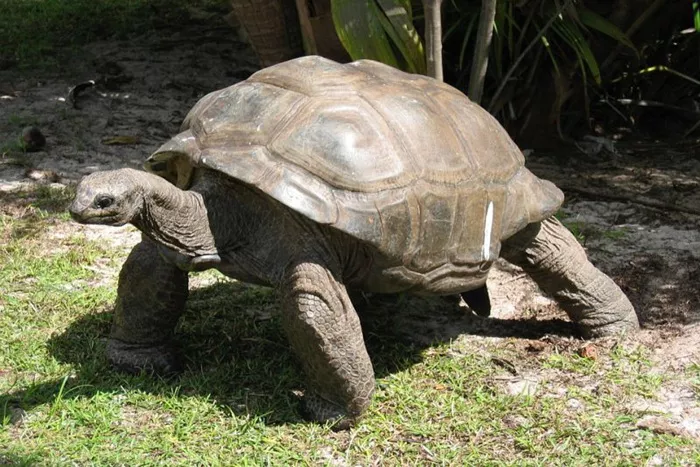
Have you ever stared at a slow-moving tortoise and wondered—what makes this ancient creature so special? You might think tortoises are just quiet, lumbering reptiles with a shell. But here’s a surprise: tortoises are full of quirks, biological marvels, and incredible survival strategies that span millions of years. Whether you’re a curious student, a reptile enthusiast, or someone who simply wants to learn something new, this article will open your eyes to the fascinating world of tortoises.
In this guide, we’ll go beyond surface-level trivia. Instead, you’ll discover five truly interesting facts about tortoises, supported by scientific explanations, real-world examples, and analogies that make complex topics easy to grasp. And don’t worry—everything will be clear and interactive, just like talking to a zoo guide who really loves these amazing animals.
Fact 1: Tortoises Can Live for Over 150 Years
Let’s start with one of the most jaw-dropping facts: some tortoises live longer than humans—and even longer than nations. One of the oldest known tortoises was a Seychelles giant tortoise named Jonathan, who turned 190 years old in 2022. That means Jonathan was born before the invention of the telephone!
Why Do Tortoises Live So Long?
You might be wondering—what’s their secret? The answer lies in their slow metabolism. Think of a tortoise as the ultimate minimalist: it uses energy slowly, moves carefully, and doesn’t waste resources. This slow-paced lifestyle reduces cellular damage over time, which scientists believe plays a role in their longevity.
Also, tortoises have low levels of stress and limited exposure to predators, especially in the wild. Fewer battles, fewer wounds, and fewer infections contribute to a healthier, longer life.
In biology, this is often called the “rate-of-living” theory—species with slower heart rates and metabolic rates tend to live longer. For example, the heart of a tortoise might beat only 6 to 10 times per minute, compared to a human’s 60 to 100.
Tortoise Longevity in Captivity vs. Wild
Captive tortoises often live even longer than their wild relatives. Why? Because in captivity, they have access to regular food, clean water, medical care, and no natural predators.
But don’t think it’s easy to raise a tortoise to 150 years. Owners must commit to a multi-generation plan! When you adopt a tortoise, you might be choosing a pet that outlives you.
Fact 2: Their Shell Is a Living, Feeling Part of Their Body
At first glance, a tortoise’s shell might look like a hard, lifeless armor. But the shell is actually part of its skeleton, made of bone and covered in keratin—the same material found in your fingernails and hair.
The Shell Is Not a Helmet
Unlike a helmet that you can take off and put on, a tortoise’s shell is fused to its spine and ribs. It’s like your ribcage wrapping around you in a full circle. So, no, a tortoise can’t crawl out of its shell. That’s just a cartoon myth.
Yes, They Can Feel Touch on Their Shell
Surprisingly, tortoises can feel when you touch or scratch their shell. It contains nerve endings, so they experience sensations through it. Some even seem to enjoy gentle rubs, especially around the neck area and the top of the shell. It’s kind of like getting a back massage!
So, if you ever meet a friendly tortoise, try softly stroking its shell and see how it reacts. Just remember, be gentle—because it’s like touching someone’s back.
The Shell Can Heal, But It’s Not Invincible
If a tortoise’s shell gets cracked (say, from a fall or a predator attack), it can heal over time, much like a broken bone. But this process is slow and requires special care. A broken shell may expose internal organs, so it’s a serious medical emergency. That’s why keeping tortoises in safe enclosures with proper flooring is essential.
Fact 3: Tortoises Are Cold-Blooded and Need “Artificial Sunlight”
Did you know that tortoises can’t produce their own body heat? That’s because they are cold-blooded animals, or more scientifically, ectotherms. This means they rely on their environment to regulate body temperature.
Sunlight Is Their Power Source
In the wild, tortoises bask in the sun to warm up their bodies. Without heat, their digestion slows down, their immune system weakens, and they become lethargic. Think of sunlight as their natural charger—just like your phone battery needs power to work.
In captivity, tortoises need UVB lamps, which are like “artificial sunlight.” These lamps help tortoises synthesize vitamin D3, which is necessary for absorbing calcium—a mineral crucial for strong bones and healthy shells.
Why Is Calcium So Important?
Without enough calcium and vitamin D3, tortoises can develop metabolic bone disease, or MBD for short. This disease causes soft, deformed bones and shells, and can be fatal if not corrected early.
So if you’re keeping a tortoise at home, make sure to:
Use a good UVB light.
Offer calcium-rich foods (like dark leafy greens).
Provide a basking area at the right temperature.
It’s like giving your tortoise the tools to build a strong, healthy body!
Fact 4: Tortoises Have Excellent Spatial Memory and Navigation Skills
You might think tortoises are slow in both body and brain, but that’s not true at all. Tortoises have surprisingly sharp memory, especially when it comes to locating food, water, and familiar paths.
Studies Show They Can Learn and Remember
Research published in Biology Letters in 2017 showed that desert tortoises could navigate mazes and remember the right path even months later. They use visual landmarks, smells, and sometimes even vibrations to find their way.
Imagine being able to find your way through a forest just by remembering the shape of a rock or the color of a bush. That’s what tortoises do—and they’re really good at it.
They Know Their Territory
In the wild, a tortoise might roam a specific area for decades. It learns where the best feeding spots are, where it can find water, and where to hide from predators. So if you move a wild tortoise to a new place, it can actually get lost or stressed.
That’s why wildlife experts often say: “Don’t relocate wild tortoises unless it’s absolutely necessary.”
Fact 5: Tortoises Communicate in Subtle and Surprising Ways
We often assume tortoises are silent and emotionless—but they’re not. Tortoises have their own ways of communicating, especially during mating, territorial disputes, and even when feeling threatened.
They Make Sounds—Yes, Really!
During mating season, male tortoises often grunt, wheeze, or make rhythmic noises, depending on the species. These sounds help attract females or signal dominance.
Some baby tortoises make high-pitched noises from inside the egg shortly before hatching. Scientists believe this may synchronize the group’s hatching time—almost like they’re saying, “Ready? Let’s go!”
They Use Body Language, Too
Tortoises also express themselves through head bobbing, pushing, and posture. For example:
A fast head bob may signal aggression.
A slow head bob could be a greeting.
Ramming and biting are often used by males competing for territory or mates.
Although these gestures may seem subtle to us, among tortoises, they carry powerful messages.
Conclusion
So, now that you’ve spent some time in the fascinating world of tortoises, what surprised you the most? Was it their record-breaking lifespan, their living shell, or maybe their secret memory skills?
Here’s a quick recap of what we’ve learned:
Tortoises can live for over 150 years, outlasting generations of humans.
Their shell is a living part of their body, sensitive to touch and vital for survival.
They need heat and UVB light, just like plants need sunlight.
They have great spatial memory, helping them find their way even months later.
Tortoises communicate using sound and body language in ways most people overlook.
Tortoises are more than just “slow movers.” They are survivors, thinkers, and living fossils with a lot to teach us about patience, endurance, and living in harmony with nature.
Whether you’re considering one as a pet or simply fascinated by their ancient charm, remember—every tortoise is a walking history book with its own story to tell.
Related topics: