
Have you ever wondered why some shelled reptiles prefer to swim while others slowly wander on land? At first glance, turtles and tortoises might seem like just different names for the same animal. But once you dig a little deeper, you’ll find fascinating differences that separate these two shelled creatures in surprising ways. If you’ve ever been confused about which one is which, or wondered about their unique lifestyles, you’re in the right place. Let’s unlock the mysteries behind turtles and tortoises!
The Big Question: Turtle or Tortoise?
People often use the words “turtle” and “tortoise” interchangeably, but they actually refer to distinct groups of reptiles. Imagine turtles as the “swimmers” of the reptile world, while tortoises are the “land explorers.” This isn’t just about where they live — their bodies, diets, behaviors, and even lifespans reflect these differences.
In this article, we’ll break down these differences step-by-step, so whether you’re thinking about getting a pet or just curious about nature, you’ll come away with a clear understanding. Let’s dive in!
What Are Turtles?
Turtles are reptiles known for their hard, protective shells and their aquatic or semi-aquatic lifestyles. Think of a turtle like a little armored submarine that can both swim in water and walk on land. Most turtles spend a significant amount of time in water—whether that’s the ocean, rivers, lakes, or marshes.
Body Shape and Adaptations
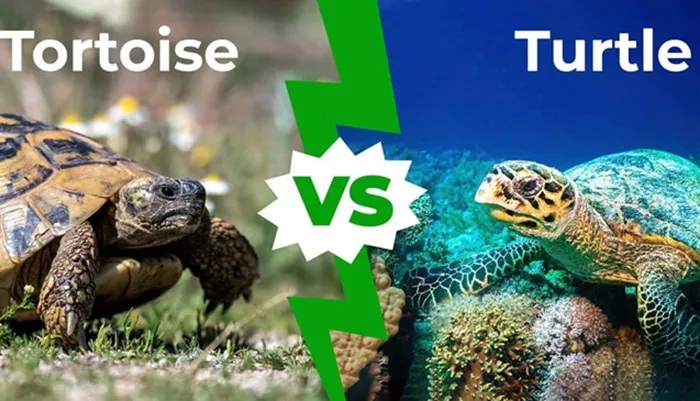
One of the biggest clues that you’re looking at a turtle is its body shape. Turtles usually have flatter, more streamlined shells compared to tortoises. This makes it easier for them to glide through water with less resistance—like how a kayak is shaped to cut through a river smoothly.
Their feet are often webbed or have flipper-like adaptations to help them swim. Sea turtles, for example, have large flippers that act like paddles, helping them travel long distances across oceans. Freshwater turtles tend to have webbed feet for easy swimming but can also walk on land when needed.
What Are Tortoises?
Tortoises are the sturdy, slow-moving relatives of turtles who have fully embraced life on dry land. Picture a tortoise as a tiny, armored tank slowly cruising through the grasslands or deserts. Unlike turtles, tortoises almost never swim and are built for walking, digging, and surviving on land.
Shell Shape and Physical Traits
Tortoises have domed, heavy shells that look like miniature battle helmets. This shape gives them strong protection against predators and harsh environments. Their legs are thick, sturdy, and covered in scales, more like elephant legs than paddles. They are made for walking long distances over rough ground and digging burrows.
Because they don’t need to swim, tortoises don’t have webbed feet or flippers. Instead, their toes are short and strong to help them grip soil and rocks.
Habitat: Water vs. Land
The most obvious difference between turtles and tortoises is where they live.
Turtles mostly live in water or near water sources. Some are ocean dwellers, like the majestic sea turtles who travel thousands of miles, while others prefer freshwater habitats.
Tortoises live almost exclusively on land, often in dry, hot places like deserts or grasslands. They’re adapted to survive with limited water.
This difference in habitat affects their behavior, diet, and physical features.
Diet Differences: What Do They Eat?
When it comes to food, turtles and tortoises also show different preferences.
Turtles often have a more varied diet that includes plants, insects, small fish, and aquatic creatures. Some turtles are omnivores, meaning they eat both plants and animals.
Tortoises are mostly herbivores. They eat grasses, leaves, fruits, and sometimes flowers. Their slow movement and strong jaws are perfect for chewing tough plants.
Imagine a tortoise munching leisurely on a leafy salad, while a turtle might be hunting for a tasty fish snack or nibbling on aquatic plants.
Lifespan and Growth
Both turtles and tortoises can live long lives, but tortoises are famous for their impressive longevity. Some tortoise species can live well over 100 years, making them among the longest-living land animals. Turtles generally have shorter lifespans, often around 20 to 50 years, depending on the species.
Think of tortoises as the wise old sages of the reptile world, taking their time and outlasting many other animals around them.
Behavior and Movement
Turtles are generally more agile, thanks to their swimming ability. In water, they move gracefully, using their limbs to steer and propel themselves. On land, they may look a bit clumsy, but they can still get around fairly quickly when needed.
Tortoises, however, are built for steady, slow movement on land. Their heavy shells and stout legs mean they take their time, moving at a pace that suits a relaxed but cautious lifestyle.
Reproduction and Nesting
Both turtles and tortoises lay eggs, but their nesting habits differ due to their habitats.
Turtles usually return to sandy beaches or riverbanks to lay eggs. Sea turtles, for instance, make long journeys to their birth beaches to dig nests in the sand.
Tortoises dig nests in dry soil or under bushes. Because they live on land, their nests are often hidden from predators and environmental threats.
Interestingly, temperature during egg incubation can influence the gender of the hatchlings in many turtle and tortoise species, a phenomenon called temperature-dependent sex determination. This adds an extra layer of wonder to their life cycle.
Shell Differences: Not Just a Home
While both turtles and tortoises have protective shells, the shell’s shape, thickness, and texture provide clues to their lifestyles.
Turtle shells tend to be flatter and more hydrodynamic. The shell is designed to reduce drag in water, helping them swim efficiently.
Tortoise shells are thick, rounded, and heavier. They provide excellent defense against predators but are not built for swimming.
Also, the shell surface may differ—some tortoises have rougher, bumpy shells to blend with rocky, dry environments, while many turtles have smoother shells.
Fun Fact: The Terminology Confusion
In some regions, the word “turtle” is used to describe all shelled reptiles, including tortoises and terrapins. This can be confusing! In American English, “turtle” often refers to aquatic species, while “tortoise” strictly means land dwellers. In British English, “turtle” can mean sea turtles specifically, and “terrapin” refers to freshwater turtles.
Think of it like regional accents in language — different words for similar creatures depending on where you are!
How to Tell If You’re Looking at a Turtle or a Tortoise?
If you spot a shelled reptile and wonder, “Is this a turtle or a tortoise?” here are some quick clues:
−Is it near or in water? Probably a turtle.
−Does it have webbed feet or flippers? Turtle.
−Is the shell flat and smooth? Likely turtle.
−Does it have chunky legs and a domed shell? Likely tortoise.
−Is it walking slowly on land far from water? Tortoise.
Caring for Turtles vs. Tortoises
If you’re thinking about a shelled reptile as a pet, knowing the differences is crucial.
Turtles need an aquatic or semi-aquatic setup. They require clean water to swim in, basking spots, and UVB lighting — think of UVB lamps as “artificial sunlight” that helps turtles make vitamin D3, essential for healthy bones.
Tortoises need a dry, spacious habitat with access to fresh vegetables and sunlight or UVB light. They love to roam on land and dig, so plenty of space is important.
Neglecting these needs can lead to health problems. For example, turtles without proper UVB lighting may develop metabolic bone disease—a condition where calcium deficiency weakens their bones and shells. It’s like humans not getting enough sunlight and becoming vitamin D deficient.
The Role of Turtles and Tortoises in Nature
Both turtles and tortoises play important roles in their ecosystems.
−Turtles help keep aquatic environments healthy by controlling insect populations and cleaning up dead plants or animals.
−Tortoises aid in seed dispersal by eating fruits and moving around, helping plants grow in new places.
Protecting their habitats is vital because many species face threats from habitat loss, pollution, and illegal pet trade.
Interesting Species to Know
There are thousands of species of turtles and tortoises worldwide. Here are just a couple of fascinating examples:
Galápagos Tortoise: Famous for its massive size and long life, sometimes exceeding 100 years.
Leatherback Sea Turtle: The largest sea turtle species, known for its impressive ocean migrations.
Box Turtle: A terrestrial turtle with a unique shell that can close tightly to protect itself.
Learning about these species helps us appreciate the diversity and importance of shelled reptiles.
Conclusion
So, what’s the difference between a turtle and a tortoise? In simple terms: turtles are the swimmers with flatter shells and webbed feet, spending most of their lives in or near water. Tortoises are the slow, sturdy land dwellers with domed shells and strong legs built for walking and digging.
Understanding these differences helps you appreciate the unique adaptations each has developed to thrive in their environments. Whether you admire their graceful swimming or their slow, steady trek on land, turtles and tortoises both remind us of nature’s incredible creativity.
Next time you see a shelled reptile, you’ll be able to tell its story—and maybe even share a cool fact or two!
Related topics: