
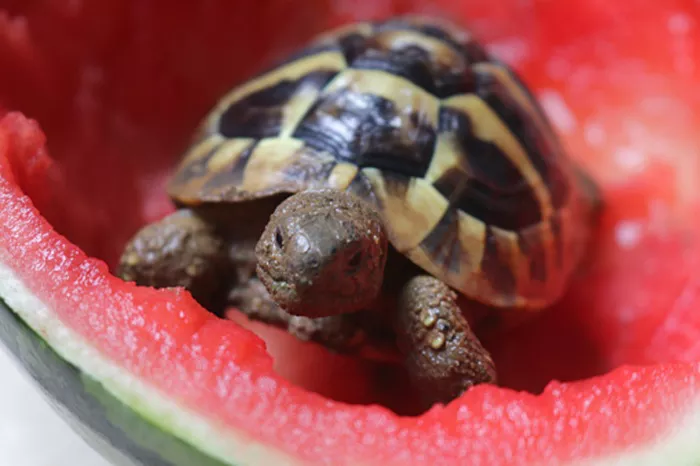
Imagine it’s a hot summer day. You’re enjoying a sweet, juicy slice of watermelon. Your Hermann tortoise waddles over and gives you that “Can I have some?” look. It’s tempting to share—but wait! Can Hermann tortoises actually eat watermelon safely?
This question isn’t just about what’s tasty. It’s about what’s healthy, safe, and species-appropriate. As cute and harmless as it may seem, offering the wrong food—even just a nibble—can cause digestive issues or long-term health problems for your shelled friend.
Let’s explore the complete picture: the nutritional needs of Hermann tortoises, what watermelon offers, how it affects their system, and how to make smart choices as a responsible tortoise keeper.
Understanding Hermann Tortoises: What Makes Them Unique
Before diving into their diet, let’s get to know who these reptiles really are.
Hermann tortoises (Testudo hermanni) are small, land-dwelling tortoises native to southern Europe, especially the Mediterranean regions of Italy, Greece, and the Balkans. These areas are warm, dry, and filled with low shrubs and grassy areas. That means Hermann tortoises evolved in sunny, plant-rich habitats, foraging mostly on wild weeds, leaves, and flowers.
They are herbivores, but not just any plant-eaters. Their digestive systems are adapted to high-fiber, low-sugar, calcium-rich plants like dandelions, plantain leaves, and clover. They do not have the gut bacteria or internal balance to handle high-sugar, watery fruits often eaten by tropical species.
That’s where things get interesting when we consider watermelon.
The Core Question: Can Hermann Tortoises Eat Watermelon?
The Short Answer? Yes—but only in very small amounts.
Watermelon isn’t toxic to Hermann tortoises. If yours took a few bites while you weren’t looking, don’t panic. But when it comes to their regular diet, watermelon is not ideal and should be treated as a rare treat, not a staple.
Why? Let’s explore the five main reasons.
1. Sugar Content: Sweet Isn’t Always Sweet for Tortoises
To us, sugar gives watermelon that mouthwatering flavor. But to your tortoise, too much sugar can disrupt the delicate balance in the gut. Hermann tortoises rely on fermentation in their digestive tract to break down plant material. That fermentation is done by special bacteria, and too much sugar can feed the wrong kinds of bacteria, leading to:
Bloating
Diarrhea
Gut imbalance (dysbiosis)
Think of it like a garden: feed the wrong plants and weeds take over. Similarly, too much sugar lets harmful bacteria grow, crowding out the good ones.
Even if your tortoise seems fine afterward, repeated sugary treats can cause chronic digestive problems over time.
2. Too Much Water: Hydrating or Dangerous?
Since watermelon is mostly water, you might think, “That’s great for hydration, right?”
Well, not quite.
Hermann tortoises are adapted to dry environments, where they conserve water efficiently. Their bodies are built for moisture from leafy greens, not for gulping down massive amounts of water at once.
Too much water at once can flush out electrolytes, leading to:
Loose stools
Lethargy
Disrupted digestion
Just like drinking a gallon of water at once might upset your own stomach, the same happens with watermelon and tortoises.
3. Calcium to Phosphorus Ratio: A Hidden Danger
Healthy tortoise bones and shells require a diet rich in calcium, with a favorable calcium-to-phosphorus ratio. Ideally, this ratio should be around 2:1 (twice as much calcium as phosphorus).
Watermelon has:
Low calcium
Moderate phosphorus
That results in a poor ratio. Repeatedly offering such food may eventually lead to MBD (metabolic bone disease), a common reptile disease caused by calcium deficiency. This can cause:
Soft, deformed shells
Weak bones
Difficulty walking or eating
It’s a slow process—but trust me, one not worth starting.
4. Fiber Content: Tortoises Need Roughage
Hermann tortoises need fiber—and lots of it—to keep their digestive tract moving. It’s like a broom that sweeps the intestines clean. Think of grasses and weeds as natural scrubbing brushes for their gut.
Watermelon has very little fiber. So even though it may fill your tortoise up, it doesn’t give the gut what it needs to stay healthy and efficient. Over time, low-fiber foods can lead to impaction or sluggish digestion.
5. Behavioral Habits: Picky Eaters in Disguise
Here’s a little behavioral twist: tortoises can develop preferences—even bad ones.
Give them sweet fruit too often, and they may start rejecting their usual leafy greens. It’s like a kid who gets too many candies and starts refusing broccoli. So even if watermelon is offered as an occasional treat, it can lead to long-term bad habits if not controlled.
Safe Ways to Offer Watermelon (If You Must)
Still want to give your tortoise a little taste? Here’s how to do it responsibly:
1. Tiny Portions Only
Think thumbnail-sized pieces. For a 1–2 kg tortoise, that’s all they need.
2. Not More Than Once a Month
This ensures the sugars and poor nutrient ratio don’t accumulate.
3. Only Flesh—No Seeds or Rind
Seeds can block the digestive tract. Rinds may contain pesticides or wax coatings.
4. Pair with High-Fiber Greens
Offer watermelon only alongside fibrous foods like dandelion leaves to reduce sugar impact.
What to Feed Instead: Better, Safer Choices
Instead of reaching for that watermelon slice, try:
Dandelion greens
Plantain (not the banana type, but the wild weed)
Clover
Mulberry leaves
Endive
Escarole
These are low in sugar, high in calcium, and packed with fiber.
Want to get fancy? Try planting a tortoise-safe weed garden. Great enrichment, excellent nutrition—and your tortoise will love it!
Real-Life Example: Bella the Watermelon Bandit
A Hermann tortoise owner once shared how their tortoise, Bella, managed to nibble a big chunk of watermelon left near her enclosure. Within an hour, Bella had runny droppings and lookesluggish. After a warm bath and some dandelion leaves, she perked up—but it was a clear warning.
This story reminds us: what seems harmless can cause trouble quickly.
Your Role as a Caretaker: Think Like a Tortoise
When caring for a Hermann tortoise, always ask:
Would this food exist in a Mediterranean meadow?
Is it full of fiber and calcium?
Could too much of it cause harm?
Watermelon fails on most counts. While not deadly, it’s a “dessert” food, not a main course.
Treat it like cake at a birthday party—a rare delight, not a diet staple.
Conclusion
So, can Hermann tortoises eat watermelon? Technically, yes—but only in tiny, occasional amounts. Watermelon is too watery, too sugary, and too low in calcium to be part of their regular diet.
As a devoted tortoise owner, your best choice is to stick with high-fiber, low-sugar greens that support their natural biology. Save the watermelon for the humans in your home—and maybe let your tortoise have a tiny celebratory nibble once in a while.
When you feed wisely, you’re not just giving food—you’re giving health, happiness, and a long life.
Great! Now you know the real scoop behind that juicy red fruit and your tortoise’s well-being. Don’t miss the opportunity to build a stronger bond with your pet by feeding them like nature intended.
Related topics: