
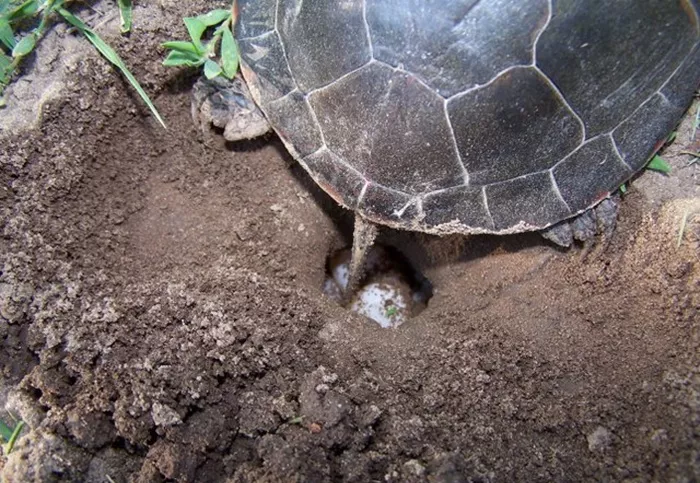
Painted turtles are one of the most common and easily recognizable species of freshwater turtles in North America. Known for their strikingly colorful markings, they are often seen basking in the sun on logs or swimming in calm ponds, lakes, and rivers. However, beneath their serene and docile exterior, these turtles go through fascinating reproductive processes. One of the most intriguing aspects of their reproduction is the way they lay their eggs.
Unlike many animals, painted turtles do not lay their eggs in the water. Instead, they venture to specific terrestrial sites, often leaving the safety of their aquatic environment to search for suitable nesting grounds. In this article, we will explore the behavior of painted turtles during the egg-laying process, how they choose their nesting sites, and the environmental factors that influence their decisions.
Painted Turtle Reproduction Overview
Before diving into the specifics of egg-laying, it’s important to understand the general reproductive cycle of painted turtles. These turtles typically reach sexual maturity around 5 to 10 years of age. During the breeding season, males will actively search for females to mate with. This usually takes place in the water, where males will court females by displaying certain behaviors such as nipping or waving their claws. After successful mating, the female painted turtle begins the process of laying her eggs.
Once fertilized, the eggs develop within the female for several weeks. The timing of egg-laying varies depending on the geographical location and environmental conditions, but typically occurs in late spring or early summer. Female painted turtles are solitary during the egg-laying process and often leave their aquatic habitats to find a suitable nesting site.
Nesting Locations: Where Do They Go?
Female painted turtles typically lay their eggs on land, but the choice of nesting location is a critical decision in their reproductive process. They seek out specific sites that provide the right conditions for the development of their eggs. These conditions include access to sunlight, a dry, sandy substrate, and a location away from predators.
In general, painted turtles prefer nesting areas that are relatively close to their aquatic habitat. They need to be able to access the water easily after laying their eggs, as they are primarily aquatic animals. Common nesting sites are often located along the banks of ponds, lakes, and rivers, where the terrain is typically sandy or loamy.
Environmental Factors Influencing Nesting Sites
The selection of a nesting site by a female painted turtle is influenced by several environmental factors:
Soil Composition: Painted turtles prefer soft, sandy soil that is easy to dig into. Sandy soil also provides good drainage, which is essential for preventing the eggs from becoming too waterlogged, which could harm the developing embryos.
Temperature: Temperature plays a crucial role in the success of turtle egg development. Painted turtles tend to choose nesting sites with adequate exposure to sunlight. Warm temperatures are necessary to ensure proper incubation of the eggs.
Proximity to Water: While the actual nesting site is typically located away from the water, it is important that it is within a reasonable distance for the female to reach the water easily after laying the eggs. This is important both for her own safety and for the survival of the species, as water provides refuge and protection from predators.
Predator Avoidance: Painted turtles are aware of the potential dangers posed by predators such as raccoons, skunks, and birds of prey. They often select nesting sites that are somewhat secluded, such as those with thick vegetation or areas with low human activity.
Egg-Laying Process: How Do Painted Turtles Lay Their Eggs?
Once the female painted turtle has selected an appropriate site, the egg-laying process begins. The female will dig a hole in the soil using her hind legs. The depth of the hole varies, but it is typically about 4 to 6 inches deep. The female will then deposit her eggs, which are usually white and leathery in texture. A typical clutch contains anywhere from 4 to 20 eggs, depending on the size and age of the female.
After laying her eggs, the female carefully covers them with soil and vegetation to help camouflage the nest. The covering provides insulation and helps regulate the temperature of the eggs. Once the nest is covered, the female returns to the water, leaving her eggs to incubate on their own.
Incubation and Hatching
Unlike many other species of animals, painted turtle eggs do not receive parental care after being laid. Instead, the eggs undergo an incubation period in the soil, which can range from 60 to 90 days, depending on environmental conditions such as temperature and humidity. During this time, the developing embryos inside the eggs undergo several stages of growth.
The sex of the hatchlings is determined by the temperature at which the eggs incubate. Warmer temperatures typically result in more females, while cooler temperatures favor male hatchlings. This temperature-dependent sex determination is a fascinating aspect of turtle biology and has been the subject of much scientific research.
Once the incubation period is complete, the hatchlings break free of their eggs and begin to dig their way out of the nest. They are often assisted by the conditions of the soil, which may be loose and soft enough to allow for easier emergence. Once they reach the surface, the hatchlings make their way toward the water, where they will begin their life in the aquatic environment.
Why Do Painted Turtles Lay Their Eggs on Land?
There are several reasons why painted turtles choose to lay their eggs on land instead of in the water, despite spending most of their lives in aquatic environments. One of the primary reasons is the need for the eggs to incubate in a stable, dry environment. If the eggs were laid in the water, they would likely be at risk of becoming waterlogged, which could prevent the developing embryos from receiving enough oxygen.
Furthermore, land provides the necessary conditions for temperature regulation. The soil can absorb and retain heat from the sun, which helps to incubate the eggs at the optimal temperature for development. Water, on the other hand, would not provide the same level of control over temperature fluctuations.
Finally, laying eggs on land helps protect the eggs from aquatic predators. Many fish and other water-dwelling creatures would readily consume turtle eggs if they were laid in the water, whereas laying them on land helps to minimize this risk.
Challenges and Risks of Egg Laying
While the process of laying eggs is an essential part of the painted turtle’s life cycle, it is not without its challenges and risks. One of the biggest threats to painted turtle eggs is predation. Raccoons, skunks, and other mammals are known to dig up and consume turtle eggs, which can drastically reduce the survival rate of hatchlings. In fact, predation is one of the leading causes of egg loss in painted turtles.
Another challenge is the impact of human activity. Habitat destruction, particularly in areas where turtle nesting sites are located, can significantly reduce the availability of suitable nesting locations. Additionally, human interference in the form of vehicle traffic can result in crushed eggs or nests, further reducing the survival rate of hatchlings.
Climate change also poses a growing threat to painted turtle reproduction. Shifting weather patterns, including extreme temperature fluctuations, could disrupt the delicate balance needed for successful egg incubation. Warmer temperatures may lead to an increase in female hatchlings, while cooler temperatures could lead to a shortage of males, affecting the overall reproductive success of the species.
Conclusion
The process of egg-laying in painted turtles is a fascinating aspect of their reproductive cycle. These turtles go to great lengths to find the perfect nesting sites, often venturing far from their aquatic homes to ensure the survival of their offspring. The combination of environmental factors, predator avoidance, and temperature regulation makes this process both complex and essential to the survival of the species. However, with increasing threats from predation, habitat loss, and climate change, painted turtles face challenges in ensuring the success of their reproductive efforts.
As we continue to learn more about the behavior and biology of painted turtles, it is important to remain vigilant in our efforts to protect their habitats and ensure the survival of this beloved species.
Related topics: