
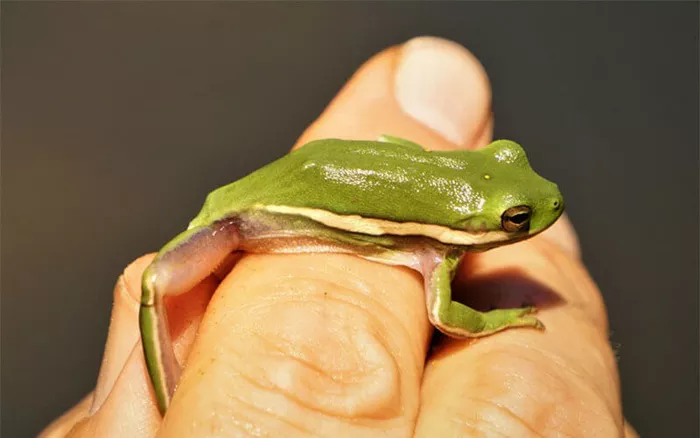
Green tree frogs are small, bright, and charming amphibians. Many people see them in gardens, near ponds, or even on windows at night. Their smooth green skin and gentle movements make them look harmless and friendly. It is natural to feel curious. Many people ask a simple question: Is it OK to touch a green tree frog?
The answer is not just yes or no. It depends on the situation. It depends on the health of the frog. It depends on your own hands. It also depends on whether the frog is wild or kept as a pet. In this article, we will carefully examine the issue. We will explain the biology of the green tree frog. We will discuss the risks to humans and the risks to frogs. We will also explain the proper way to handle one if it is truly necessary.
Understanding the Green Tree Frog
What Is a Green Tree Frog?
The name green tree frog usually refers to species such as the American Green Tree Frog (Hyla cinerea) in North America or the Australian Green Tree Frog (Litoria caerulea) in Australia. These frogs belong to the order Anura, which includes all frogs and toads. They are amphibians, not reptiles. However, people often group them together with reptiles because they share habitats and similar appearances.
Green tree frogs live in warm and humid environments. They prefer wetlands, forests, gardens, and areas near water. They are mostly active at night. During the day, they hide in leaves or climb vegetation.
Physical Characteristics
Green tree frogs have smooth, moist skin. Their color can range from bright green to dull olive. Some may show a white or cream stripe along the side of the body. They have long legs for jumping and sticky toe pads for climbing.
Their skin is very delicate. It is also very important for breathing and hydration. Unlike mammals, frogs absorb water directly through their skin. They also exchange gases through their skin. This makes them extremely sensitive to chemicals and dryness.
Why People Want to Touch Green Tree Frogs
Curiosity and Fascination
Many people are fascinated by amphibians. Children are especially curious. A small green frog sitting calmly on a leaf seems safe and interesting. Its soft appearance invites touch.
Pet Ownership
Some people keep green tree frogs as pets. In this case, handling may seem normal. Owners may wonder if touching their frog helps build trust or strengthens the bond.
Rescue Situations
Sometimes frogs enter homes, pools, or garages. A person may feel the need to move the frog to a safer location. In such cases, touching may appear necessary.
Is It Safe for Humans to Touch a Green Tree Frog?
Toxins and Skin Secretions
Most green tree frogs are not dangerous to humans. They do not have strong toxins like poison dart frogs. However, they do produce mild skin secretions. These secretions protect them from bacteria and predators.
For healthy adults, casual contact usually does not cause serious harm. However, some people may experience skin irritation. If you touch your eyes or mouth after handling a frog, you may feel burning or discomfort.
Risk of Salmonella
Amphibians can carry bacteria such as Salmonella. This bacterium can cause stomach illness in humans. The frog may look healthy but still carry bacteria on its skin.
If you touch a frog and then touch food without washing your hands, you increase the risk of infection. Children, elderly people, and those with weak immune systems are more vulnerable.
Allergic Reactions
Some individuals may have allergic reactions to amphibian skin proteins. Symptoms may include itching, redness, or mild swelling. Severe reactions are rare but possible.
Is It Safe for the Frog If You Touch It?
The Frog’s Skin Is Extremely Sensitive
This is the most important point. A frog’s skin is not like human skin. It is thin, permeable, and vital for survival. Our hands naturally produce oils and salts. We also carry soap residues, lotions, sunscreen, and chemicals.
When you touch a green tree frog with dry or unclean hands, these substances can damage its skin. Even small amounts of chemicals can interfere with its breathing and hydration.
Stress and Physical Injury
Handling causes stress. Frogs are prey animals. Being picked up by a large animal triggers fear. Stress weakens their immune system. Repeated stress can shorten their lifespan.
If handled improperly, a frog can also suffer physical injury. Its bones are light and fragile. Squeezing or dropping it can cause serious harm.
Transmission of Disease
Humans can spread pathogens to amphibians. One major threat to frogs worldwide is chytrid fungus. While this fungus is usually spread through water and amphibian contact, improper handling can contribute to disease transmission in certain environments.
Wild Green Tree Frogs vs. Pet Green Tree Frogs
Wild Frogs
It is generally not recommended to touch wild green tree frogs. They are part of a natural ecosystem. Human contact increases stress and risk. Observing them from a distance is better for their health and your safety.
Pet Frogs
Pet green tree frogs may become accustomed to minimal handling. However, even pet frogs should not be handled frequently. They are display animals. They are best appreciated visually rather than physically.
If handling is necessary for cleaning the enclosure or medical care, it should be done carefully and correctly.
When Is It Acceptable to Touch a Green Tree Frog?
Emergency Situations
If a frog is in immediate danger, such as inside a swimming pool or near traffic, moving it may be justified. In such cases, proper hygiene is essential.
Scientific or Veterinary Reasons
Researchers and veterinarians may handle frogs as part of conservation or medical work. They follow strict hygiene protocols to prevent harm.
How to Safely Handle a Green Tree Frog
Wash Your Hands Thoroughly
Wash your hands with clean water only. Avoid soap residue. Rinse completely. Some experts recommend wearing powder-free gloves that are dampened with clean water.
Moisten Your Hands
Dry hands can absorb moisture from the frog’s skin. Lightly wet your hands with clean, chemical-free water before touching the frog.
Be Gentle and Calm
Do not squeeze. Support the frog’s body. Keep handling time as short as possible.
Wash Your Hands Afterward
After handling, wash your hands thoroughly with soap and warm water. This protects you from bacteria.
Teaching Children About Frogs
Children often want to pick up frogs. It is important to teach them respect for wildlife. Explain that frogs have delicate skin. Teach them to observe rather than touch.
This lesson promotes empathy and environmental responsibility.
Conservation Considerations
Amphibians are among the most threatened animal groups in the world. Habitat loss, pollution, climate change, and disease affect frog populations globally. Minimizing unnecessary contact helps reduce stress and disease spread.
Common Myths About Touching Frogs
Myth: Touching a Frog Gives You Warts
This is false. Warts are caused by human viruses, not frogs.
Myth: All Frogs Are Poisonous
Most green tree frogs are not dangerous to humans. However, they still should not be handled casually.
Ethical Considerations
Wild animals deserve respect. Just because a frog is small and quiet does not mean it should be handled. Observing wildlife without interference is a responsible approach.
Conclusion
So, is it OK to touch a green tree frog? In most cases, it is better not to. While touching one may not seriously harm you, it can harm the frog. Their skin is delicate and sensitive. Human hands carry oils, chemicals, and bacteria. Handling also causes stress.
If touching is absolutely necessary, proper hygiene and gentle handling are essential. However, the best practice is simple: admire green tree frogs from a distance. Respect their role in nature. Protect their fragile bodies. By doing so, you support both animal welfare and environmental conservation.