
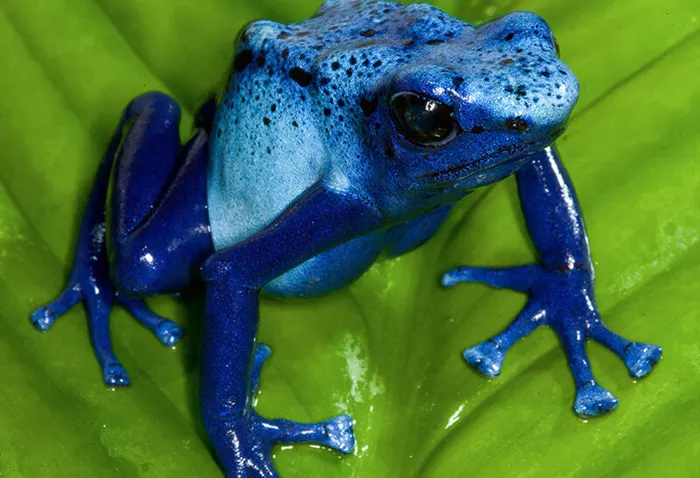
Have you ever wondered just how big a blue poison dart frog is? If you’re picturing something tiny and delicate, you’re right, but the reality of its size may still surprise you. Blue poison dart frogs, also known as Dendrobates tinctorius “azureus”, may seem small, but their size plays a major role in their survival. The size of this strikingly colorful creature is not just about how it looks but how it functions in the wild.
In this article, we’ll explore the fascinating world of the blue poison dart frog, breaking down everything you need to know about its size, from its physical measurements to how its tiny body helps it survive in the wild. So, let’s dive right into it!
Introduction to the Blue Poison Dart Frog
Blue poison dart frogs are small, but don’t let their size fool you! Despite their size, these frogs are mighty and pack a punch—metaphorically speaking, of course. Their vivid blue color, which is so mesmerizing, is a warning to potential predators: “Don’t mess with me, I’m toxic!” This warning comes from their toxicity, which is derived from the insects they consume in the wild.
But how big are they exactly? Let’s answer this burning question and find out what makes their size and stature so unique.
The Average Size of a Blue Poison Dart Frog
Blue poison dart frogs are relatively small compared to other amphibians. On average, they measure about 3.0 to 4.5 centimeters (1.2 to 1.8 inches) in body length, making them about the size of your average pen or a smartphone! To put it into perspective, if you hold a pen in your hand, you’re holding something about the same length as a blue poison dart frog.
Despite their small size, these frogs are fascinating because their size varies slightly depending on whether they’re male or female. Females tend to be a little bit larger, typically around half a centimeter longer than males. But don’t be fooled—though they’re small, these frogs are powerful in their own right.
What Makes Their Size Significant?
Why does their size matter so much? Well, being small is actually an advantage for these frogs. Their small size allows them to stay agile and hidden in their natural habitat, the moist and humid rainforests of Suriname. Small size is also essential for their defense mechanism. The tiny blue dart frog can dart around quickly to escape predators, which helps it evade being caught.
Interestingly, this tiny size doesn’t mean they are helpless. The blue poison dart frog is one of the most toxic frogs on the planet, thanks to the pumiliotoxin (PTX) in its skin. Despite being small, its toxin can incapacitate predators and make them think twice about going after such a little creature.
The Role of Size in Defense
Imagine you’re a predator. You spot something small, blue, and bright—maybe it looks like a tasty snack. But, wait, that’s exactly what makes the blue poison dart frog so dangerous! The vibrant blue color is a warning signal. This is a classic case of aposematism, where an animal uses its appearance to warn off predators.
Now, think of it like this: if you were walking in the forest and saw a bright orange mushroom, you might think twice before eating it, right? The bright color signals danger. In the same way, the frog’s small size combined with its warning color tells predators, “Stay away!” They may be tiny, but they are not to be messed with!
How Size Affects Their Lifespan
Now that you understand the significance of their size, let’s talk about how it influences their life cycle. Blue poison dart frogs typically live 10 to 15 years in the wild, which is a decent lifespan for an amphibian of their size. However, in captivity, they can live up to 23 years with proper care.
Their life span, of course, depends on a number of factors, including the availability of food, the environment, and their ability to avoid predators. Interestingly, their small size allows them to live in smaller, isolated areas, like mossy rocks and small puddles, which provides both shelter and food.
Size and Reproduction: The Blue Poison Dart Frog’s Unique Traits
When it comes to reproduction, size plays a role here too. Blue poison dart frogs are territorial and tend to live alone unless they’re mating. The males, which are typically smaller, call out to females with soft, melodic croaks. Females, drawn to the sound, will come to find a mate. Once paired, the female will lay around 5 to 10 eggs, and the male will fertilize them externally.
Incredibly, after the eggs hatch, the male carries the tiny tadpoles on his back to a nearby water source. This level of care is rare in the amphibian world, and their small size means they can easily maneuver around their environment to protect their offspring.
See Also: How Do Blue Poison Dart Frogs Survive Without Teeth?
Blue Poison Dart Frog’s Diet and Size Connection
You may be wondering how their size affects what they eat. Blue poison dart frogs primarily eat small insects, ants being a major part of their diet. Their tiny size makes it easier for them to find and consume small creatures that larger animals may overlook. These ants and other small insects are what provide the toxins that make the frog so dangerous.
Now, let’s think about it this way: if you’re a tiny frog, your prey needs to be just the right size—not too big to overwhelm you but just right to fuel your tiny body. This is why the blue poison dart frog relies heavily on smaller, more easily caught insects, which directly affects its survival.
The Blue Poison Dart Frog in the Wild: Size and Adaptation
Blue poison dart frogs are not just small; they’re also highly adapted to their environment. In the rainforests of Suriname, their small size allows them to hide in the damp, dense foliage where larger predators can’t reach. The humid environment is perfect for the small amphibians, as it keeps their skin moist—something crucial for their survival.
Being small helps them navigate the thick undergrowth, often leaping between rocks and vegetation to avoid danger. Their small body size also means they don’t need as much food as larger animals, allowing them to thrive in environments where food may be scarce.
Blue Poison Dart Frog: A Tiny Powerhouse
The blue poison dart frog is indeed an example of how size can be both an advantage and a challenge. While it may be small in stature, its vibrant colors and potent toxins make it a powerhouse in the wild. Its size allows it to remain elusive, survive in difficult environments, and defend itself effectively against predators.
When you see a blue poison dart frog next time, remember: It may be small, but it’s mighty in its own way. Its size is a critical part of its survival and helps it stand out in the vast rainforest.
Conclusion
The blue poison dart frog is a true marvel of nature—small, but full of surprises. From its compact size to its deadly toxicity, this tiny amphibian shows us that being small doesn’t mean being weak. Its body is perfectly suited for life in the rainforest, and its size plays a key role in its survival.
We hope you now have a deeper understanding of how big the blue poison dart frog is and why that size is so important to its existence.
Related topics: