
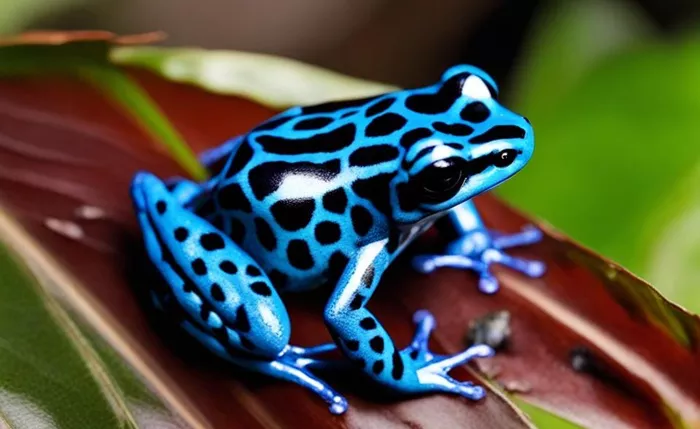
The blue poison dart frog, also known by its scientific name Dendrobates tinctorius “azureus”, is one of the most strikingly beautiful and mysterious creatures in the animal kingdom. Its vibrant blue skin, adorned with unique black spots, makes it impossible to miss. But beyond its eye-catching appearance, there’s an even more fascinating aspect of this frog‘s life: what it eats. This seemingly small animal plays an important role in its ecosystem, and its diet is as unique as its color.
If you’ve ever wondered what makes this little frog so toxic, you’re in for a treat! The foods it consumes in its natural environment contribute to its toxicity and have a direct influence on its behavior, physiology, and even how it interacts with other creatures. Ready to dive deep into the world of the blue poison dart frog? Let’s jump right in!
What Does a Blue Poison Dart Frog Eat in the Wild?
The blue poison dart frog is an insectivore, which means its diet mainly consists of small animals, particularly insects. However, not just any insects will do—this frog is picky. It feeds on a range of invertebrates that provide it with both food and the toxins that make it so dangerous to predators.
1. Insects: The Frog’s Main Course
Blue poison dart frogs primarily eat ants, termites, beetles, and other small insects. These critters are loaded with alkaloids, the natural compounds that give the frog its deadly skin toxins. But why do these frogs need toxins? It’s all about survival in the wild. Just like how some animals use speed or camouflage to escape predators, the blue poison dart frog uses its poison as a defense mechanism.
Think of it like this: imagine you’re eating a salad, but instead of lettuce, you’re munching on something that has a secret power—say, something spicy that deters anyone from wanting a bite. That’s the role the poison plays for this frog. It doesn’t create the toxins on its own but rather collects them from its food. Without the right diet, the frog wouldn’t be toxic at all!
2. Ants: The Toxin Source
One of the primary sources of poison for the blue poison dart frog is fire ants, a type of ant that’s especially rich in toxins. These ants pack a punch with their chemicals, and when the frog eats them, it absorbs the toxins. In fact, if you were to keep a blue poison dart frog in captivity and feed it a regular diet of crickets, for example, it would lose its toxicity. This is because crickets don’t contain the same potent toxins that fire ants do.
So, the frog’s diet is much more than just sustenance—it’s a way of making sure it stays safe from predators, just like how a skunk’s spray keeps animals at bay. When predators see that bright blue color, they instinctively know to stay away because they’ve learned that this frog isn’t your ordinary snack.
3. Beetles and Other Arthropods
Besides ants, blue poison dart frogs enjoy eating beetles, mites, spiders, and even termites. These creatures often live in the same areas as the frogs, in the humid rainforests of South America. These animals also carry toxins, which the frog collects as part of its meal.
Imagine these insects as “superfoods” for the frog: each one adds a little more to the frog’s arsenal of poisons. Without these little guys, the frog wouldn’t be nearly as dangerous. It’s like eating something that gives you extra energy or strength to fight off danger—essentially, the frog eats these insects to power up its defenses.
What Happens in Captivity?
When blue poison dart frogs are kept in captivity, their diet and their toxin levels change dramatically. In the wild, they rely on the special diet of ants and beetles to produce their toxins. But in captivity, these frogs often don’t get these insects, so they don’t develop the same level of toxicity.
So, when you’re looking at a captive blue poison dart frog, you’re not seeing the same kind of danger as you would in the wild. For example, a frog in a rainforest terrarium might be feeding on fruit flies or pinhead crickets, neither of which carry the potent toxins needed to keep predators away.
This change in diet is a fascinating example of how an animal’s environment affects its biology. The foods the frog eats are so crucial to its survival tactics and overall behavior.
See Also: Who Threatens the Blue Poison Dart Frog? Discover Its Natural Enemies
How Do Blue Poison Dart Frogs Get Their Food?
The blue poison dart frog is an agile hunter despite its small size. You can think of it like a little ninja on the hunt for its next meal. They don’t roam far for food, as their territories tend to be small. Their primary hunting method involves short leaps and a lot of patience.
Frogs are also known to be excellent ambush predators. They wait quietly until an insect happens to wander by, and then they strike, snatching it up with their long, sticky tongue. This hunting style is particularly effective in their rainforest homes, where insects are plentiful and constantly on the move.
1. Hunting Style: Ambush Predators
Much like a chameleon that waits to snap up a fly, the blue poison dart frog relies on stealth. It sits patiently in the shadows of its rainforest home, waiting for the right moment. The second an insect wanders too close, out comes its tongue, which can extend quickly and grab its prey.
This method ensures that the frog doesn’t have to waste energy chasing down its meals. Instead, it conserves its energy and waits for opportunities.
2. Digesting the Toxins
Once the frog has eaten its meal, the digestive system gets to work. The alkaloids from the ants and beetles the frog consumes travel through its digestive system and are stored in its skin. This process makes the frog toxic to the touch, keeping potential predators from attacking.
You can think of it like how a chef collects all the spices for a dish—they gather the right ingredients, mix them in, and the result is a flavorful and powerful outcome. For the frog, it’s all about the right ingredients—bugs with the right chemicals—that make it a potent and dangerous creature.
Why Is the Frog’s Diet So Important?
The blue poison dart frog’s diet is integral not only to its survival but also to its reputation as one of the most toxic creatures in the animal kingdom. Its diet allows it to produce the necessary toxins to protect itself from predators, which is why it needs access to these specific food sources in the wild.
Toxicity and Defense Mechanism
Without the right food, the blue poison dart frog would be just another colorful amphibian—still pretty to look at, but much more vulnerable. The frogs’ bright blue color is a warning sign to potential predators that they are poisonous and should be avoided. This “warning coloration” is a key part of the frog’s defense mechanism.
Conclusion
The blue poison dart frog’s diet is more than just about feeding itself; it’s about survival. The insects it consumes play a crucial role in shaping its toxicity and ensuring it can defend itself from potential threats. From ants to beetles, each bite helps this little amphibian become the powerhouse it is in the rainforest. So, next time you see a blue poison dart frog, remember: it’s not just a pretty face—it’s an expert at getting its food and staying protected!
Related topics: