
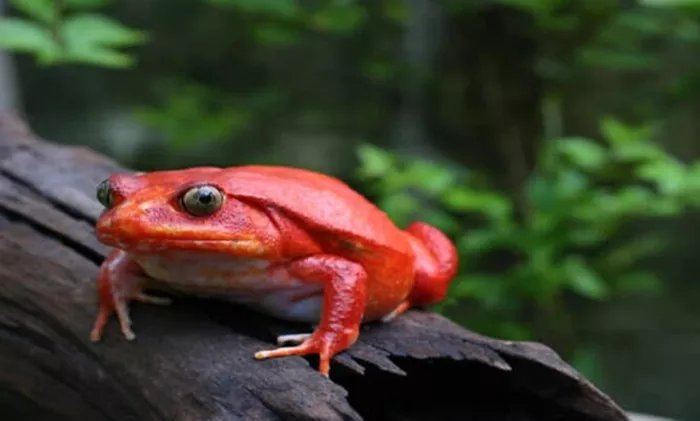
When you first encounter a tomato frog, it might be hard to believe that these brightly colored creatures have anything in common with more familiar pets like dogs or cats. Tomato frogs, native to Madagascar, are known for their vivid red-orange skin and their ability to secrete a toxic substance as a defense mechanism. But one question often stumps those who come across these fascinating creatures for the first time: Do tomato frogs have teeth?
In this article, we’re going to dive deep into the biology of tomato frogs, addressing not just the mystery of their teeth, but also their behavior, diet, and much more. Whether you’re a beginner just starting to explore the world of amphibians or an experienced herpetologist, we’ll break everything down into easy-to-understand sections.
So, without further ado, let’s answer the burning question: Do tomato frogs have teeth?
What Are Tomato Frogs?
Before we get into the specifics of their anatomy, let’s take a closer look at what tomato frogs are. Tomato frogs (scientifically known as Dyscophus antongilii) are a species of amphibian that live exclusively on the island of Madagascar. These frogs are famous for their bright red or orange skin, which is a defense mechanism to warn predators that they are toxic. But why toxic? Let’s find out as we break down their features!
Key Features of Tomato Frogs:
Size: Adult tomato frogs usually grow to about 4 to 5 inches (10 to 12 cm) in length.
Coloration: As the name suggests, they have a striking tomato-red or orange coloration, though some individuals can appear yellowish.
Defense Mechanism: They can secrete a potent toxin from their skin, which acts as a deterrent to predators.
Now that you know a bit about their overall appearance, let’s dive into the specifics: Do tomato frogs have teeth?
Do Tomato Frogs Have Teeth?
The short answer is no, tomato frogs do not have teeth in the way that you might imagine. When you think of a predator or animal using its teeth to bite or chew food, you’re probably imagining sharp, pointed teeth like those of a lion or a shark. However, frogs in general, including tomato frogs, have different types of mouthparts designed to suit their specific needs.
Frog Anatomy: What’s Going on Inside Their Mouth?
Tomato frogs have a unique structure in their mouth called “vomerine teeth”, but these aren’t what you might expect. Vomerine teeth are small, ridgelike structures located in the roof of their mouth. They aren’t used for chewing but rather for helping the frog hold onto prey once it’s been caught. So, although tomato frogs technically have “teeth”, they are not for biting or chewing.
Let’s break it down with a simple analogy: Think of the vomerine teeth like a clothes hook you use to hang up your coat. The hook doesn’t cut or chew anything—it just grabs onto what’s been placed on it. In the case of the tomato frog, the vomerine teeth help the frog grip onto its prey while it swallows it whole.
What About Their Diet?
Tomato frogs, like most frogs, are carnivores. They feed on a variety of live insects, such as crickets, beetles, and moths. Unlike mammals, frogs don’t chew their food. They catch their prey with their sticky tongues and swallow it whole. The vomerine teeth help hold the prey in place during swallowing. So, while they don’t have traditional teeth, they still need specialized mouthparts to handle their food.
Here’s an interesting fact: Even though their teeth aren’t used for chewing, some frogs can crush or grind their prey with their jaw muscles before swallowing. But tomato frogs don’t need this—they simply swallow their food whole and let their stomachs do the work!
The Role of Tomato Frog’s Toxicity
Now, you may be wondering, how does this relate to their teeth, or the lack thereof? Well, the tomato frog’s main defense mechanism is its toxicity, not its teeth. This secretion, which is released through the skin, serves as a warning to predators that they are not a tasty meal. The toxin isn’t something that comes from their mouth, so there’s no need for biting or tearing into prey.
See Also: What Is the Life Cycle of a Tomato Frog? Magical Process
Toxic Secretion: The Real Weapon
Tomato frogs secrete a milky substance that is toxic to other animals when they feel threatened. This can cause irritation or even death to animals that try to eat them. The bright red color of the frog is a visual cue that signals danger to predators, much like how a bright warning sign on the road tells you to slow down. So, while the lack of teeth might seem like a disadvantage, it’s actually the frog’s toxic skin that does the real work.
This is another example of how frog anatomy is designed around their needs: they don’t need sharp teeth because their defense mechanism is their toxic skin.
Frog Teeth: A Broader Comparison
To better understand why tomato frogs don’t need teeth like other animals, let’s compare them to other types of frogs. While many species of frogs have vomerine teeth, some frogs are more specialized in their feeding behaviors. For instance, bullfrogs and tree frogs also have vomerine teeth, but they may use their teeth for different purposes.
Let’s take tree frogs as an example. Tree frogs usually have tiny, backward-facing teeth that help them catch and hold onto insects, just like tomato frogs. However, unlike tomato frogs, some species of tree frogs will chew their food slightly before swallowing, using their teeth to break down larger prey.
However, even though some frogs may use their vomerine teeth to hold prey, they do not use them for chewing in the way that we think of teeth. All in all, while teeth can vary in shape and size depending on the species, most frogs—including tomato frogs—use their teeth primarily for gripping and holding food, not for biting or tearing it apart.
Do Tomato Frogs Make Good Pets?
If you’re considering keeping a tomato frog as a pet, it’s important to understand their unique needs. Tomato frogs can live for several years in captivity, but their care requires attention to their environment and diet. Unlike many pets, these frogs need moist, humid environments to thrive, and they should never be handled too much. Their skin secretions can irritate human skin, and excessive handling can stress them out.
Here are some quick care tips:
Humidity: Tomato frogs need high humidity levels to stay healthy.
Diet: They eat live insects, so be prepared to feed them crickets or other small insects.
Handling: Avoid handling your tomato frog too much to prevent skin irritation.
Conclusion
In the case of tomato frogs, teeth are not essential for their survival. Instead, their primary methods of defense and feeding revolve around their unique anatomy—sticky tongues for capturing prey and toxic skin secretions for protection. While they do have vomerine teeth, these small structures play a very specific role in holding onto food, rather than tearing or chewing it.
The next time someone asks, “Do tomato frogs have teeth?” you can confidently explain that while these fascinating creatures don’t chew their food, they’ve evolved other remarkable adaptations to survive in the wild. Their lack of teeth is simply one more way they’ve adapted to their environment—an environment that is both challenging and awe-inspiring.
Related topics: