
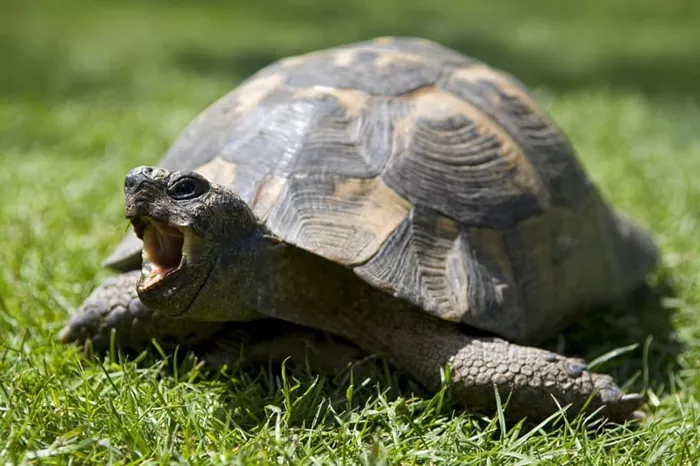
When you think of reptiles, particularly tortoises, you might imagine their hard, protective shells and slow movements. But what about their teeth? Do these ancient creatures have teeth to chew and break down their food? Or do they rely on something else entirely? This question might sound simple, but it leads us into the fascinating world of tortoises and their unique ways of eating.
In this article, we’ll dive deep into the anatomy of tortoises, answer the question of whether or not they have teeth, and explore how they manage to consume food. We’ll also uncover some interesting facts about tortoises’ feeding habits, and how their adaptations help them thrive in the wild.
So, let’s get to the heart of the matter—do tortoises have teeth?
The Mystery of Tortoise Teeth: Do They Exist?
At first glance, you might expect that all animals have teeth for biting, chewing, or breaking down food. After all, humans, dogs, and even fish have teeth, right? But when it comes to tortoises, the situation is different. Tortoises do not have teeth. Yes, you read that right. Instead of teeth, tortoises have a special structure in their mouths called a beak.
Think of it like this: while humans have teeth to cut and chew their food, tortoises use their beaks much like a bird would use its beak to break apart food. Their beaks are sharp and can handle a variety of food types, but they work differently from teeth. So, even though they lack teeth, they still manage to eat a wide range of foods effectively.
Why Don’t Tortoises Have Teeth?
You might be wondering, “Why did tortoises evolve without teeth?” Great question! Let’s break this down.
The tortoise’s beak is all they need to manage their diet, which varies depending on the species. Many tortoises are herbivores and feed on grasses, leaves, and plants. Some even eat fruits and vegetables. Their beaks are designed to grip and cut these foods, much like how you might use scissors to cut through paper. The beak is powerful enough to help them chew and break down plant matter, which doesn’t require the same kind of crushing force that teeth provide.
Tortoises are evolutionary marvels—nature has given them a beak that suits their eating habits. The lack of teeth likely allows them to conserve energy and reduce the need for complex tooth maintenance, unlike some animals that need teeth to capture and tear apart prey.
Beaks vs. Teeth: What’s the Difference?
If you’re familiar with birds, you’ve probably noticed that they have beaks instead of teeth. Similarly, tortoises have beaks that perform the same primary functions as teeth but are much more specialized for their environment.
To give you a better comparison, imagine you’re using a pair of scissors. Scissors cut materials, but they don’t need to be constantly maintained the way teeth do. Similarly, a tortoise’s beak allows it to grab, cut, and chew food without the need for constant regrowth like teeth in mammals. Beaks are simpler to maintain and adapt perfectly to the tortoise’s diet.
How the Tortoise’s Beak Works
Tortoises use their beaks to tear, rip, and cut their food. The upper and lower parts of the beak are sharp, and they come together in a scissor-like motion. The sharpness of the beak allows them to grip tough plant matter, like grasses or leaves, and cut it into manageable pieces. This is a bit like how you might use a knife to slice fruits and vegetables for a salad.
The sharpness of their beaks can vary depending on the species and their diet. Herbivorous tortoises tend to have more finely pointed beaks, while omnivorous tortoises, which eat both plants and animals, may have slightly sharper or more robust beaks to handle their varied diet.
What Do Tortoises Eat, and How Do They Use Their Beaks?
Now that we know tortoises don’t have teeth, let’s take a look at what they actually eat and how their beaks help them with this task. Tortoises are generally herbivores, though some species may be opportunistic omnivores.
Herbivorous Tortoises: Masters of Plant Matter
Most tortoises eat plants like grass, fruits, leaves, and flowers. Herbivorous tortoises typically use their beaks to rip and tear their food. They don’t need to chew the way mammals do, but they do need to break down the food into manageable pieces. Their beaks help them do this efficiently.
For example, the Aldabra giant tortoise, which is one of the largest tortoises in the world, feeds primarily on grass, leaves, and fruit. Its beak is strong enough to rip through tough plant material. Although the Aldabra tortoise lacks teeth, its beak is perfectly suited for its herbivorous diet, allowing it to access nutrients without needing teeth.
Omnivorous Tortoises: A Broader Range of Foods
Some tortoises, like the Russian tortoise, are omnivores and will consume both plant matter and small animals such as insects and carrion. These tortoises may have slightly different beaks—still sharp, but a little more robust to handle a wider variety of food.
For example, the Red-footed tortoise is known to have a varied diet that includes fruits, vegetables, insects, and even small vertebrates. Its beak is strong enough to help it tear through both plant matter and softer animal tissues, but once again, the lack of teeth is not a hindrance.
See Also: Can Hermann’s Tortoise Eat Banana?
Beak Adaptations in Different Species
Interestingly, not all tortoises have the same type of beak. For instance, the Galápagos tortoise, which feeds mostly on cactus and fruits, has a more curved beak that helps it access the pulp of cactus pads. The variation in beak shapes between species is a great example of how tortoises have adapted to their environments.
What Happens If a Tortoise Loses Its Beak?
Unlike mammals, which can lose teeth over time, tortoises rely on their beaks for their entire lives. If a tortoise were to lose its beak (due to injury or illness), it would face significant challenges in feeding itself. Without a beak, a tortoise would be unable to tear or rip food, making survival nearly impossible.
Fortunately, tortoises have strong, durable beaks that are unlikely to wear down quickly. Their beaks are continually growing throughout their lives, allowing them to maintain sharpness for feeding.
Conclusion
While tortoises don’t have teeth, their beaks are perfectly adapted to their diet and lifestyle. Whether they’re munching on grass or tearing through fruits, their beaks handle it all with impressive efficiency. So, the next time you see a tortoise munching away, remember that it’s using its beak—not teeth—to enjoy its meal.
Related topics: