
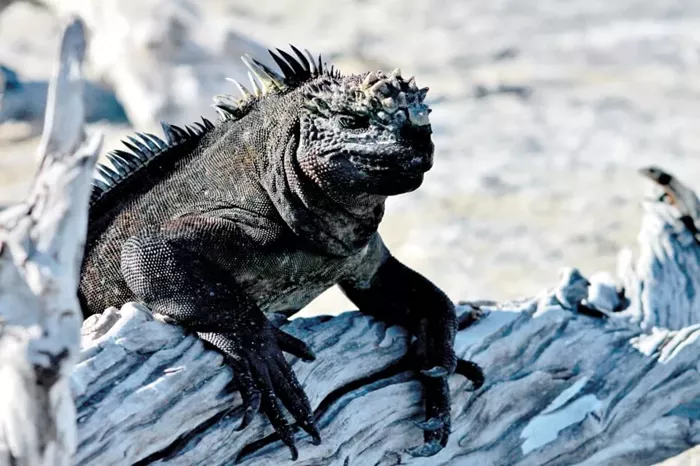
Marine iguanas are some of the most unique reptiles on Earth. Found only in the Galápagos Islands, these creatures stand out for their ability to swim and dive into the ocean to feed on algae. But how did such an unusual ability come to be? The evolution of the marine iguana is one of the most captivating stories in evolutionary biology, blending concepts from natural selection, adaptation, and the extreme conditions of island life.
In this article, we will explore the origins of the marine iguana, uncovering how it evolved from a common land-based ancestor to a specialized marine species. We’ll also delve into how the unique environment of the Galápagos Islands shaped this species into the fascinating creature it is today. Whether you’re a science enthusiast, a reptile lover, or simply curious about the natural world, this detailed guide will help you understand the evolutionary journey of the marine iguana.
Introduction: The Mystery of Marine Iguanas
Marine iguanas are famous for their ability to dive into the ocean and feed on algae, a trait that’s quite rare among lizards. But did you know that these extraordinary reptiles evolved from land-dwelling ancestors? This raises a fascinating question: Where did marine iguanas evolve from? What drove this dramatic shift from land to water?
To understand the marine iguana’s evolution, we must first step back in time. Picture the Galápagos Islands, isolated in the Pacific Ocean. Around 5 to 10 million years ago, an unknown species of iguana arrived on these remote islands, likely carried by ocean currents or floating debris. Over generations, these early settlers faced a variety of challenges—new food sources, climate shifts, and the absence of predators. These pressures would gradually shape the evolution of the marine iguana into the specialized creature we see today.
But how exactly did a land-dwelling iguana evolve to thrive in the sea? Let’s dive deeper.
The Evolutionary Roots: Common Iguanas and Their Ancestors
The marine iguana (Amblyrhynchus cristatus) is part of the larger Iguanidae family, which includes well-known species like the green iguana and the spiny-tailed iguana. But where did the marine iguana’s ancestors come from, and how did they end up on the Galápagos Islands?
Common Iguanas: The Starting Point
Common iguanas, such as the green iguana (Iguana iguana), are herbivores that live in tropical and subtropical regions, often climbing trees to feed on leaves. The marine iguana, however, is a specialized herbivore that feeds on algae underwater, marking a huge shift in lifestyle. Both species belong to the same family but diverged over time due to geographic isolation and different environmental pressures.
The common ancestor of the marine iguana likely lived around 10 to 20 million years ago, sharing characteristics with modern-day land iguanas. These early ancestors were land-based reptiles that probably lived in warm, tropical environments, much like the habitats of their relatives today.
Early Galápagos Settlers: Island Hopping and Isolation
Imagine the scene: A group of iguanas, likely from a mainland species similar to the green iguana, ends up on the Galápagos Islands. These islands are some of the most isolated places on Earth, surrounded by the vast, deep Pacific Ocean. The iguanas would have migrated to the islands, likely via ocean currents or on rafts of vegetation, a process known as dispersal. Once they arrived, they encountered a new world full of untouched ecosystems and unique challenges.
Over time, these iguanas evolved separately from their mainland relatives. Geographic isolation played a key role in their evolution, with each island providing different challenges and opportunities. Some iguana populations might have found themselves near coastal environments, where the abundance of algae and other marine food sources provided a new, untapped resource. Natural selection would have favored individuals who were able to exploit these resources—leading to the gradual adaptation of traits that allowed them to thrive in this new, more aquatic habitat.
Adapting to the Sea: The Key Evolutionary Steps
Over generations, the marine iguana began to diverge significantly from its terrestrial relatives. But what were the specific changes that allowed it to become an expert swimmer and algae-feeder?
Physical Adaptations: From Land to Sea
The marine iguana’s transformation into a swimmer is one of the most striking examples of adaptation in the animal kingdom. Let’s break down the key changes that took place:
Flattened Tail: Marine iguanas have a flattened tail that acts like a rudder, aiding in their swimming. This tail helps them steer efficiently through the water, much like the tail of a fish. The tail has become an important tool for propulsion and stability during swimming.
Nostrils and Breathing: Marine iguanas can hold their breath for long periods of time while diving underwater. Their nostrils are positioned in such a way that they can close them while submerged, preventing water from entering their lungs. This allows them to dive deep and forage for algae without worrying about taking in seawater.
Large Claws: The sharp claws of marine iguanas are ideal for climbing rocks and scraping algae off submerged rocks in the ocean. These claws are an adaptation that helps them access food in areas where land-based iguanas would struggle to reach.
Heat Regulation: Marine iguanas are cold-blooded, meaning they depend on external temperatures to regulate their body heat. After swimming in the cold ocean, they will often bask in the sun on the rocks to warm up, recharging their bodies for the next dive. This is similar to how you might find yourself warming up after a swim on a chilly day!
Feeding on Algae: A Major Shift in Diet
The marine iguana’s primary diet consists of marine algae, which it feeds on by diving into the ocean. This diet marks a significant departure from its terrestrial ancestors, who were likely herbivores feeding on plants on land. The shift to marine algae required a number of physiological changes, including:
Specialized Teeth: Marine iguanas have sharp, serrated teeth that help them scrape algae off rocks. These teeth are much more suited to their diet than the flatter teeth of land iguanas.
Digestive Adaptations: To process the algae, marine iguanas have a robust digestive system that can handle the unique nutrients found in marine plants.
Salt Regulation: Since marine iguanas ingest seawater while feeding, they have developed special glands near their eyes that help them excrete excess salt. This prevents them from becoming dehydrated and allows them to continue feeding without suffering from the saltwater.
The Galápagos Islands: An Evolutionary Laboratory
The Galápagos Islands serve as a natural laboratory for the study of evolution. These islands are a true hotspot of biodiversity, with species adapting in unique ways to the challenges of island life. The marine iguana’s evolution is a perfect example of adaptive radiation, where a single species diversifies into a variety of forms to fill different ecological niches.
Each island in the Galápagos Archipelago has its own population of marine iguanas, and over time, these populations have become genetically distinct due to the isolation of the islands. For instance, some populations are larger and better suited for swimming, while others are smaller and more adapted to life on land. This variation shows how different environmental pressures on each island have led to subtle differences in size, color, and behavior.
The Role of Natural Selection
The evolution of the marine iguana is a textbook example of natural selection. Over time, the iguanas that were best able to exploit the marine environment—by swimming, diving, and feeding on algae—survived and reproduced, passing on their advantageous traits to future generations.
By contrast, individuals that were less suited to the marine lifestyle likely faced higher risks of starvation or predation, reducing their chances of passing on their genes. This process, over millions of years, led to the marine iguana’s unique set of characteristics, making it a specialized and successful species in its marine ecosystem.
Conclusion
The marine iguana is a true marvel of evolution—a land-based reptile that transitioned into an aquatic specialist. From its ancient land-dwelling ancestors to its modern-day existence as a master of the sea, the story of the marine iguana’s evolution is one of adaptation and survival. By learning from the past, we can gain a deeper understanding of how isolation, natural selection, and environmental pressures work together to shape life on Earth.
Related topics: