
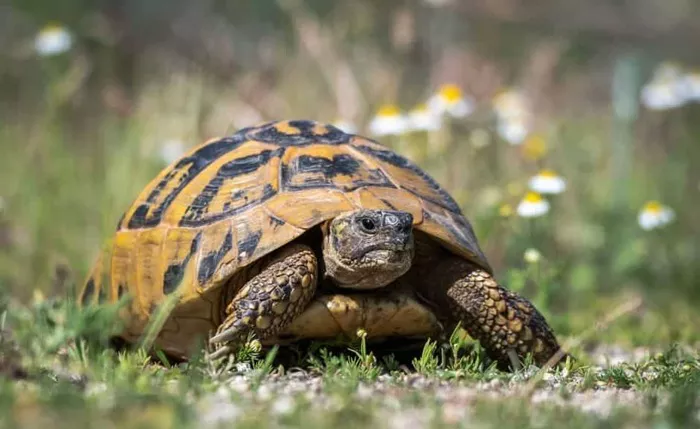
Have you ever found your Hermann tortoise curled up in the corner, motionless for hours, and started to worry—“Is my tortoise okay, or is it just really sleepy?” You’re not alone. Many tortoise keepers ask the same question: Do Hermann tortoises sleep a lot? And the short answer is yes—they do sleep a lot, but there’s much more to the story than just that.
In this detailed guide, we’ll explore the fascinating sleep habits of Hermann tortoises, understand what’s normal and what’s not, and help you feel more confident as a tortoise parent. From natural biological rhythms to habitat setup and health signals, we’ll walk through every essential angle. You’ll also find practical advice and some surprising facts along the way—so don’t miss out!
Understanding the Hermann Tortoise’s Natural Rhythm
Let’s start by looking at how Hermann tortoises behave in the wild. These tortoises come from the warm, dry Mediterranean regions of southern Europe, where the climate has shaped their daily activity.
Hermann tortoises are diurnal, meaning they are active during the day and rest at night—just like us. But their activity level doesn’t stay the same all day. In the wild, they spend most of their early morning hours warming up under the sun, becoming active for a few hours, and then often retreating during the hottest parts of the afternoon. This natural behavior is called crepuscular resting, where they’re most active in the cooler parts of the day.
When it’s hot or dry—or during winter—they naturally slow down and rest more. This behavior is part of a survival strategy. In the wild, they might brumate (a reptile version of hibernation) during colder months, sleeping for weeks or even months at a time.
How Much Sleep Is Normal for a Hermann Tortoise?
On average, a healthy Hermann tortoise may sleep 12 to 14 hours a day. This might seem like a lot, especially if you compare them to dogs or cats. But reptiles function differently from mammals. Tortoises rely on external heat sources to regulate their body temperature—a trait known as ectothermy. So when it’s cool, they rest more.
Think of it like this: your tortoise is a little solar-powered tank. Without enough heat or sunlight (or a good artificial substitute), it doesn’t “charge up” enough to be active. So if your Hermann tortoise is snoozing away for what feels like half the day, it’s probably just following its natural rhythm.
Why Do Hermann Tortoises Sleep So Much?
There are several reasons why your Hermann tortoise might sleep a lot, and most of them are completely normal. But some might signal that something’s wrong. Let’s break this down.
1. Temperature Levels Aren’t Right
Temperature plays a huge role in how active your tortoise is. If the enclosure is too cold, your tortoise may become sluggish and sleep more. They need warmth to digest food, move around, and just function normally.
−Ideal basking area: around 90–95°F (32–35°C)
−Cooler end: around 75°F (24°C)
−Nighttime: 65–70°F (18–21°C) is generally fine
If your tortoise sleeps all day and hardly eats, check your temperatures with a digital thermometer. Trust us, it’s worth it.
2. Lack of Proper Lighting (Especially UVB)
You might not realize it, but UVB lighting is essential for tortoise health. UVB rays help your tortoise synthesize vitamin D3, which is crucial for absorbing calcium and preventing diseases like MBD (metabolic bone disease), a common reptile disease caused by calcium deficiency.
A UVB lamp is like “artificial sunlight” for your tortoise. Without it, they can become lethargic and start sleeping much more than they should.
3. Natural Seasonal Changes
Even indoor tortoises respond to seasons. Shorter daylight hours during winter can trigger a sort of mini-brumation. This doesn’t mean your tortoise is sick—it’s just reacting to what its body “thinks” is happening in nature.
Make sure to adjust your lighting cycle gradually as seasons change. Giving your tortoise 12–14 hours of light per day helps keep their body clock in sync.
4. Health Problems
Sometimes, excessive sleep can be a warning sign. If your tortoise is sleeping much more than usual and also not eating, pooping, or moving, it could be dealing with health issues. Some of the most common include:
Parasites – internal worms can drain energy
Respiratory infections – signs include wheezing, bubbles from the nose, or frequent yawning
Dehydration – a sleepy tortoise may just be thirsty
Malnutrition – not enough vitamins and minerals can make them weak
If you notice unusual behavior along with oversleeping, it’s time to visit a reptile-savvy vet.
Sleep Patterns Based on Age
Just like human babies, young tortoises sleep more than adults. Hatchlings and juveniles often rest a lot as they grow. Their bodies are working hard to build bones, develop organs, and get used to their surroundings. It’s completely normal.
Older tortoises may also sleep a lot, especially if they’re not stimulated or don’t have enough space to explore. Providing an enriching environment can help balance their sleep and activity.
How to Tell If Your Tortoise Is Just Sleeping—Or If Something’s Wrong
When a tortoise is motionless, it can be hard to tell if it’s sleeping or sick. Here are some signs that your tortoise is simply snoozing:
−Legs and head are tucked in or slightly out
−Eyes closed or partially closed
−Slow, rhythmic breathing
−Still responsive if you gently touch it
Warning signs to watch out for:
−Doesn’t wake up even when touched
−Mouth open or gaping
−Heavy, rapid breathing
−No interest in food or water
−Shell feels soft (especially in young ones)
If you’re unsure, don’t wait—consult a vet.
Creating the Ideal Sleep Environment
Want your Hermann tortoise to sleep well and stay healthy? Here’s how to set up a great habitat.
1. Provide a Good Hiding Spot
Tortoises feel safe when they can hide while they sleep. Use logs, half logs, or purpose-made hides. Think of it like their little bedroom!
2. Use a Natural Substrate
A mixture of soil and coconut fiber works well. It holds moisture but doesn’t get muddy. Your tortoise can dig down if it wants, just like in the wild.
3. Keep a Regular Light Cycle
Use a timer to control your lights. Keeping the lights on for about 12–14 hours a day and off at night helps simulate a natural day-night cycle.
4. Keep the Humidity in Check
Too dry or too wet isn’t good. Aim for 40–60% humidity for adults, and a little higher for babies. Mist the enclosure lightly if needed.
Let’s Talk Brumation: The Long Winter Nap
In nature, Hermann tortoises brumate in winter, sometimes for up to 3 months. It’s like hibernation but for reptiles. Their metabolism slows way down, they don’t eat, and they barely move.
Should your pet tortoise brumate? That depends. Some keepers allow it under controlled conditions. Others keep their tortoise awake year-round with stable temperatures and lighting. If you’re considering brumation, talk to a vet first. Improper brumation can be risky.
Do Tortoises Dream?
It might sound silly, but it’s a fun question. We don’t know for sure if tortoises dream, but studies on reptiles suggest they go through sleep cycles, including deeper rest periods. So next time you see your tortoise twitch a little during sleep, maybe it’s dreaming of dandelions!
Conclusion
Your Hermann tortoise is a quiet little marvel. Its slow, deliberate lifestyle might seem sleepy to us, but in its world, it’s perfectly normal. By understanding its habits, you can make better decisions and build a stronger bond.
And remember—sleep is just one part of the big picture. Stay curious, keep observing, and let your tortoise teach you the beauty of slowing down.
Related topics: