
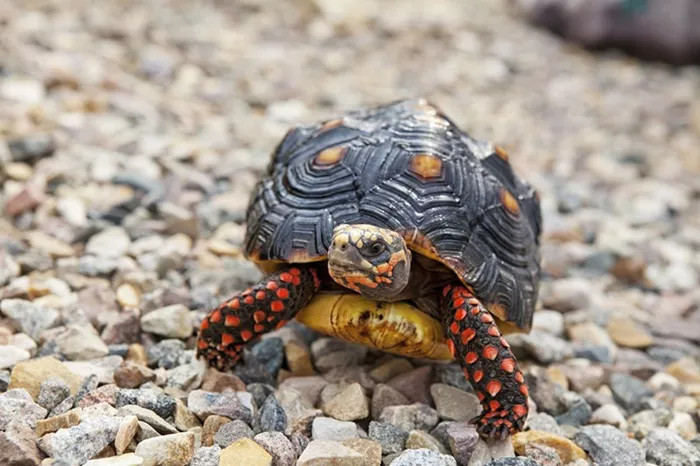
The redfoot tortoise (Chelonoidis carbonarius) is one of the most popular and fascinating species of tortoises in the pet trade and among reptile enthusiasts worldwide. Native to the tropical and subtropical forests and savannas of northern and central South America, this species captivates many with its striking shell pattern and distinctive red or orange scales on its limbs, hence the name “redfoot.”
One of the most common questions about redfoot tortoises—whether for potential pet owners, hobbyists, or wildlife enthusiasts—is: How big do redfoot tortoises get? Understanding their size is crucial for proper care, habitat design, and health maintenance. This article explores the growth patterns, adult size, sexual dimorphism, and factors influencing the ultimate size of redfoot tortoises. We will also look into their biology, lifespan, and comparisons to related tortoise species.
Biological Overview of Redfoot Tortoises
Redfoot tortoises belong to the family Testudinidae, which groups land-dwelling tortoises. They thrive in warm, humid environments, primarily in countries such as Brazil, Colombia, Venezuela, Guyana, and Suriname. They inhabit diverse ecosystems ranging from rainforests to dry savannas, adapting to different microhabitats.
Redfoot tortoises are medium-sized tortoises with an attractive carapace (shell) that features a dark base color highlighted by lighter patches or streaks. The shell shape is slightly domed, allowing them to navigate through dense underbrush. The red or orange scales on their legs, head, and tail provide distinctive markings that set them apart from other tortoise species.
Understanding the redfoot tortoise’s growth and size requires insight into their biology, ecology, and captive care conditions. Growth rates and final size can vary depending on nutrition, environment, genetics, and gender.
Average Size of Redfoot Tortoises
The size of redfoot tortoises can be broadly categorized by age and gender. Like many tortoises, redfoots grow gradually over many years. In the wild, they reach a certain size influenced by food availability, temperature, and natural threats. In captivity, with consistent care and abundant nutrition, they can sometimes grow larger and healthier than their wild counterparts.
Carapace Length
The most common measurement used to describe the size of tortoises is the carapace length. This refers to the distance from the front edge (near the head) to the back edge (near the tail) of the shell.
Adult redfoot tortoises typically have a carapace length ranging from 10 to 14 inches (25 to 35 cm). Males tend to be slightly smaller but have more pronounced features such as a longer tail and concave plastron (the bottom shell). Females are often larger and have a flatter plastron, which allows more space for egg development.
In some exceptional cases, redfoot tortoises can grow up to 16 inches (40 cm) in carapace length, but this size is less common.
Weight
Weight is another important aspect of size. Adult redfoot tortoises usually weigh between 8 to 15 pounds (3.5 to 7 kg), depending on their size and health. Males generally weigh less than females due to their smaller body size, but this difference is not always pronounced.
Captive redfoot tortoises often weigh more than wild ones, as they are fed calorie-rich diets and have fewer risks such as predators or diseases.
Sexual Dimorphism and Size Differences
Sexual dimorphism refers to physical differences between males and females of the same species. In redfoot tortoises, size differences are subtle but important for identification and understanding growth patterns.
Male Redfoot Tortoises
Males usually have:
−A slightly smaller and more elongated shell.
−A concave plastron, which aids in mounting females during mating.
−Longer, thicker tails that often extend beyond the shell.
−More pronounced red or orange coloration on their limbs and head.
Males tend to reach a carapace length of 10 to 12 inches (25 to 30 cm) on average. Their growth slows earlier than females, and they generally do not grow as large.
Female Redfoot Tortoises
Females are typically:
−Larger and broader in shell size to accommodate egg development.
−Have a flat or slightly convex plastron.
−Have shorter, thinner tails.
−Show more muted red or orange coloration, though this varies among individuals.
Females often grow larger than males, with some individuals reaching 14 to 16 inches (35 to 40 cm) in carapace length.
Understanding these sexual size differences is vital for breeders and caretakers, especially when designing enclosures or planning breeding programs.
Growth Rate and Lifespan
The growth of redfoot tortoises is slow but steady. Juveniles grow rapidly during the first few years of life, especially when provided with proper nutrition and warm conditions. After reaching sexual maturity, their growth rate slows significantly.
Juvenile Growth
In their first year, redfoot tortoises can grow from a few centimeters to about 5 to 7 inches (12 to 18 cm). Proper diet rich in calcium, fiber, and vitamins is essential during this phase to ensure healthy shell development and bone strength.
Juveniles grow about 1 to 2 inches (2.5 to 5 cm) per year in ideal captive conditions.
Adult Growth
After reaching maturity, generally around 5 to 7 years of age, their growth slows. Adults might continue to grow very slowly for many years. Their size stabilizes around 10 to 16 inches in carapace length, as mentioned earlier.
Lifespan
Redfoot tortoises are long-lived reptiles. In captivity, they can live 50 years or more, with some reported to reach 70 years. In the wild, their lifespan tends to be shorter due to predation, disease, and environmental stress.
Longevity means that size and health management are long-term commitments for owners and conservationists.
Factors Influencing Size
Several factors affect how big a redfoot tortoise grows. These include genetics, diet, habitat conditions, and health status.
Genetics
Genetics plays a foundational role in determining the maximum size a tortoise can reach. Different populations of redfoot tortoises show slight variations in size and coloration due to geographical distribution.
Some individuals have genes that favor larger or smaller growth, but this can only be partially influenced by captive care.
Nutrition
Nutrition is one of the most controllable factors influencing growth. A balanced diet high in fiber, calcium, vitamins A and D3, and low in protein promotes healthy shell and bone development.
Wild redfoots feed on a variety of fruits, flowers, leaves, and small amounts of animal matter. In captivity, feeding a diet that mimics this variety encourages proper growth.
Improper diet, especially one deficient in calcium or excessive in protein, can stunt growth or cause deformities such as pyramiding.
Habitat and Environment
Temperature, humidity, and lighting are critical environmental factors. Redfoot tortoises thrive in warm, humid climates with temperatures ranging from 75 to 90°F (24 to 32°C) and humidity around 70-80%.
Exposure to UVB light is essential for calcium metabolism and overall health.
Poor environmental conditions can slow growth or lead to health problems that indirectly limit size.
Health
Disease, parasites, and injury also affect growth. A healthy tortoise grows more efficiently than one battling infections or shell damage.
Regular veterinary checkups and preventive care help maintain health and growth potential.
Comparisons with Other Tortoise Species
To appreciate the size of redfoot tortoises, it is useful to compare them with related species in the genus Chelonoidis and other tortoise families.
Redfoot Tortoises vs. Yellowfoot Tortoises
Yellowfoot tortoises (Chelonoidis denticulatus) are closely related and share similar habitats. They generally grow larger than redfoots, reaching up to 16 to 18 inches (40 to 45 cm) in carapace length.
While redfoots have bright red markings, yellowfoots display yellow or orange on their limbs and head.
Redfoot Tortoises vs. Sulcata Tortoises
Sulcata tortoises (Centrochelys sulcata), native to Africa, are much larger than redfoots. Adults can reach 24 to 30 inches (60 to 75 cm) and weigh over 100 pounds (45 kg).
Redfoot tortoises are relatively small compared to these giants, which makes them suitable for smaller enclosures.
Redfoot Tortoises vs. Russian Tortoises
Russian tortoises (Testudo horsfieldii) are smaller, usually only 6 to 10 inches (15 to 25 cm). Redfoots are noticeably bigger, with brighter coloration and a more tropical habitat requirement.
Growth Challenges in Captivity
While captive care can promote healthy growth, it also presents challenges. Improper husbandry often results in stunted or irregular growth.
Pyramiding
Pyramiding is a common growth disorder in tortoises, including redfoots, characterized by raised, pyramid-like growths on the scutes of the shell. It results from poor diet, low humidity, or inadequate UVB exposure.
This condition does not directly affect the overall size but can impair shell health and appearance.
Stunted Growth
Stunted growth occurs when tortoises do not receive sufficient nutrients or environmental support. They may remain small even as adults, which compromises their health and longevity.
Overfeeding and Obesity
Conversely, overfeeding or feeding inappropriate foods can lead to obesity. Excess weight stresses the tortoise’s body and can cause health issues.
Balanced feeding and monitoring weight are essential for proper size development.
Caring for Redfoot Tortoises to Support Healthy Growth
For those keeping redfoot tortoises as pets, understanding how to care for them to support optimal size and health is vital.
Enclosure Size
Because redfoot tortoises grow up to 14 inches or more, they require spacious enclosures. A minimum of 4 by 4 feet (1.2 by 1.2 meters) for one adult is recommended, with larger areas preferred.
Outdoor enclosures in warm climates with secure fencing allow natural foraging and exercise.
Diet
Providing a diet similar to their natural food improves growth. This includes:
−Leafy greens such as dandelion, collard greens, and hibiscus leaves.
−Fruits like papaya, mango, and melon in moderation.
−Flowers such as hibiscus and nasturtium.
−Occasional animal protein like earthworms, but not too much.
Calcium supplements and UVB lighting are essential to prevent metabolic bone disease.
Temperature and Humidity
Maintaining temperatures between 75 to 90°F with a humidity level of 70-80% encourages normal growth. Heat lamps and misting systems help replicate these conditions.
Veterinary Care
Regular checkups allow early detection of parasites, infections, or shell problems. Treatment and preventive measures help ensure continued growth and health.
Conclusion
Redfoot tortoises are medium-sized tortoises that typically reach a carapace length of 10 to 14 inches, with females generally larger than males. Their weight ranges from 8 to 15 pounds, influenced by genetics, diet, environment, and health.
They grow steadily over many years, often living 50 years or more in captivity. Proper care, including a balanced diet, suitable habitat, and veterinary attention, is essential for them to reach their full size potential and live long, healthy lives.
Understanding how big redfoot tortoises get helps owners provide the best possible care and supports conservation efforts to protect these beautiful reptiles in the wild.
Related topic: