
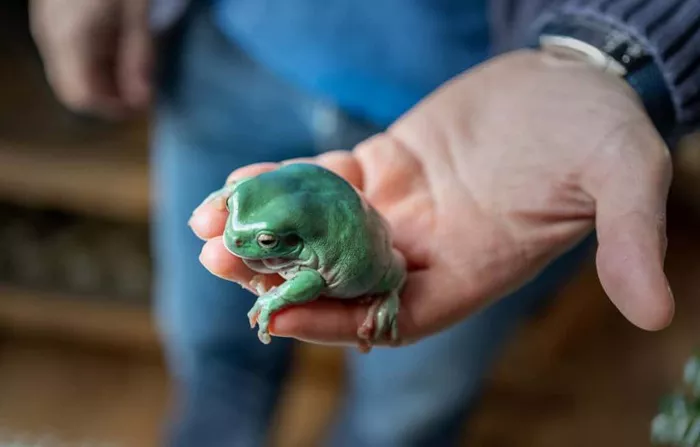
White’s tree frog (Litoria caerulea), also known as the Australian green tree frog or dumpy tree frog, is a species native to Australia and parts of New Guinea. These frogs are well-known in the pet trade due to their calm nature and ease of care. Because of their popularity, they have been introduced to regions outside of their natural habitat. As a zoologist, it’s important to examine whether these introductions have led to invasive behavior.
The term “invasive species” refers to a non-native organism that causes harm to the environment, economy, or human health. Not every species that is introduced to a new area becomes invasive. Some species adapt without causing harm, while others can destabilize ecosystems. In this article, we will explore whether White’s tree frogs have shown invasive tendencies in non-native environments and what this means for biodiversity and local fauna.
Native Range of White’s Tree Frog
White’s tree frog is naturally found in northern and eastern Australia, as well as southern New Guinea. In their native environment, these frogs play a balanced role in the ecosystem. They feed on a variety of insects and small invertebrates and are, in turn, preyed upon by birds, snakes, and larger reptiles.
Because they evolved within this ecosystem, they have natural predators and competitors that keep their populations in check. Their role in their native range is important, but it is also balanced. Issues typically arise when animals like these are introduced to new areas.
Why Are White’s Tree Frogs Introduced Elsewhere?
There are several reasons why these frogs are found outside their natural range. The primary reason is their popularity in the pet trade. People in many countries purchase them for home terrariums. However, some of these frogs escape or are intentionally released into the wild.
Another reason is accidental transportation. Frogs can hitch rides in shipments of goods, particularly produce or tropical plants. If conditions in the new location are suitable, these frogs can survive and reproduce.
Documented Cases of Introduction
White’s tree frogs have been introduced to areas such as Florida in the United States and parts of New Zealand. In Florida, they have been observed in the wild, especially in regions with a warm and humid climate. Their presence in New Zealand is less significant due to cooler temperatures, which limit their ability to spread.
In some of these areas, they have established small populations. Whether these populations can be called invasive depends on several factors, including their impact on local ecosystems.
What Makes a Species Invasive?
To determine if White’s tree frogs are invasive, we must understand what qualifies a species as invasive. The criteria include:
The species is not native to the ecosystem.
The species establishes a self-sustaining population.
The population spreads aggressively.
The species causes harm to native wildlife, disrupts ecosystems, or affects human activities.
It is not enough for a species to be non-native. It must also negatively impact its new environment. Some non-native species integrate without causing problems. Others become dominant and push out native species.
Potential Ecological Impacts
White’s tree frogs are opportunistic feeders. They consume a wide range of insects, spiders, and even small vertebrates. In a new environment, they may compete with native frogs and reptiles for food. If they have no natural predators, their populations can grow unchecked.
This competition can stress native species. If native frogs are outcompeted, their numbers may decline. This affects the food chain and overall biodiversity. Additionally, White’s tree frogs may prey upon smaller native frogs, which could lead to declines in those populations.
They can also carry diseases like chytrid fungus. This fungus is deadly to many amphibians and has contributed to population crashes around the world. If an infected tree frog is introduced into a new environment, it can spread the disease to native species.
Florida: A Case Study
In Florida, there have been occasional reports of White’s tree frogs in the wild. The climate in southern Florida is similar to their native habitat. This allows them to survive, especially in human-altered environments like gardens and suburban areas.
However, their populations in Florida are still small. As of now, they do not seem to have established widespread or damaging populations. Monitoring continues, but there is currently no evidence that they are causing major harm to Florida’s native species.
That said, Florida has a long history of invasive amphibians, such as the Cuban tree frog. This makes researchers cautious. Even if White’s tree frogs are not currently a threat, the potential exists.
Comparison With Other Invasive Frogs
To better understand the risks, we can compare White’s tree frogs with known invasive frogs. For example, the cane toad (Rhinella marina) is a notorious invasive species in Australia. It was introduced to control pests but became a major threat to native wildlife.
Cane toads breed rapidly, are toxic to predators, and consume a wide range of prey. In contrast, White’s tree frogs do not breed as quickly and are not toxic. They are also less aggressive in their behavior. This suggests that, while they may establish populations, they are less likely to cause severe ecological disruption.
Captive Breeding and the Pet Trade
Most White’s tree frogs in captivity come from breeders. This reduces the demand for wild-caught frogs. However, the risk remains that pet frogs will escape or be released. Education is crucial. Pet owners must understand the risks of releasing exotic animals into the wild.
Responsible pet ownership includes never releasing animals and ensuring enclosures are secure. It also means understanding the needs of the animal to prevent escape.
Climate Limits and Distribution
Another factor that limits the spread of White’s tree frogs is climate. They need warm, humid environments to thrive. In colder areas, they cannot survive the winter. This restricts their potential range. Unlike more adaptable invasive species, their needs are specific.
In areas with suitable climates, such as tropical or subtropical regions, there is a higher risk. However, even in these areas, they may not outcompete native species unless other factors, like disease or habitat disturbance, play a role.
Monitoring and Management
Wildlife agencies often monitor non-native species to assess risk. In the case of White’s tree frogs, reports of sightings are logged, and populations are tracked. If problems arise, measures can be taken. These might include removal efforts or public awareness campaigns.
At this point, most areas do not consider White’s tree frogs a major threat. But vigilance is necessary. Ecosystems are complex, and small changes can have large effects over time.
Ethical Considerations
There is also an ethical side to consider. Humans have moved species around the globe. In many cases, this has led to ecological damage. We have a responsibility to prevent further harm. Avoiding the release of pets and supporting conservation are important steps.
White’s tree frogs are beautiful and engaging animals. But they belong in their natural range or in secure captivity. Introducing them to new areas without understanding the consequences can lead to problems.
Conclusion
Are White’s tree frogs invasive? The answer is complex. In some areas, they have been introduced and have survived. However, they have not yet shown the aggressive, damaging behavior that defines truly invasive species.
Their potential to become invasive exists, especially in warm, humid environments. They can compete with native species and spread disease. But their current impact appears limited.
Prevention is key. Through education, responsible pet ownership, and monitoring, we can reduce the risk. White’s tree frogs are not yet a major ecological problem, but we must remain watchful. Their story is a reminder of the delicate balance in nature and the unintended consequences of human actions.
Related topics: