
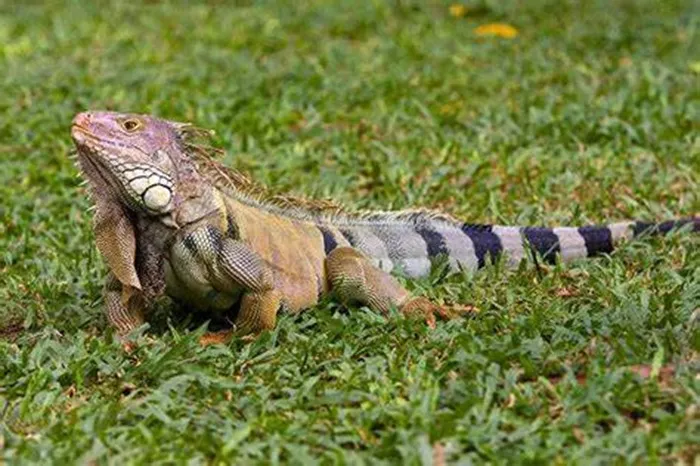
Iguanas are among the most iconic creatures in the world of reptiles. Their unique appearance, with long tails, spiny crests, and sharp claws, often raises questions about their classification. One of the most common questions people ask when they encounter an iguana is: “Are iguanas reptiles?” While it may seem like an obvious answer to some, it’s important to understand the characteristics that define reptiles, as well as where iguanas fit into this group.
This article aims to provide a thorough examination of iguanas, their biology, and their classification as reptiles. To answer the question directly: Yes, iguanas are reptiles. However, to truly understand why, we need to dive into the characteristics that define reptiles and how iguanas fit into this classification. This article will explore various aspects of iguanas, from their evolutionary history to their physical and behavioral traits, and explain how these features align with the broader reptilian class.
What Makes Reptiles Reptiles?
Before we delve into the specifics of iguanas, it’s crucial to define what a reptile is. Reptiles are a class of cold-blooded vertebrates that include species such as snakes, lizards, turtles, and crocodiles. These creatures share several key characteristics that distinguish them from other animals like mammals, birds, and amphibians.
Key Characteristics of Reptiles
Cold-Blooded Metabolism
Reptiles are ectothermic, meaning they rely on external sources of heat to regulate their body temperature. This is a significant difference from mammals and birds, which are warm-blooded (endothermic) and can maintain a constant internal body temperature regardless of the environment.
Scaly Skin
One of the most distinguishing features of reptiles is their scaly skin. These scales are made of keratin, the same protein found in human hair and nails. The scales serve as a protective barrier, preventing water loss and protecting the animal from environmental hazards.
Egg-Laying
Most reptiles lay eggs, although there are some exceptions. The eggs are typically leathery rather than hard like those of birds. Reptile eggs also have a protective shell that allows the embryos to develop outside of water. However, certain reptiles, such as some species of snakes and lizards, give birth to live young.
Lungs for Breathing
All reptiles, including iguanas, breathe air through their lungs. Unlike amphibians, which can also absorb oxygen through their skin, reptiles have a fully developed respiratory system with lungs that are the primary means of oxygen intake.
Internal Fertilization
Reptiles generally reproduce through internal fertilization. In most species, males transfer sperm to females through specialized organs, ensuring fertilization occurs inside the female’s body before the eggs are laid.
These characteristics are shared by all reptiles, and iguanas are no exception. Now that we understand the defining traits of reptiles, let’s explore how iguanas specifically fit this description.
The Iguana’s Place in the Reptile Family Tree
Iguanas belong to the family Iguanidae, which is part of the larger order Squamata. Squamates include lizards and snakes, and they are the largest group of reptiles, with over 10,000 species worldwide. Iguanas are most commonly associated with lizards due to their physical similarities, but their evolutionary history dates back millions of years.
Evolution of Iguanas
Iguanas evolved from early reptiles that lived during the Mesozoic Era, roughly 200 to 65 million years ago. This era, known as the “Age of Dinosaurs,” saw the rise of many reptilian species. Iguanas share a common ancestor with other squamates, and their evolutionary path led them to become distinct in terms of physical traits and habitat preferences.
Iguanas are believed to have originated in Central and South America, although their range has expanded to other regions of the world, including the Caribbean. There are currently about 45 species of iguanas, and they exhibit a wide range of adaptations, from desert-dwelling species to those that live in tropical rainforests.
Anatomy and Adaptations
Iguanas are well-adapted to their environment. Their bodies are designed for both terrestrial and arboreal lifestyles, meaning they can live on the ground or in trees. Their long, muscular tails help them maintain balance and can even be used as a defensive weapon against predators.
One of the most notable features of iguanas is their specialized feet. Iguanas have long claws that allow them to climb trees and grip onto branches. Their claws are particularly adapted for gripping onto rough surfaces, such as tree bark. This adaptation is essential for the iguana’s survival, as many species live in the canopy of rainforests or in rocky areas where climbing is necessary.
Iguanas also have a specialized dewlap, a flap of skin under their throat, which they use for communication. Males, in particular, use their dewlaps during territorial displays or when courting females. The ability to communicate through visual signals is a crucial survival tactic in the iguana’s environment.
Iguanas and the Reptilian Class
Iguanas, like all reptiles, are classified as cold-blooded, egg-laying creatures with scaly skin. These traits place them firmly within the reptile group. However, it’s worth noting that there are many different types of reptiles, and iguanas belong to a specific subcategory within that group. Understanding their place within the reptile family tree will help clarify why iguanas are indeed reptiles.
Iguanas as Lizards
Iguanas are lizards, a subgroup within the broader class of reptiles. Lizards, which belong to the order Squamata, are characterized by their scaly skin, four legs, and elongated bodies. While not all reptiles are lizards, all lizards are reptiles. Iguanas share many characteristics with other lizards, such as their ectothermic metabolism and scaly skin.
Some of the most well-known types of lizards include the gecko, chameleon, and anole, but iguanas are distinct from these species in several ways. For example, while many lizards have relatively short tails, iguanas are known for their long, muscular tails, which they use for balance and defense.
Subgroup: The Iguanids
Within the lizard category, iguanas are part of the family Iguanidae. This family contains a wide range of species, including the common green iguana (Iguana iguana), the marine iguana (Amblyrhynchus cristatus), and the desert iguana (Dipsosaurus dorsalis). While these species vary greatly in size, color, and habitat, they all share the core characteristics of reptiles.
Marine iguanas, for example, are unique among lizards because they are the only lizards that live in and around the ocean. They have developed the ability to swim and dive for food, an adaptation that has allowed them to survive in a challenging environment. Despite these differences, all iguana species share the same basic reptilian features, such as scaly skin and a cold-blooded metabolism.
Conclusion: Why Iguanas Are Reptiles
In conclusion, iguanas are indeed reptiles. They share all of the defining characteristics of the reptilian class, including scaly skin, cold-blooded metabolism, and internal fertilization. As lizards within the Iguanidae family, iguanas are closely related to other reptiles in the Squamata order, such as snakes and other lizards. Their evolutionary history, physical adaptations, and behavior all align with what we know about reptiles, making them a clear example of this diverse and fascinating group of animals.
Related topics: